Last updated 2026-08-21
TL;DR
Hawaii does not issue a state occupational license called HERS rater. You certify through RESNET and work under a RESNET Accredited Rating Provider. Testing-only work usually skips a contractor license. Altering the building can trigger HRS 444. File business and GET paper before you invoice. Training often takes weeks to a few months. Confirm fees with RESNET and DCCA. Nobody publishes a guaranteed clock.
Do you need a license for HERS rater in Hawaii?
Hawaii does not issue a standalone occupational license titled HERS rater. The credential that lets you produce a HERS Index is RESNET HERS Rater certification, plus a written tie to a RESNET Accredited Rating Provider. That is national paper, not a DCCA card with your name in a HERS class.
People still type HERS rater hawaii into a search bar and expect a state application. Other trades have boards. Electricians do. The Professional and Vocational Licensing list does not carry energy rater as its own license type. The closest state card is a contractor license, and that card only matters if your offer falls under HRS chapter 444. [1][2]
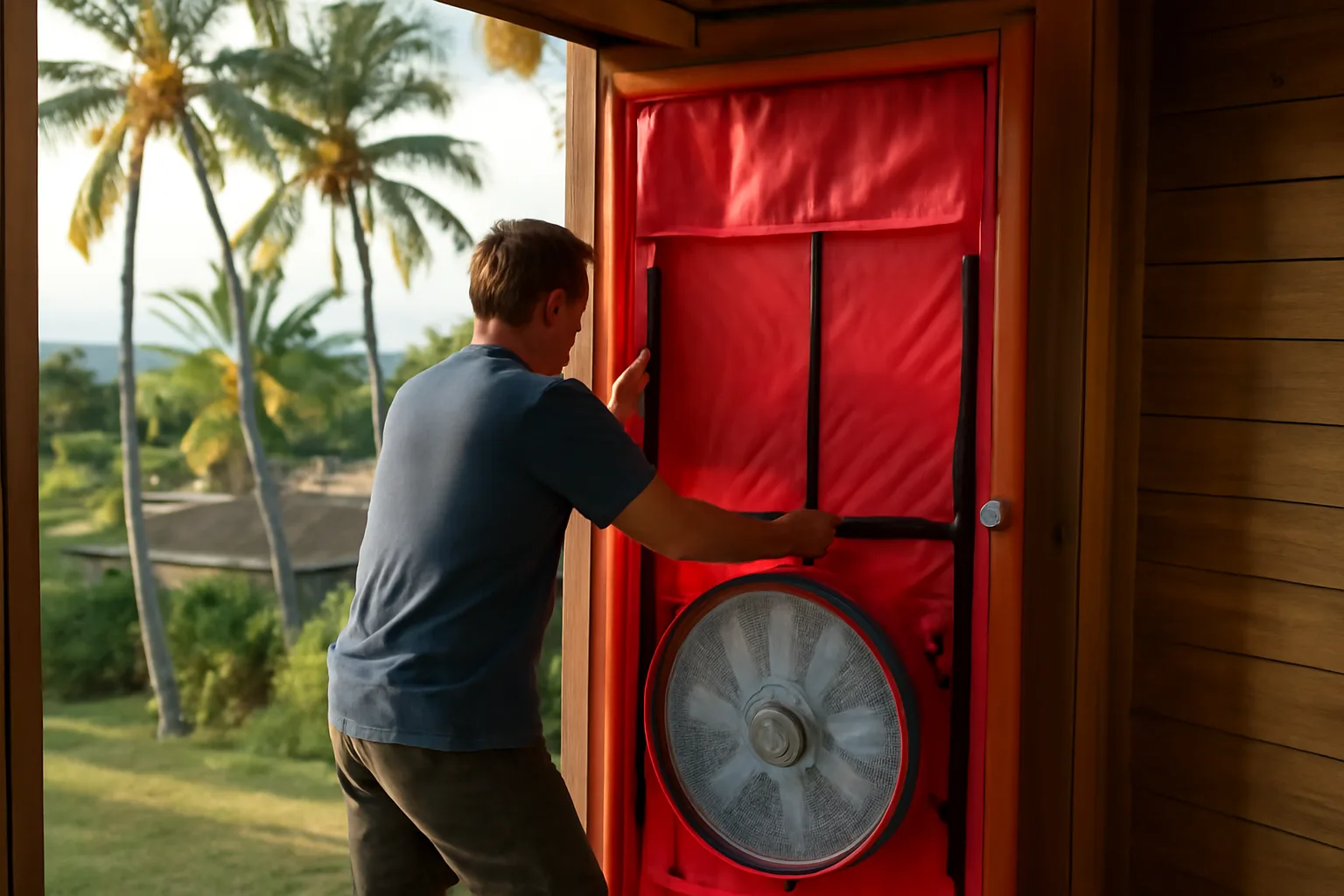
If you only model the house, run a blower door, test ducts, and register a rating through your provider, you are doing inspection and analysis. You still need business and tax paper. You still need RESNET rules. You do not automatically need a C license.
HRS 444-9 is blunt. "No person within the purview of this chapter shall act, or assume to act, or advertise, as general engineering contractor, general building contractor, or specialty contractor without a license previously obtained under and in compliance with this chapter and the rules and regulations of the contractors license board." [1]
Read that twice if you plan to sell insulation, seal ducts as a repair, or advertise remodel work on the side. Rating is one business. Contracting is another.
Confirm current contractor classifications and any exemption language with the Contractors License Board before you print a truck wrap. Boards change forms. I will not invent a fee or a processing clock.
What paper actually sits on a Hawaii HERS rater desk?
Your desk, if you do this cleanly, holds four stacks. Not one magic Hawaii HERS license.
Stack one is RESNET. Training completion from an accredited rater training provider, the national rater exam, a listing as a certified rater, and a Rating Provider that will QA your files and register ratings. MINHERS is the rulebook you actually work under. [7][8]
Stack two is Hawaii business identity. Register the entity with DCCA Business Registration unless you are a sole prop operating under your legal name the way BREG allows. Get a GET license from the Department of Taxation before you take gross income. [5][11]
Stack three is optional and situational. Contractor applications from the Contractors License Board, plus any county permit if you physically alter a dwelling. [9]
Stack four is job-level paper. Field data, test-out sheets, ENERGY STAR checklists if you work those homes, and the software report that produces the HERS Index under ANSI/RESNET/ICC 301. [10][14]
A HERS rater hawaii search will not return a DCCA form with that title. Anyone selling you that name is mixing national certification with contractor law.
Keep the stacks separate in your head. Mixing them is how people overbuy classes they do not need.
How much does HERS rater cost in Hawaii?
There is no official Hawaii HERS rater license fee, because there is no such license. Your real spend is training, exam and listing fees, provider QA, gear, software, insurance, interisland travel, and tax on gross income. Confirm every dollar with the party that invoices it. Fees move.
RESNET-accredited training invoices I have seen advertised sit in the low thousands. Delivery is sometimes remote, sometimes a mainland classroom plus airfare. Confirm the live tuition on the provider RESNET currently lists. Exam and annual rater amounts are set by RESNET or its testing vendor, not by Honolulu. Read the current become-a-rater page and ask the provider for the full first-year invoice. [7]
Gear is the other large check. A calibrated blower door and duct leakage kit often costs in the thousands new. Used kits exist. Skip uncalibrated bargains. Infrared cameras are optional in year one. I would rent or borrow for mentored ratings if the provider allows it, then buy after you have paying work.
Software (Ekotrope or REM/Rate in most shops) is a subscription. Confirm this year's price with the vendor. Rating Provider QA and rating registration fees vary by provider. Ask for a written schedule before you sign.
Hawaii-specific drag is travel. One neighbor-island job can burn more cash in airfare and a rental car than the national exam. I would not open a second-island shop in year one unless contracts are already signed.
Tax is not optional. The Department of Taxation states, "The tax rate is 4% for most business activities, 0.5% for wholesaling, manufacturing, producing, wholesale services, and use tax on imports for resale, and 0.15% for insurance commissions." [5] County surcharge may apply. Confirm the live GET page and HRS 237-13 for your activity and island. [6]
If you only need a paper path plus a starter blower-door kit while you sort RESNET training, HERSPath publishes a $179 one-time RESNET + Blower-Door Kit at /start. It does not replace accredited training, a Rating Provider, or DCCA filings.
A contractor license, if you later need one, is a separate application, exam, experience showing, and fee schedule. Confirm current amounts on the Contractors License Board application pages. I will not invent those numbers. [9]
How long does HERS rater take in Hawaii?
Plan on weeks to a few months before you can independently register ratings, not a state-board calendar. Hawaii does not publish a HERS rater processing time because it does not license the occupation.
Classroom or online rater training is often about a week of instruction, sometimes split. Confirm the syllabus with the accredited provider. The national exam is scheduled after that. There is no Hawaii exam window.
Mentored or probationary ratings are the long pole. You wait on houses, on your Rating Provider's QA, on weather, and on interisland seats. MINHERS sets the rating and quality rules. The exact mentored count has moved in past editions, so read the live MINHERS chapter and ask your provider what they require this year. [8]
Business registration and a GET license can finish faster than training. They are not a substitute for RESNET listing.
If you also chase a contractor license, add the board's experience review and exam path. Confirm current steps with DCCA. No approval guarantee. No honest writer can promise you a date.
Nobody has good public data on median time-to-first-paid-rating in Hawaii. RESNET directories move. County permit logs do not tag HERS visits. The closest honest statement is that the bottleneck is field mentoring and travel, not a state license queue.
How do you become a RESNET HERS rater if you live in Hawaii?
You follow the national RESNET path from an island address. Live in Hilo or Kapolei. The steps do not change.
Pick a RESNET Accredited Rater Training Provider. Finish the course they publish. Pass the national rater exam. Complete the mentored ratings your Rating Provider and the current MINHERS text require. Stay listed. Work only through a provider that will register the rating. [7][8]
Hawaii does not add a state rater exam on top of that. Counties do not issue a HERS stamp.
I would lock the Rating Provider before I buy a second suite of gear. Providers differ on software, file naming, and how they handle neighbor-island mentored jobs. A cheap course that leaves you without a provider is a waste of money.
If you already hold an out-of-state rater listing, ask RESNET and a Hawaii-active provider what transfer or reciprocity steps exist this year. Do not assume a California card prints ratings in Honolulu by itself. Compare the paper in HERS rater license in California if you are moving from that market.
Keep copies of training completion, exam results, calibration certificates, and your provider agreement. Those files are what a builder, an ENERGY STAR partner, or a QA reviewer will ask for. [10]
Does a blower door test require a Hawaii contractor license?
Usually no, if the only thing you do is test, model, and report. HRS 444 reaches people who act, assume to act, or advertise as general or specialty contractors. The statute defines contractor around undertaking to construct, alter, repair, add to, or improve buildings and other realty. [1][2]
A rating visit that leaves the house physically as it was is analysis. Cutting a hole, installing insulation, or selling a duct-repair package is a different offer. That second offer is where people wander into chapter 444.
I would not advertise "we seal and rate" on the same flyer unless the Contractors License Board has confirmed your classification. Confirm in writing. Informal forum advice is not a defense.
County permit desks still control construction. A HERS report is not a permit. If a builder asks you to pull a permit, stop and read HRS 444 and the county code with a license professional. HERSPath is not a law firm.
If your long-term plan is weatherization plus ratings, budget the contractor path as its own project. Look at how other states split the same line in HERS rater license in Arizona and HERS rater license in Colorado. The national RESNET piece is similar. The state contractor piece is not.
What business and tax filings come before the first invoice?
File business and tax paper before you deposit a builder check. RESNET certification does not create a Hawaii tax account.
DCCA Business Registration is where entities get their Hawaii identity. Sole props using a trade name, LLCs, and corporations have different BREG steps. Use the live registration pages, not a blog checklist from 2019. [11]
The Department of Taxation GET license is the other gate. GET applies to gross income of a business, with rates set in statute and explained on the department's GET page. [5][6] Rating fees are generally service income. Confirm your classification with Taxation if you also sell goods or subcontract labor.
County surcharge can stack on the state GET rate depending on island and current ordinance. Read the department's current surcharge explanation rather than copying a rate from memory.
I would open a dedicated bank account and keep rating files out of a personal folder. QA reviewers and tax auditors both like clean books. Different reasons. Same habit.
General excise filings are periodic. Confirm current filing frequency with Taxation after you register. I will not invent a due date.
How does Hawaii's energy code treat HERS scores?
Hawaii adopts a statewide building code framework under HRS chapter 107, including energy provisions the State Building Code Council publishes. Counties then put that code to work, sometimes with local amendments. [3]
The U.S. Department of Energy keeps a live Hawaii energy code status page. Read that page for the IECC edition now in force. Editions change. I will not freeze a year in this article that the DOE page may have already left behind. [4]
Hawaii sits in IECC Climate Zone 1 on DOE code maps. That climate fact drives envelope and cooling assumptions in rating software. It does not by itself force every new house to carry a HERS label. [4]
A HERS Index is a performance path tool under ANSI/RESNET/ICC 301. Builders use it for ENERGY STAR, some utility or program paperwork, and federal new-home credits. Code officials still want the path their adopted energy code names. Ask the county building department which performance reports they accept this year. [14][10]
Do not tell a client the energy code "requires a HERS rater." Sometimes a project needs a rating. Sometimes it needs a prescriptive checklist. Those are different products.
What gear and software do Hawaii raters actually buy in year one?
Buy the instruments MINHERS and your provider require for the tests you will sign. For most new raters that means a blower door, a calibrated manometer, a duct leakage rig, and basic combustion and room-by-room tools your provider lists. Confirm the current equipment appendix with them. [8]
Salt air and humidity are hard on fans and cases. I would budget extra for filters, door panel wear, and a calibration cycle, not a second brand-new kit in month two.
Software is not optional. You need a RESNET-approved energy rating tool. Ekotrope and REM/Rate are the names you will hear. Pick the one your Rating Provider already QA's. Switching later is unpaid labor.
A fancy drone or a premium thermal camera is a common year-one waste. Mentored ratings teach you what you actually use. Buy toys after invoices clear.
Interisland shipping of a blower door is ugly. I would design a padded case and a written packing list before I chase a Kauai test-out. Lost calibration time costs more than the airfare.
Can a Hawaii HERS rater work ENERGY STAR and 45L jobs?
Yes, if you hold the RESNET listing, the program partnerships, and the checklists those programs name. Hawaii location does not block federal new-home credits.
ENERGY STAR Certified Homes needs a rater operating inside that program's current national program requirements and a builder who is an ENERGY STAR partner. Read the live ENERGY STAR residential new construction program pages before you promise a label. [10]
The IRS New Energy Efficient Home Credit (section 45L) is a credit for home builders and others who build energy efficient homes. Current IRS figures commonly cited for qualifying homes are $2,500 for ENERGY STAR and $5,000 for DOE Zero Energy Ready Home. Read the live IRS page. Congress can amend a credit. [12][13]
The IRS New Energy Efficient Home Credit page states, "The New Energy Efficient Home Credit is a credit for home builders and others who build energy efficient homes." [12] You are usually the rater, not the taxpayer on that credit. Still, sloppy files can sink a builder's claim. Treat 45L jobs like evidence, not a casual score.
DOE Zero Energy Ready Home has its own partner and target-home rules. Confirm those on the ZERH program page before you bid. [13]
How does Hawaii compare with other states on the paper path?
The RESNET core is the same in Honolulu and Huntsville. Training, exam, provider QA, ANSI/RESNET/ICC 301. What changes is the state occupational overlay and the travel math. [14]
Hawaii's overlay is thin for rating-only work and thick if you wander into contracting. That pattern shows up in several states that never created a rater board. See HERS rater license in Alabama for another no-special-board setup, and how to start HERS rater in California if you need the large-market version of energy-code paper.
Island logistics look more like HERS rater license in Alaska than like a compact mainland metro. Mileage is measured in airfare. Mentored ratings take calendar time even when the exam is done.
I would not pick Hawaii as a first market solely because "nobody is here." Nobody has a clean public headcount of active raters. Thin markets also mean thin mentoring. Line up a provider that already files Hawaii ratings before you move a household for this job.
If you want a second climate for software practice, how to start HERS rater in Arizona is a hot-dry contrast to Zone 1 humidity. Different envelope mistakes. Same national exam.
What should you confirm with the board before you spend money?
Confirm four live sources. RESNET for rater status, exam, and MINHERS. Your intended Rating Provider for mentored ratings, software, and QA fees. DCCA Contractors License Board if you will advertise construction or alteration. Department of Taxation for GET and surcharge. [7][8][9][5]
Ask the county building department, in writing, which energy-code performance reports they accept this year. DOE's Hawaii status page tells you the statewide edition story. The counter clerk tells you what they stamp. [4][3]
I would not prepay a contractor exam course until you know you will alter buildings. I would not buy two blower doors. I would not promise a builder a 45L number you have not traced to the current IRS page. [12]
HERSPath is an independent publisher, not a law firm and not a service company. This page is a map of the paper. It is not an approval, a quote, or a timeline guarantee.
Print the statutes. Call the board. Then spend the tuition.
Frequently asked questions
Do you need a license for HERS rater in Hawaii?
No standalone Hawaii HERS rater license exists. You need RESNET HERS Rater certification and a RESNET Accredited Rating Provider. A contractor license applies only if you act or advertise as a contractor under HRS 444. Confirm classifications with the Contractors License Board before you offer alteration work.
How much does HERS rater cost in Hawaii?
There is no state HERS license fee. Budget accredited training (often in the low thousands), RESNET exam and listing fees, provider QA, software, insurance, a calibrated blower-door kit, GET on gross income, and interisland travel. Confirm every current amount with RESNET, your provider, DCCA, and Taxation. Fees change.
How long does HERS rater take in Hawaii?
Training is often about a week plus a scheduled national exam. Mentored ratings and QA usually stretch the path to several weeks or a few months. Hawaii publishes no rater processing clock. Contractor licensing, if you need it, is a separate board timeline. Confirm steps. Nobody can honestly guarantee a finish date.
Is RESNET the same as a Hawaii state license?
No. RESNET is a national rating standard and certification body. Hawaii DCCA does not issue a HERS rater occupational license. You still file Hawaii business and GET paper to invoice locally. Keep the national credential and the state tax account in separate folders so you do not confuse builders or the board.
Do I need a contractor license to run a blower door in Honolulu?
Usually not if you only test, model, and report. HRS 444 covers people who act or advertise as contractors to construct, alter, or improve buildings. Selling sealing, insulation, or repairs can change that answer. Confirm your intended offer with the Contractors License Board before you advertise bundled work.
Can I rate homes on Maui with an Oahu business?
RESNET listing is statewide in the national sense. Your Hawaii entity and GET account are state-level too. County surcharge and local permit practice still differ by island. Confirm Taxation surcharge rules and the county building desk for any job that touches construction. Travel and calibration time are the real constraints.
Does Hawaii accept out-of-state HERS raters?
RESNET certification is national, so an already-listed rater can often work if a Rating Provider will register the Hawaii files. You still need Hawaii business and tax paper if you are operating here. Confirm transfer steps with RESNET and the provider. Do not assume a mainland contractor card substitutes for HRS 444.
What exam do Hawaii HERS raters take?
The RESNET national HERS Rater exam after accredited training. Hawaii does not add a state rater exam. If you later want a contractor license, that is a different DCCA exam and experience path. Confirm current RESNET testing rules on the become-a-rater page and current contractor exams on the board's application pages.
Do I need a GET license to invoice HERS ratings?
If you are in business and taking gross income in Hawaii, you generally need a Department of Taxation GET license. The department states a 4% rate for most business activities, with other statutory rates for listed classes. Confirm your activity, island surcharge, and filing frequency with Taxation before the first deposit.
Are HERS ratings required by the Hawaii energy code?
Not for every house. Hawaii adopts energy provisions through the state building code framework and county adoption. Some projects use a performance path that a HERS Index can support. Others stay prescriptive. Read the DOE Hawaii code status page and ask the county which reports they accept this year.
Can I do ENERGY STAR and 45L work from Hawaii?
Yes, if you meet the live ENERGY STAR rater and builder partner rules and the IRS New Energy Efficient Home Credit requirements. Current IRS figures often cited are $2,500 for ENERGY STAR and $5,000 for Zero Energy Ready Home. Read the IRS and DOE pages. You usually rate the home. The builder claims the credit.
What happens if I advertise as a contractor without a card?
HRS 444-9 bars acting, assuming to act, or advertising as a general or specialty contractor without a license. That is a statute problem, not a RESNET problem. Stay inside testing and reporting, or get the classification the Contractors License Board names. Confirm before the website copy goes live.
Where do I confirm current HERS rater fees in Hawaii?
RESNET and your accredited training provider for certification and exam amounts. Your Rating Provider for QA and registration fees. DCCA Contractors License Board for any contractor application fees. Department of Taxation for GET. No article should invent a live fee. If a number is not on those pages, treat it as unconfirmed.
Is DOE Home Energy Score the same as a HERS rating?
No. HERS is the RESNET Energy Rating Index under ANSI/RESNET/ICC 301. Home Energy Score is a separate DOE tool with different assessor training. Builders mixing the names on a bid sheet cause callbacks. Ask which label the program, lender, or tax credit actually names before you schedule the test.
Sources
- Hawaii Revised Statutes §444-9 Licenses required: No person may act, assume to act, or advertise as a general or specialty contractor without a license obtained under HRS chapter 444 and board rules.
- Hawaii Revised Statutes §444-1 Definitions: HRS 444 defines contractor in terms of offering or undertaking to construct, alter, repair, add to, or improve buildings and other realty.
- Hawaii Revised Statutes §107-25 State building code: Hawaii law establishes a state building code framework that includes the codes the State Building Code Council adopts for construction in the state.
- U.S. DOE Building Energy Codes Program, Hawaii state status: DOE publishes Hawaii's current residential and commercial energy code adoption status, including the IECC edition in force and Hawaii's Climate Zone 1 context.
- Hawaii Department of Taxation, General Excise Tax: GET is imposed on business gross income at 4% for most business activities, with 0.5% and 0.15% rates for listed classes.
- Hawaii Revised Statutes §237-13 Imposition of tax: HRS 237-13 sets the statutory GET rates that apply to classified business activities, including the common 4% service rate.
- RESNET, Become a HERS Rater: RESNET publishes the national path to HERS Rater certification through accredited training, examination, and rating-provider affiliation.
- RESNET, MINHERS standards: MINHERS is the Mortgage Industry National Home Energy Rating Standards that govern how certified ratings are produced and quality-assured.
- Hawaii DCCA Contractors License Board, applications and publications: The Contractors License Board publishes the live contractor applications, classifications, and board materials used if rating work expands into contracting.
- ENERGY STAR, Residential New Construction program requirements: ENERGY STAR Certified Homes requires partners and raters to follow the current national program requirements and checklists.
- Hawaii DCCA Business Registration Division, registration: DCCA BREG is the state office that registers Hawaii business entities and trade names before a rater invoices under a company name.
- U.S. DOE, Zero Energy Ready Home program: DOE Zero Energy Ready Home is the federal high-performance new-home program that can support the higher 45L credit tier when program rules are met.