Last updated 2026-08-21
TL;DR
Idaho does not have a HERS rater board and does not issue a HERS rater license. Certification is national through RESNET and a Rating Provider. You may still need Idaho contractor registration if you do construction work. Training plus mentored ratings usually runs months, not days. Confirm live fees with RESNET and DOPL. There is no state exam to book in Boise.
Is there a HERS rater board in Idaho?
No. Idaho does not run a HERS rater board, does not print a HERS rater license, and does not sit a state rater exam in Boise. The search term is a habit people bring from licensed trades. Energy rating is not one of those trades here.
Electricians have a board. HVAC contractors have a board. The Idaho Division of Occupational and Professional Licenses lists those boards. A HERS rater board is not on that list. If someone sells you an "Idaho HERS board application," they are selling a form that does not exist.
What exists is a national private standard. RESNET writes the Mortgage Industry National Home Energy Rating Systems Standards (MINHERS). Accredited Rating Providers run quality assurance. You become a HERS Rater inside that system, then you rate Idaho houses under that Provider. [1][3]
The Idaho Building Code Board is a real board. Under the Idaho Building Code Act it adopts the International Energy Conservation Code for the state. That board sets the energy code your model has to meet or beat. It does not credential raters. [4]
Local building departments still matter. They issue permits and certificates of occupancy. They do not issue HERS credentials. Keep those three layers straight: national cert, state energy code, local permit. That is the whole map.
Do you need a license for HERS rater in Idaho?
No. Idaho does not issue a HERS rater occupational license. You need RESNET rater certification and an active agreement with a RESNET-accredited Rating Provider. You may still need other Idaho paper (contractor registration, a city business license, an entity filing) depending on how you operate. Confirm that mix with DOPL and your city clerk before you take paid work. [1][5]
Two things get mashed together. First, the rating credential. That is RESNET. You finish accredited training, you pass the national rater exam, you complete the mentored and probationary ratings MINHERS currently requires, and you stay under a Provider's QA. RESNET publishes the live steps. Use those pages, not a 2018 blog. [1][3]
Second, the right to do business in Idaho. If you only test, model, and deliver a rating, you are probably not acting as a construction contractor. The Contractor Registration Act still uses broad language. Idaho Code 54-5204 makes it unlawful for a person to "engage in the business of, or hold himself out as, a contractor within this state without being registered as required in this chapter." [5]
Read the definition of contractor and the exemptions yourself. They live in Idaho Code 54-5203 and 54-5205. [6][7] I would call the Idaho Contractors Board and ask a yes or no question: I only perform RESNET Home Energy Ratings and diagnostic tests, I do not build or install, do I need a contractor registration? Ask them to put the answer in an email. Nobody has a clean published FAQ that names raters. The closest legal text is that chapter.
If you later add insulation installs, HVAC changeouts, or weatherization, you are in contractor land. Register then. Cities such as Boise, Meridian, Nampa, and Idaho Falls can still want a local business license. That is a city clerk problem, not a rater board problem.
Who actually certifies HERS raters if Idaho does not?
RESNET does. A RESNET-accredited Rating Provider holds your quality assurance after that. Idaho never touches the credential. [1][3]
The path is national. You pick a RESNET-accredited training provider. You sit through their rater course. You pass the RESNET national rater test. You complete the field mentorship and probationary ratings that the current MINHERS chapter requires. You sign with a Rating Provider. You stay in their QA cycle, including rated-home sampling and continuing education as that Provider and RESNET define it. Confirm every count and every form on the live MINHERS chapter. Those numbers have moved before. [1][3]
RESNET also runs the HERS Index itself. RESNET states that "a home built to the specifications of the HERS Reference Home (based on the 2006 International Energy Conservation Code) scores a HERS Index of 100, while a net zero energy home scores a HERS Index of 0." [2] That sentence is the score builders in Ada County and elsewhere are asking for when they say they need a HERS rater.
You can look up working raters in the RESNET directory before you start. If Idaho looks thin in your region, that is useful data. It tells you about drive time, not about a missing state board. [15]
I would pick the Provider before I pick the cheapest class. The Provider is who lets you file ratings. A cheap class with no Provider relationship is a weekend you cannot bill.
How much does HERS rater cost in Idaho?
There is no Idaho HERS license fee, because there is no Idaho HERS license. Your real spend is RESNET and Provider fees, accredited training, field equipment, rating software, insurance, and fuel. Confirm every current dollar with RESNET, the trainer, the Provider, and the equipment dealer. Those prices move, and I will not invent a 2026 fee sheet. [1]
Training is the first invoice. Accredited rater courses are sold by private trainers, not by DOPL. Call at least two. Ask what is in the tuition (exam voucher, mentored ratings, software trial). Ask what is not. A class that dumps you with no mentor in southern Idaho is more expensive than it looks.
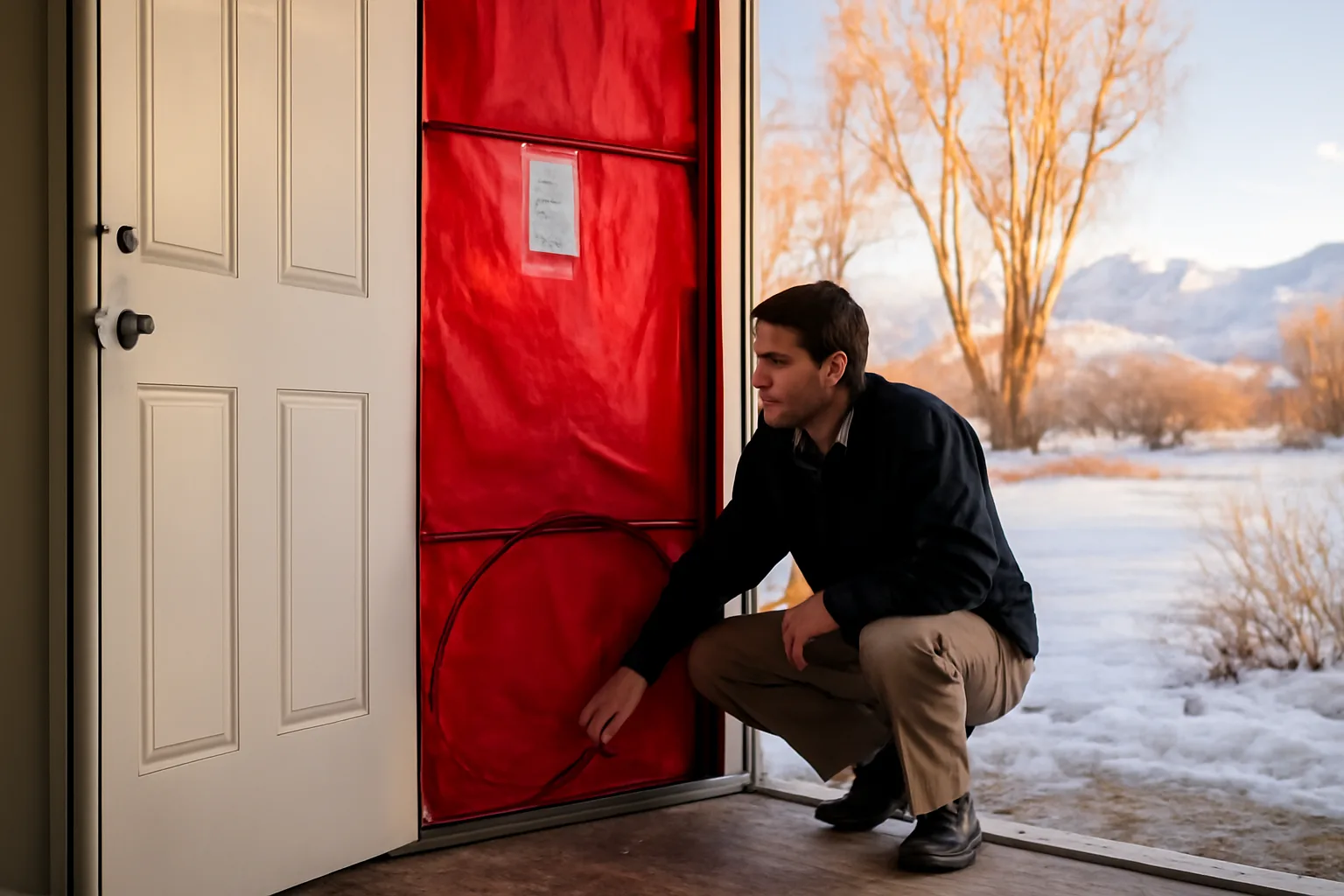
Equipment is the big check. A Provider will expect a calibrated blower door, a duct leakage tester, manometers, and the usual hand tools. Confirm the approved kit list with that Provider before you buy. An infrared camera is useful and easy to overspend on in year one. I would rent or borrow one until a builder actually pays for thermography.
Software is a subscription (Ekotrope or REM/Rate are the names you will hear). Confirm the live price with the vendor. General liability insurance is not optional if you want production-builder work. Idaho travel is its own line item. Twin Falls to Sandpoint is not a side trip.
Waste of money: any course titled "Idaho HERS license prep." Any consultant who offers to expedite your application to a board that does not exist. Compare year-one math with what HERS rater cost in Colorado looks like and HERS rater cost in Arizona if you also plan to cross a border.
If you want a low-cost study path bundled with a blower-door kit, HERSPath sells a $179 one-time RESNET + Blower-Door Kit. That does not replace a field-grade fan your Provider will accept, and it does not replace RESNET's own fee schedule. Get those quotes first.
How long does HERS rater take in Idaho?
Plan on several months from first class to a rating you can file alone. The classroom piece is short. Mentored ratings, probationary ratings, and Provider onboarding take the calendar time. Confirm the current MINHERS rating counts and your Provider's mentor calendar before you quit another job. Nobody can honestly guarantee a date. [1][3]
The class itself is usually a multi-day block. Some trainers still pack it into one week. Passing the national test after that is on you. People stall here when they treat the test like a formality. It is not.
Field mentorship is the bottleneck in Idaho. Houses have to be at the right stage. Builders have to let a candidate on site. A mentor has to drive. In the Panhandle, winter closures and unfinished envelopes will sit you down. In the Treasure Valley the problem is more often a busy mentor than the weather.
I would not market myself as available next Monday after a four-day class. I would finish the Provider's probation list, file a clean rating, then take the first paid job. Rushing that sequence is how people produce a rating their Provider rejects.
If you already hold RESNET rater status from another state, Idaho does not add a waiting period. You still need a Provider that will let you work here, and you still need to follow Idaho's adopted energy code on any code-compliance job. [1][4]
What paper do you file in Idaho besides RESNET?
You file business paper, not a rater license. Typical stack is an Idaho Secretary of State entity filing if you are not working under someone else's company, a tax account if the Tax Commission says you need one, a city business license where you are based, and contractor registration only if the Contractors Board says your scope requires it. Confirm each item. Do not copy a checklist from a state that licenses raters. [5][6]
If you hire anyone, the Idaho Industrial Commission side of workers compensation enters the chat. Sole proprietors sometimes skip coverage and regret it after a ladder fall. I am not your lawyer. Ask the Commission and your insurance agent how they treat a one-person rating shop.
You will not mail a rater application to DOPL. You will not get a wall certificate from the Building Code Board. If a lender or builder asks for your "Idaho HERS license number," give them your RESNET rater ID and your Provider name. Then offer to walk them through why that is the number that matters. [15]
Keep copies of your RESNET certificate, Provider agreement, equipment calibration sheets, and insurance certificate in the truck. Building inspectors in smaller counties will not know the RESNET process. A calm folder beats an argument in a driveway.
Does Idaho's energy code require a HERS rating on every new home?
No. A HERS rating is not a statewide condition of occupancy for every new house. Idaho adopts the International Energy Conservation Code through the Building Code Board under Idaho Code 39-4109. The IECC includes an Energy Rating Index path, but it also includes prescriptive and UA trade-off paths that a builder can use without calling you. [4]
So most production houses in Idaho still close without a HERS Index. You get hired when the builder wants ENERGY STAR, the federal 45L credit, DOE Zero Energy Ready Home, a utility new-homes incentive, or a listing that shows a score. That is program work, not a hidden state mandate. [8][10][11]
Always ask the building department on that job which IECC edition and which Idaho amendments they are on. Adoption is statewide through the board, enforcement is local, and amendments happen. DOE's Building Energy Codes Program tracks state adoption if you want a national snapshot before you call city hall. [12]
I would not tell a builder they "have to get HERS" unless I can point at the program or the ERI path they already chose. Overselling a mandate that Idaho did not write is a good way to lose the next subdivision.
What work can a HERS rater actually do in Idaho?
You can produce RESNET HERS ratings and the diagnostic tests behind them. The paid work in Idaho clusters around new-home programs, not around a state inspection monopoly. ENERGY STAR certified homes, DOE Zero Energy Ready Home, and the federal Energy Efficient Home Credit (45L) are the three names that show up in builder emails. [10][11][8]
26 U.S.C. § 45L is the statute. For qualifying new homes the single-family credit tiers are $2,500 and $5,000, tied to ENERGY STAR and DOE Zero Energy Ready Home. The IRS explains eligibility, acquisition dates, and the eligible contractor rules on its Energy Efficient Home Credit page. Builders claim it on Form 8908. You do not issue the tax credit. You produce the certification the statute and the programs require. [8][9][14]
ENERGY STAR and ZERH both require a qualified rater or verifier. That is why a RESNET rater can bill in a state with no rater license. Read the current national program requirements before you promise a score. Versions change by permit date. [10][13][11]
Investor-owned utilities in Idaho have run new-construction efficiency programs off and on. Idaho Power, Avista, and Rocky Mountain Power each publish their own rules. Confirm the live program page for the service territory. I would not buy a truck based on a rebate PDF from three years ago.
Existing-home work (real estate listings, retrofit before/after tests) exists and pays less predictably. BPI is a different credential. Do not confuse the two on a bid.
Do you need an Idaho contractor registration to rate homes?
Maybe not, if rating and testing is all you do. Maybe yes, if you hold yourself out as a contractor or you perform construction. The only honest answer is the one the Idaho Contractors Board gives you for your scope. Start with Idaho Code 54-5203 (definitions), 54-5204 (registration required), and 54-5205 (exemptions), then call the board. [6][5][7]
54-5204 is blunt. Registration is required to engage in the business of a contractor or to hold yourself out as one. The fight, if there is one, is whether a rater is a contractor under 54-5203. That definition is built around undertaking construction, alteration, and similar work. A pure rating scope is a poor fit. A rating-plus-install scope is not. [6][5]
Exemptions in 54-5205 are real and narrow. Do not talk yourself into one after a quick skim. Read the section.
I would keep invoices clean. Line items that say "install weatherstripping" or "seal ducts" look like construction. Line items that say "blower door test" and "HERS rating" look like professional testing. If you want to sell installs later, register first and pull the permits the jurisdiction wants.
Out-of-state raters flying into Boise for a 45L batch should ask the same question. Idaho does not waive contractor law because RESNET is national.
What equipment and insurance do Idaho raters actually carry?
A calibrated blower door, a duct leakage tester, digital manometers, probe kit, and a laptop that will run your rating software. That is the working set. Your Rating Provider, not Idaho, decides whether your kit is acceptable. Confirm their equipment and calibration rules in writing. [1][3]
Climate here is rude to cheap gear. You will test in January in zone 6 counties and in July in the Treasure Valley. Batteries die. Tubing stiffens. I would buy the fan and gauges the Provider already knows how to review, then stop shopping for gadgets.
Insurance is a builder requirement more than a state rater requirement. General liability is the policy they ask for. Ask your agent about errors and omissions if you will sign ENERGY STAR or 45L files. If you have employees, talk to the Idaho Industrial Commission about workers compensation. I would not crawl attics uninsured to save a premium.
Calibration certificates belong in the same folder as your RESNET ID. A failed QA review over a lapsed calibration is a grim way to learn the rules.
How is Idaho different from states that run their own HERS programs?
Idaho uses national RESNET HERS. It does not run a state HERS provider network. California is the state people confuse this with. CEC HERS under Title 24 is a different credential, a different test, and a different board. If you only hold California HERS, you are not a RESNET rater in Idaho. If you only hold RESNET, you are not a CEC HERS rater in California. Read HERS rater board in California before you mix the two. [1]
Neighbor states look more like Idaho than like California. HERS rater board in Colorado, HERS rater board in Arizona, and HERS rater board in Alaska are the same flavor of problem: find the national path, then find the local business paper. Cost writeups for California still help for equipment and training, even when the license story does not transfer.
| Question | Idaho | California CEC HERS | RESNET national |
|---|---|---|---|
| What board credentials the rater? | None | CEC HERS providers under Title 24 | RESNET plus a Rating Provider |
| Score builders usually mean | HERS Index | Title 24 HERS tests | HERS Index (100 = 2006 IECC reference home) |
| Required on every new home? | No | Built into many Title 24 compliance paths | Only if the code path or program asks |
| Typical extra state paper | Business license, maybe contractor registration | State HERS procedures plus contractor rules | Provider QA, not a state card |
IECC climate zone tables put Idaho's populated counties in cold and very cold dry zones (5B and 6B are the ones you will see most). Confirm the county in the IECC table you are rating under, because software climate files follow that table, not your gut. [12]
What should you confirm before you take a first paid job in Idaho?
Confirm four things in writing. Your RESNET rater status and Provider agreement are active. Your Provider will accept the address and the program (ENERGY STAR, ZERH, 45L, or a plain Index). The building department's adopted IECC edition matches what you modeled. The Contractors Board has answered the registration question for your scope. Then go to work. [1][4][5][8]
Call the utility if the bid assumes a rebate. Call the builder's tax person if the bid assumes 45L. You are not their CPA. You can still refuse to be the person who promised a credit the house cannot claim.
I would start with one production builder in the Treasure Valley or the county you already live in. Crossing the state for a single custom home in year one looks romantic and pays like a hobby. Stack ratings on a street, then expand.
HERSPath keeps a start checklist at /start if you want that next to the RESNET path. This page still works if you never open it. Confirm fees, quotas, and processing times with RESNET and with Idaho DOPL. No one writing a guide can promise you an approval date.
Frequently asked questions
Do you need a license for HERS rater in Idaho?
No. Idaho does not issue a HERS rater occupational license and has no HERS rater board. You need RESNET certification and a Rating Provider. You may still need a city business license, an entity filing, or contractor registration if your scope includes construction. Confirm that mix with DOPL and your city clerk.
How much does HERS rater cost in Idaho?
There is no state HERS license fee. Budget accredited training, RESNET and Provider fees, a field-grade blower door and duct tester, rating software, insurance, and travel. Those prices change. Confirm live invoices with RESNET, the trainer, the Provider, and dealers. Skip any course that claims to prepare you for an Idaho rater license.
How long does HERS rater take in Idaho?
The class is usually days. Becoming someone who can file a rating alone usually takes several months because mentored and probationary ratings depend on houses, mentors, and your Provider. Winter in north Idaho can add delay. Confirm current MINHERS counts and your Provider's calendar. No one can guarantee a finish date.
Is RESNET the same as an Idaho license?
No. RESNET is a national private credential. An Idaho license would be a state occupational license, and Idaho does not issue one for this job. Builders, ENERGY STAR, ZERH, and 45L care about the RESNET path and the program rules, not about a DOPL rater number that does not exist.
Can I rate homes in Idaho with an out-of-state RESNET certification?
Yes, if your RESNET rater status is current and a Rating Provider will file Idaho ratings for you. Idaho does not add a reciprocity exam. You still follow Idaho's adopted energy code on code jobs, and you still ask the Contractors Board whether your scope needs registration. Confirm both before you book flights.
Does Idaho require HERS for a certificate of occupancy?
Not statewide, and not on every house. Idaho adopts the IECC, which offers an Energy Rating Index path as one option. Builders can often use prescriptive or UA paths instead. A local department can still require what the adopted code and amendments require. Ask that department on that permit.
Is California HERS the same as RESNET HERS in Idaho?
No. California Energy Commission HERS is a Title 24 verification system with its own providers and tests. RESNET HERS is the Index system Idaho builders mean. Holding one does not grant the other. If you plan to work both states, budget two credential paths and two sets of rules.
Do I need a blower door to work as a HERS rater in Idaho?
Yes, in practice. Envelope leakage testing is core HERS field work, and Rating Providers expect a calibrated blower door plus a duct leakage tester. Confirm the accepted equipment list and calibration interval with your Provider before you buy. A study kit is not a substitute for the field fan they will review.
Which Idaho utilities pay for HERS ratings?
It depends on the year and the territory. Idaho Power, Avista, and Rocky Mountain Power have each published new-construction efficiency programs at various times. Confirm the current program page and the required rater paperwork before you price a bid around a rebate. Old PDFs are not a promise to pay.
Can I operate as a sole proprietor HERS rater in Idaho?
Often yes. Many one-person shops start unincorporated or as an Idaho LLC. You still collect the local business license if your city wants one, and you still ask the Contractors Board about registration. If you hire help, workers compensation rules apply. Ask a CPA and the Industrial Commission. This is not legal advice.
Does the Idaho Building Code Board certify HERS raters?
No. The Building Code Board adopts the I-codes, including the IECC, under the Idaho Building Code Act. It does not sit a rater exam or issue rater cards. Certification stays with RESNET and your Rating Provider. The board's rules still control which energy code edition your compliance model must use.
What climate zone is Idaho for HERS software?
Most populated Idaho counties sit in IECC climate zones 5B or 6B. Ada County (Boise) is the 5B example people know. North Idaho counties run colder. Use the IECC climate zone table for the county you are rating and the climate file your software expects. Do not guess from a weather app.
Do I need to register my rating company with DOPL?
Not as a HERS rater. DOPL does not have that registration. You may need contractor registration through the Contractors Board if your work is construction under Title 54, Chapter 52. You may also file an entity with the Secretary of State. Confirm each office. Do not invent a rater registration number.
Sources
- RESNET, MINHERS Standards: MINHERS is the operative RESNET standard for rater certification, quality assurance, and the rating process.
- Idaho Legislature, Idaho Code 39-4109: Idaho adopts the International Energy Conservation Code through the Building Code Board under the Idaho Building Code Act.
- Idaho Legislature, Idaho Code 54-5204: Idaho law makes it unlawful to engage in the business of, or hold oneself out as, a contractor without registration under the chapter.
- Idaho Legislature, Idaho Code 54-5203: The Contractor Registration Act defines who is a contractor for purposes of registration.
- Idaho Legislature, Idaho Code 54-5205: Idaho Code lists exemptions from contractor registration that must be read against a rater's actual scope.
- Cornell LII, 26 U.S.C. § 45L: Federal statute 26 U.S.C. § 45L sets the Energy Efficient Home Credit amounts and certification categories.
- U.S. Department of Energy, Zero Energy Ready Home: DOE Zero Energy Ready Home is a certification path that uses qualified raters and ties to the higher 45L tier.
- ENERGY STAR, National Program Requirements for Certified Homes: ENERGY STAR publishes the national program requirements a rater must follow, which change by version and permit date.
- Internal Revenue Service, About Form 8908: Eligible contractors claim the Energy Efficient Home Credit on IRS Form 8908.