Last updated 2026-08-18
TL;DR
To rate homes in California you complete RESNET-accredited training, pass the RESNET written exam, finish mentored field ratings under a certified Rater Quality Assurance Designee, and register with a RESNET Rating Provider. California adds a second layer: your provider must be on the California Energy Commission accepted-provider list before you can sign Title 24 field verification certificates.
What does a HERS rater actually do in California?
A HERS rater (Home Energy Rating System rater) inspects and tests homes to measure real energy performance against a reference design. In California the job carries extra weight. The California Energy Code, Title 24 Part 6, requires third-party field verification for many mandatory measures: duct leakage, refrigerant charge, airflow, envelope insulation, and more. [1]
Every new single-family home permitted in the state needs HERS field verification for at least some of those measures before the building department signs off. Demand here is structural, not optional. That's one reason California carries more registered HERS raters than almost any other state.
The rater produces a compliance certificate through software approved by the California Energy Commission (CEC). The builder hands that certificate to the building department. Wrong numbers, and the project stalls. That accountability is why the credentialing process is thorough.
Do you need a license to work as a HERS rater in California?
No. California does not issue a state "HERS rater license" the way it licenses contractors or architects. There's no state license board you apply to. The credential comes from RESNET (Residential Energy Services Network), the national body that writes the HERS methodology, plus CEC accepted-provider registration for California Title 24 field verification. [2]
You need two things before you can sign a California compliance certificate:
1. Active RESNET certification as a HERS Rater (or HERS Rater Trainee working under a Rater Quality Assurance Designee, called an RQAD). 2. Affiliation with a RESNET Rating Provider that is also a CEC accepted provider for residential field verification. CEC maintains that accepted-provider list and updates it as providers apply. [3]
Here's the part most newcomers miss. You personally do not apply to CEC. Your Rating Provider does. But you cannot operate without being affiliated with one.
Some raters also hold a BPI (Building Performance Institute) credential or a contractor's license. Both can help you sell services. Neither is required to rate under RESNET.
For a full breakdown of what California calls a "license" versus what RESNET calls a "certification," see our companion piece on HERS rater license in California.
What are the step-by-step requirements to become a HERS rater in California?
The path has six concrete steps. None can be skipped, but some overlap in time.
Step 1: Meet the prerequisites. RESNET does not publish a minimum age or education requirement for raters beyond what its accredited training programs set. Most programs expect you to be at least 18 with basic construction literacy. A background in HVAC, insulation, or building inspection helps. It's not required. [4]
Step 2: Complete RESNET-accredited rater training. You take a course from a RESNET-accredited training provider. Length varies, but most run three to five days of classroom or online content covering building science, blower door testing, duct leakage testing, HERS software, and California's Title 24 specifics. Confirm current formats directly with the provider, because delivery changed after 2020 and keeps shifting. [4]
Step 3: Pass the RESNET written exam. After training you sit a proctored exam through a third-party testing center. It covers HERS standards, building science, and field procedures. You need a passing score to advance. Retake fees apply if you don't pass; confirm the current retake policy with RESNET directly. [4]
Step 4: Complete mentored field ratings under an RQAD. This is the phase most people underestimate. You complete a set of mentored ratings under a RESNET-certified Rater Quality Assurance Designee. RESNET's standard sets a minimum number of supervised field ratings before you can rate independently. The exact count has changed across standard revisions, so confirm the current requirement in RESNET Standard 310 or with your Rating Provider. [5]
Step 5: Register with a RESNET Rating Provider. A Rating Provider is the business entity registered with RESNET that employs or contracts raters, runs quality assurance, and submits ratings to the RESNET registry. No provider, no submitted ratings. In California, that provider must also sit on CEC's accepted-provider list. Find providers through the RESNET directory. [2]
Step 6: Maintain your credential. RESNET certification is not one-and-done. Continuing education is required each year. California's Title 24 updates on roughly a two-year cycle, so your training has to keep pace with the current code. [1]
How much does it cost to become a HERS rater in California?
Cost depends on your training provider, your equipment choices, and whether you already own any field testing gear. Here's an honest breakdown of the main buckets.
| Cost Item | Typical Range | Notes |
|---|---|---|
| RESNET-accredited training course | $400, $900 | Varies by provider and format (in-person vs. online hybrid) |
| RESNET written exam fee | $100, $200 | Confirm current fee at RESNET.us |
| RESNET registration / annual dues | $100, $300/year | Paid through your Rating Provider; structure varies |
| Blower door kit | $3,000, $5,500 (new) | Required for duct and envelope testing; used equipment cheaper |
| Duct blaster / pressure pan kit | $1,500, $3,000 (new) | Often bundled with blower door packages |
| HERS rating software subscription | $200, $600/year | EnergyPro and other CEC-approved tools charge annual fees |
| Mentored rating travel and time | Variable | Depends on RQAD location and number of mentored ratings required |
Work for a contractor who already owns equipment, and your out-of-pocket costs drop hard. Start from scratch buying your own gear, and you should budget at least $5,000 to $8,000 before your first independent rating.
Training is not the big cost. Equipment is. A new blower door from Minneapolis (The Energy Conservatory) or Retrotec runs $3,000 to $5,500 depending on configuration. [6] Some raters rent equipment from their Rating Provider or a local rental shop, which cuts upfront cost but eats into per-rating margin.
HERSPath lists a $179 training bundle combining RESNET fundamentals and blower-door orientation. That's a cheap entry point for the study portion. It does not replace the full accredited course or the field hours RESNET requires. Use it to lower your prep costs, not to skip steps.
For a side-by-side look at how California's cost structure compares to neighboring states, the how to start HERS rater in Arizona and how to start HERS rater in Colorado articles cover those markets.
How long does it take to become a HERS rater in California?
Two to six months from first enrollment to your first independent rating. The wide range comes almost entirely from how fast you finish the mentored field rating requirement.
The course runs three to five days. The exam usually schedules within a few weeks of finishing. Registration with a Rating Provider can happen in parallel. The bottleneck is mentored field ratings.
If your RQAD works a high-volume market like Los Angeles, the Bay Area, or San Diego, you might clear your required mentored ratings in four to six weeks going full-time. In slower markets, or part-time around another job, it can stretch to four or five months.
California's construction permit volume ranks among the highest in the country, and that works in your favor. There are more active RQADs here than in most states, and providers onboard new raters constantly. [7]
Title 24 code cycles matter for timing too. The 2022 Title 24 standards took effect January 1, 2023. [1] If you train in the months right before a new cycle, make sure your provider covers the incoming code, not the outgoing one. Getting trained on a code that expires in ninety days wastes your time.
Plan for the full two-to-six month window. Don't make financial commitments to clients until you've finished your mentored ratings and your Rating Provider has confirmed your independent status in writing.
What is the California Energy Commission's role and what is an accepted provider?
The California Energy Commission sets the energy efficiency standards (Title 24 Part 6) that buildings must meet. CEC also runs the HERS program inside California, which means it approves the field verification protocols, the compliance software, and the organizations (accepted providers) that can submit compliance documentation to building departments. [3]
The CEC HERS program requires that raters be affiliated with a CEC-approved HERS provider organization to perform field verifications in California. That's the requirement that surprises newcomers who assume RESNET certification alone is enough. [3]
CEC maintains a public list of accepted providers. Before you sign with a Rating Provider, look them up. If they're not on it, you cannot submit California Title 24 compliance certificates through them, no matter how strong their RESNET standing is.
Accepted providers renew with CEC periodically, and approval can lapse. Confirm a provider's status with CEC directly if you're signing a multi-year arrangement.
The software issue is also California-specific. Tools like EnergyPro (by Energy Soft) and CBECC-Res (the CEC's own public-domain tool) are the main options for Title 24 compliance modeling. RESNET's national registry software is separate. You'll work in both. [8]
What equipment do HERS raters need in California?
California field verifications routinely require more equipment than a basic RESNET rating in a lower-code state. Title 24's mandatory measures are extensive. Here's what you'll actually use in the field.
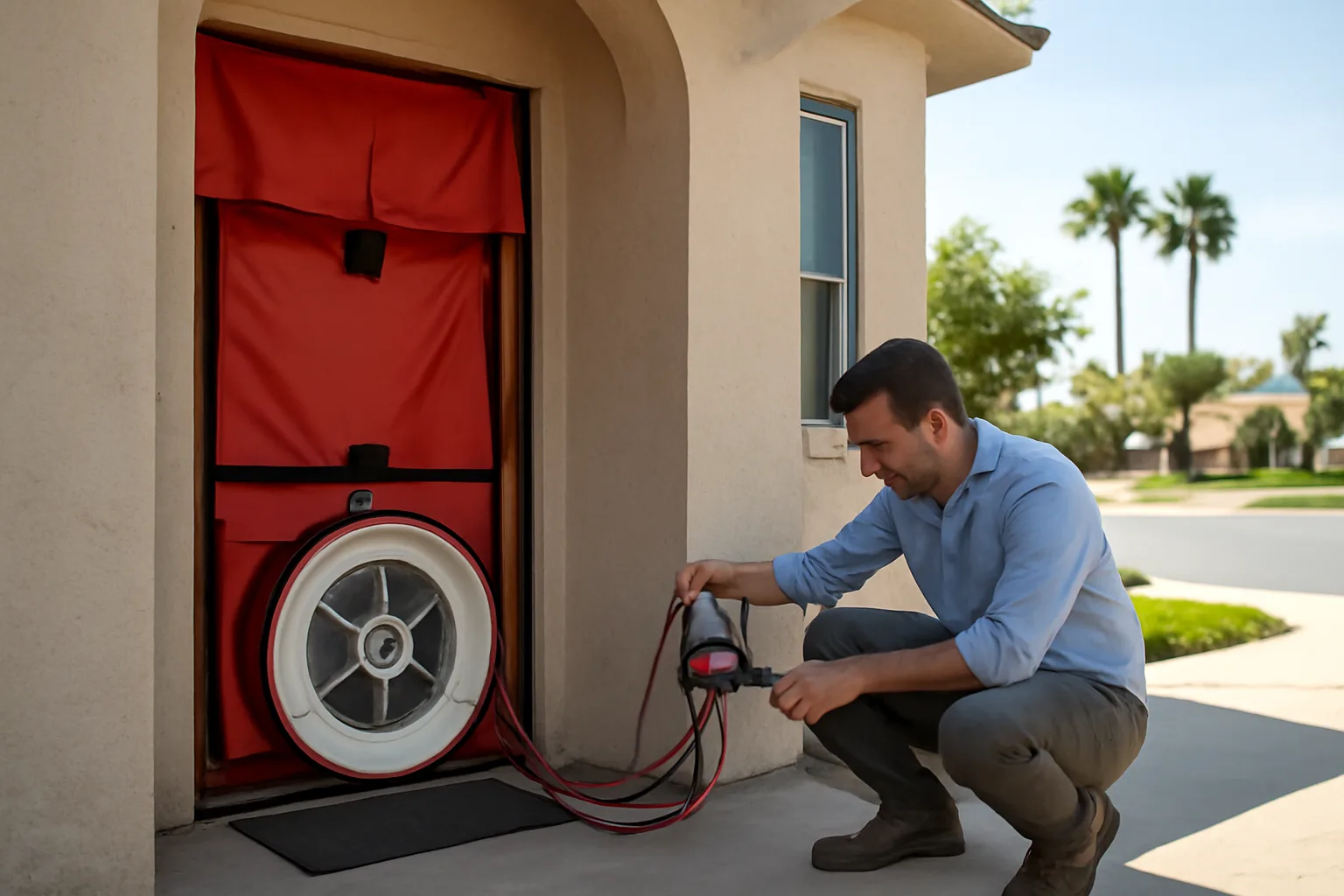
Blower door system. Required for whole-house air leakage testing, mandatory for all newly constructed low-rise residential buildings under the 2022 Title 24 standards. [1] Minneapolis Blower Door and Retrotec are the dominant brands. Both are accepted for California testing.
Duct blaster. Required for duct leakage testing, another mandatory measure in California new construction. Often sold as a kit bundled with the blower door.
Digital manometer. Measures pressure differentials during blower door and duct testing. Usually included with blower door kits.
Refrigerant charge and airflow verification tools. California-specific HVAC measures. These tests can be done by the HVAC contractor and verified by the rater, or the rater can perform them directly. Check the current Title 24 ACM (Alternative Calculation Method) reference manuals for protocol. [9]
Tape measure, IR thermometer, and moisture meter. Basic inspection tools you'll use constantly.
Laptop with approved software. EnergyPro or CBECC-Res, plus RESNET registry access.
Used equipment is fine if it's calibrated and within the manufacturer's service intervals. Calibration records matter. Your RQAD and Rating Provider may audit them.
Some California raters start without buying anything by working as subcontractors through a Rating Provider that owns the gear. That's a legitimate path for your first year, especially while you're still building a client base.
How does California Title 24 change the HERS rating process compared to other states?
In most states a HERS rating is mainly a voluntary score on the HERS index (lower is better) that a builder uses for marketing or loan programs. California still uses that framework. But Title 24 makes many field verifications legally required for building permit finalization, not optional. [1]
The practical differences are real.
Every new California low-rise residential building must meet specific duct leakage, whole-house air leakage, and HVAC performance standards, and those get verified by an accepted HERS rater rather than self-certified by the builder. [1]
The compliance documentation chain is more formal. The Certificate of Compliance, the Certificate of Installation, and the Certificate of Field Verification all flow through CEC-accepted software and land at the building department. A paperwork error can fail a final inspection.
The software modeling is heavier. CBECC-Res and EnergyPro make you input detailed building data and run the performance compliance path rather than fill in a checklist.
For raters coming from other states, this complexity is the adjustment. For people entering from California's construction industry, it often feels familiar, because contractors already work Title 24 on every project.
Curious how California compares to a lower-regulation state? The how to start HERS rater in Alaska guide covers a place where HERS ratings are almost entirely voluntary and the paperwork chain is much lighter.
How do you find a RESNET Rating Provider in California?
RESNET maintains a public directory of Rating Providers on its website. Filter by California and you'll find dozens of active providers, concentrated in Southern California, the Bay Area, and the Central Valley. [2]
When you evaluate providers, these questions matter most:
- Are they on CEC's accepted-provider list? (Confirm directly with CEC if the stakes are high.)
- Do they have active RQADs available to mentor you through your required field ratings?
- What does their rater compensation look like: salary, per-rating fee, or a split?
- Do they own equipment you can use while you build capital, or do you bring your own?
- What geographic area do they serve?
Some large California providers operate statewide. Others stay regional. If you're based in Sacramento and the provider's active work is all in San Diego, the mentored rating logistics get complicated fast.
Many new California raters find their provider through their training instructor, who often has direct relationships with local providers. That's not a guarantee of the best fit, but it's a reasonable starting point.
You can negotiate the terms of your rater agreement. Providers vary in how they split fees, who owns the client relationship, and whether you can rate for other providers at the same time. Read the agreement carefully before you sign.
What are the ongoing requirements after you become a HERS rater in California?
RESNET requires annual continuing education to keep your certification active. The specific hour requirement lives in RESNET Standard 310; confirm the current number directly with RESNET, because it has been adjusted in past standard revisions. [5]
Beyond RESNET's national requirements, California's Title 24 updates on roughly a two-year cycle. The 2022 standards (effective January 1, 2023) were a significant revision that tightened envelope requirements and expanded mandatory HVAC measures. [1] When a new cycle takes effect, your existing training may not fully cover the new protocols. CEC accepted providers usually push updated training to their affiliated raters, but confirm this with your provider.
Quality assurance sampling is ongoing. RESNET requires that a percentage of each rater's ratings be reviewed by the Rating Provider's quality assurance process. Your provider owns that process, but it touches your workflow, because some ratings will need additional documentation or a second look.
Let your RESNET certification lapse and you cannot legally submit ratings as a certified rater. Reinstatement is possible but involves fees and possibly extra continuing education. Don't let it lapse.
Errors and omissions insurance is not required by RESNET or CEC for individual raters. Some Rating Providers require it from the contractors they affiliate with. Check before you assume you're covered under the provider's policy.
HERSPath covers ongoing compliance in more detail. If you're also weighing how neighboring states handle annual requirements, the how to start HERS rater in Arizona article is a useful comparison.
Is becoming a HERS rater in California worth it financially?
Nobody has clean, audited income data on California HERS rater earnings. The closest public figures come from Bureau of Labor Statistics occupational data for "construction and building inspectors," which showed median annual wages in California around $76,000 to $85,000 in recent survey years. That category is broad and not specific to HERS raters. [10]
Here's what the structure of the work tells you. California's mandatory field verification requirements mean steady demand. New residential construction volume, cyclical as it is, generates a baseline of required HERS verifications that doesn't exist in voluntary-only states. In a strong Southern California year, an experienced rater affiliated with a large provider can complete dozens of verifications per week.
Per-verification fees typically run $150 to $400 for a standard residential duct and envelope verification, depending on complexity, geography, and who's setting the rate. [11] Volume drives income.
The equipment investment is real (see the cost section above). If you're buying your own gear and building your own client base, break-even takes time. If you're a salaried rater or a fixed-rate contractor for an established provider, the capital risk is lower.
The honest answer: California is one of the better states to build a HERS practice, because the regulatory requirement makes the market. It's also a higher-cost operating environment than most. Get your first year's volume projections from your Rating Provider before you assume the income covers your equipment costs quickly.
Frequently asked questions
Do you need a license for HERS rater in California?
California does not issue a state HERS rater license. The credential comes from RESNET, the national standards body. But to sign California Title 24 compliance certificates, you must also be affiliated with a CEC-accepted provider organization. Think of it as two layers: RESNET certification for your personal credential, plus your Rating Provider's CEC accepted-provider status for California-specific work.
How much does it cost to become a HERS rater in California?
Training alone runs $400 to $900 for an accredited course plus roughly $100 to $200 for the RESNET exam. Equipment is the larger cost: a blower door kit runs $3,000 to $5,500 new, and a duct blaster adds $1,500 to $3,000. Total startup costs if you're buying your own gear are typically $5,000 to $8,000 or more. Rating software subscriptions add $200 to $600 per year.
How long does it take to become a HERS rater in California?
Plan on two to six months from enrollment to your first independent rating. The training course takes three to five days. Exam scheduling adds a few weeks. The variable is your mentored field rating requirement: in high-volume California markets like LA or the Bay Area with an active RQAD, you can finish in four to six weeks. Part-time pursuit can stretch the process to four or five months.
What is a RESNET Rating Provider and why do I need one in California?
A Rating Provider is the RESNET-registered business that submits ratings to the national registry and handles quality assurance for its affiliated raters. You cannot submit HERS ratings without one. In California, the Rating Provider must also appear on CEC's accepted-provider list. Check that list before affiliating because an approved RESNET provider that isn't CEC-accepted cannot submit California Title 24 compliance certificates.
What is a Rater Quality Assurance Designee (RQAD) and do I need one?
An RQAD is a senior RESNET-certified professional authorized to mentor new rater trainees through their required field ratings. You cannot complete your certification without mentored ratings under an RQAD. Your Rating Provider typically arranges this. When choosing a Rating Provider in California, confirm they have active RQADs who operate in your geographic area, or your mentored rating process will stall.
Which software do California HERS raters use for Title 24 compliance?
The two main CEC-approved compliance tools are EnergyPro (by Energy Soft, a commercial product with annual licensing fees) and CBECC-Res (the CEC's public-domain residential compliance tool, available free). Most Rating Providers have a preferred tool. You'll likely encounter both. RESNET's national registry software is separate and handles the HERS index score submission; both systems are used on California projects.
Can I be a HERS rater in California without owning my own blower door?
Yes, at least initially. Some Rating Providers own equipment and make it available to affiliated raters, either at no cost or for a per-use fee deducted from your rating revenue. Some raters subcontract under a provider specifically to avoid upfront equipment costs during their first year. Long-term, owning your equipment gives you scheduling flexibility and better margins, but it's not a day-one requirement.
Does California Title 24 require HERS verification on all new homes?
California's 2022 Title 24 Part 6 standards require HERS field verification for mandatory measures including whole-house air leakage, duct leakage, and specific HVAC performance tests on all newly constructed low-rise residential buildings. Not every measure requires a HERS rater specifically, but many do. The Certificate of Field Verification must be signed by a CEC-accepted HERS rater and submitted before the building department issues final approval.
How often does California's energy code change and how does that affect my training?
California updates Title 24 on roughly a two-year cycle. The most recent major version took effect January 1, 2023. When a new code cycle takes effect, the field verification protocols and mandatory measures can change significantly. Your Rating Provider should provide updated training, but confirm this in your agreement. Training on a code cycle that expires shortly after your certification is essentially wasted.
Can a licensed contractor in California also work as a HERS rater?
Yes, and many do. A California contractor's license is not a substitute for RESNET certification or CEC accepted-provider affiliation, but there's no conflict between holding both. HVAC contractors and insulation contractors particularly benefit from having a HERS rater credential because they can self-verify their own work in some contexts, though RESNET and CEC have conflict-of-interest rules that limit when this is permitted. Review those rules before assuming you can rate your own installations.
Is there continuing education required to maintain HERS rater certification in California?
Yes. RESNET requires annual continuing education for active certification; confirm the current hour requirement with RESNET directly, as it has changed with standard revisions. California's code cycle updates add a practical layer: when Title 24 changes, you need to understand the new protocols to do the work correctly. Your Rating Provider typically facilitates this training, but it is your responsibility to stay current.
How do I find HERS rating work in California once I'm certified?
Most new raters find initial work through their Rating Provider, who has established builder and contractor relationships. Direct outreach to homebuilders, general contractors, and HVAC companies in your area is also effective. California's mandatory verification requirement means builders actively need raters; you are not selling a discretionary service. Networking through the California Building Industry Association and local green building councils can also generate leads.
What is the HERS index and does California use it?
The HERS index is a national score where 100 equals a home built to the 2006 IECC standard and lower is better. California uses the HERS index for voluntary programs like energy efficient mortgage qualification and green building certifications. For mandatory Title 24 compliance, California primarily uses its own performance compliance path rather than the HERS index score, though both may appear in the same rating documentation.
Sources
- California Energy Commission, 2022 Building Energy Efficiency Standards (Title 24 Part 6): California's 2022 Title 24 Part 6 standards took effect January 1, 2023 and require HERS field verification for mandatory measures including whole-house air leakage and duct leakage on new low-rise residential construction.
- RESNET, Residential Energy Services Network: RESNET maintains a public directory of registered Rating Providers; raters must be affiliated with a Rating Provider to submit ratings to the RESNET registry.
- California Energy Commission, Home Energy Rating System (HERS) Program: CEC administers the California HERS program, maintains the accepted-provider list, and requires raters to be affiliated with a CEC-accepted HERS provider organization to perform Title 24 field verifications.
- RESNET, Residential Energy Services Network: RESNET outlines the steps to become a certified HERS Rater including completing accredited training, passing the written exam, and completing mentored field ratings under an RQAD.
- ANSI/RESNET/ICC Standard 310, RESNET Standards: RESNET Standard 310 governs the national home energy rating standards including the mentored rating requirements for rater trainees and annual continuing education requirements for certified raters.
- The Energy Conservatory (Minneapolis Blower Door): Blower door systems from major manufacturers including Minneapolis (The Energy Conservatory) typically retail in the $3,000 to $5,500 range depending on configuration.
- U.S. Census Bureau, New Residential Construction: California consistently ranks among the top states for new residential construction permit volume, creating structural demand for mandatory HERS field verification services.
- California Energy Commission, Approved Compliance Software for Residential Buildings: CEC approves specific compliance software tools including EnergyPro and CBECC-Res for use in Title 24 residential compliance documentation.
- California Energy Commission, 2022 Residential ACM Reference Manual: The CEC ACM Reference Manual specifies the field verification protocols for refrigerant charge, airflow, and other HVAC measures required under Title 24 Part 6.
- U.S. Bureau of Labor Statistics, Occupational Employment and Wage Statistics, California: BLS Occupational Employment data for California shows median annual wages for construction and building inspectors in the $76,000 to $85,000 range in recent survey years, the closest available public proxy for HERS rater earnings.
- RESNET, Residential Energy Services Network: Per-verification fees for residential HERS field verifications are set by Rating Providers and individual raters; typical ranges for standard residential verifications in California run $150 to $400 depending on complexity and geography.