Last updated 2026-08-19
TL;DR
Arizona does not issue a HERS rater occupational license. Official HERS ratings require RESNET certification and a RESNET-accredited Rating Provider. Build or install work can trigger an Arizona ROC contractor license. Budget training, exams, provider dues, gear, insurance, and city tax licenses. Timing is weeks to several months. Confirm fees and steps with RESNET, your provider, and the ROC.
Do you need a license for HERS rater in Arizona?
Arizona issues no state occupational license titled HERS rater. You do not file with a rater board in Phoenix, sit a state skills exam, or hang a laminated state card that authorizes Home Energy Ratings. Official HERS ratings here run through RESNET certification and a RESNET-accredited Rating Provider.
That is the whole state-license answer. Short on purpose.
People still hear the word license and reach for the Arizona Registrar of Contractors. Fair instinct if you came out of trades. Contracting is licensed when you construct, alter, improve, or repair structures for compensation. A.R.S. § 32-1151 says it is "unlawful for a person to engage in the business of" acting as a contractor "without having the required license issued under this chapter." [2] A rating visit is not that act.
Read the contractor definition in A.R.S. § 32-1101 before you sell anything that looks like a repair. [1] The exemption list in A.R.S. § 32-1121 is the other statute I would actually open. [3] If you only test, model, and file, you are usually outside ROC work. If you offer to recaulk, recut ducts, or swap equipment after a fail, you stepped into a different statute.
Cities can still want tax paper. That is not a skill license. It is a privilege tax license so you can legally invoice. Confirm with the city where you hang your shingle and with the Arizona Department of Revenue joint tax process. [11]
When a builder asks if you are licensed in Arizona, ask which paper they mean. RESNET and ROC are not substitutes. For the adjacent board question, use the HERS rater board in Arizona guide and then call ROC if your scope creeps toward construction.
What actually lets you issue a HERS rating in Arizona?
You issue an official HERS rating after RESNET certifies you as a HERS Rater and you operate under a RESNET-accredited Rating Provider. Training, the national rater test, probationary field ratings, software access, and quality assurance all sit in that private standards system. Confirm the live checklist on RESNET's rater pages, because providers add their own fieldwork gates. [8][9]
Arizona does not swap in a state exam.
RESNET states that "a home built to the specifications of the HERS Reference Home (based on the 2006 International Energy Conservation Code) scores a HERS Index of 100, while a net zero energy home scores a HERS Index of 0." [9] Builders in the Phoenix metro and Tucson chase scores well under 100 for programs and federal credits. The state did not assign those anchors.
You will sign a provider agreement. You will take QA. I would pick the provider that already rates production homes in the Valley or southern Arizona over the cheapest national classroom. Mentorship homes are the slow part.
BPI credentials help you talk building science. They do not replace RESNET if the deliverable is a HERS rating. ENERGY STAR partnership is a separate EPA track. You can hold a HERS credential and still not be the rater of record on a given ENERGY STAR house. [10]
The week-by-week version lives in how to start HERS rater in Arizona. Use that after you accept there is no state card to wait on.
How much does HERS rater cost in Arizona?
There is no Arizona HERS rater license fee, because there is no Arizona HERS rater license. Your real spend is training, the RESNET exam path, Rating Provider onboarding and dues, software access, a blower door, a duct leakage tester, insurance, mileage, and local tax registration. Nobody publishes a clean Arizona-only price sheet. Confirm every dollar with the provider and the vendor before you budget.
Training class tuitions move. I have seen enough catalogs to say you should expect a serious class plus testing, not a free weekend. I will not invent a current tuition. Pull it from a RESNET-accredited training provider and ask what the price includes (exam voucher, software intro, field days). [8]
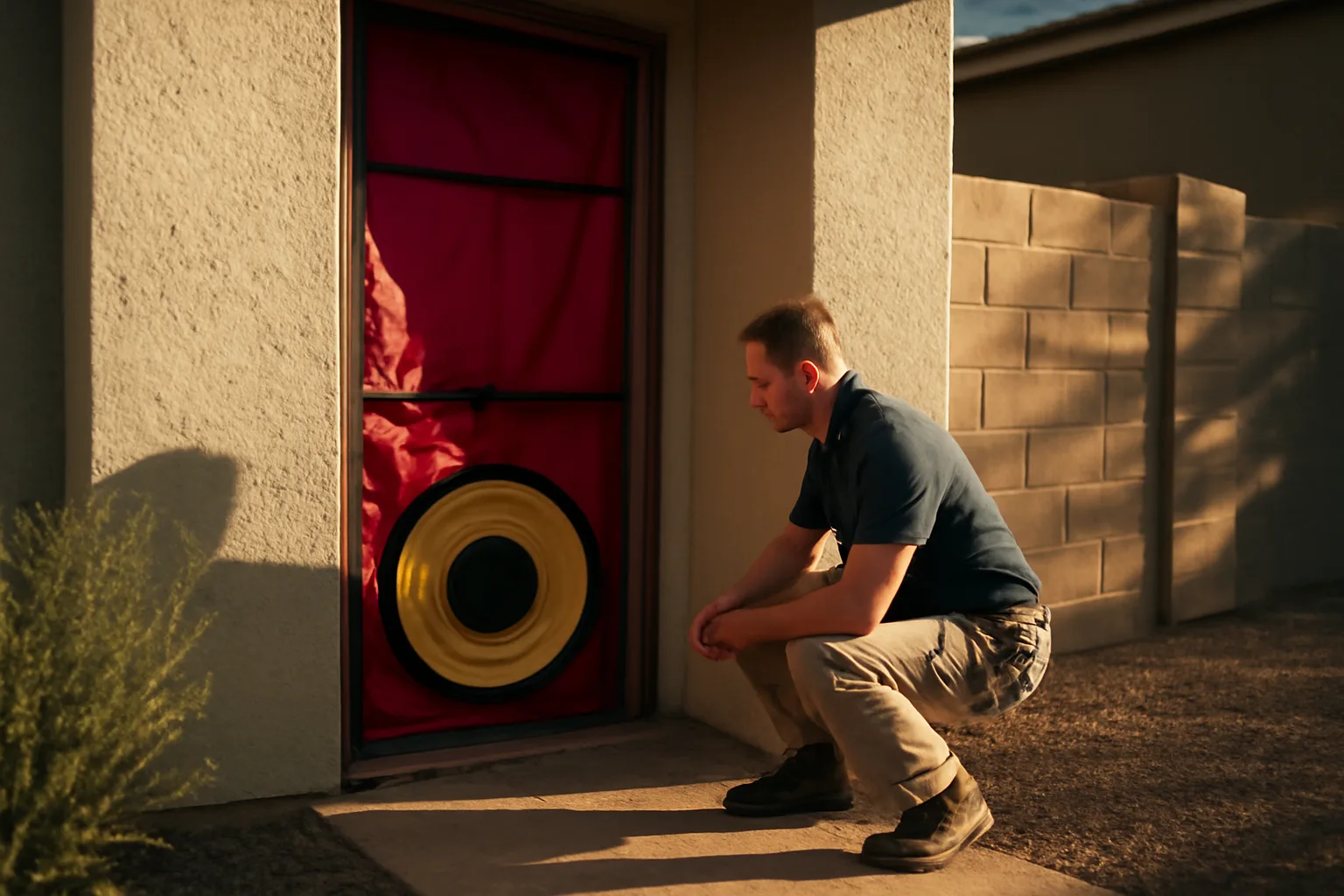
Gear is the line item that surprises desk people. A production rater in this climate owns a blower door and a duct tester. New kits run into the several-thousand-dollar range once you add manometers, rings, and cases. Used kits exist. Confirm current quotes. Renting forever is a bad plan if you want volume.
If you want a paper map of the RESNET steps plus a blower-door shopping list without pretending it is a license, HERSPath sells a $179 one-time RESNET + Blower-Door Kit at /start. That is optional. The rating path works without it.
Insurance is not optional in my book. General liability plus errors and omissions is what I would carry before I put a fan in a $700,000 spec house. Premiums vary by claims history and revenue. Confirm with a broker who has actually written rater or inspector policies.
Arizona business paper is cheap next to the fan. File the entity with the Arizona Corporation Commission if you want an LLC, then get on the joint tax application so you can collect and remit transaction privilege tax where it applies. [11][12] Confirm the current Commission filing amount on the forms page. I would not quote a fee from memory.
Mileage is a silent cost. The Phoenix metro is wide. Flagstaff is a different climate day. Price jobs with drive time or you will work for gas.
Skip the truck wrap in month one. Skip the thermal camera until a builder is paying for it. Put money into the provider relationship and the fan you will use four days a week.
How long does HERS rater take in Arizona?
Plan on weeks to several months, not a long weekend. Classroom time is the short piece. Mentored ratings, provider onboarding, and waiting on houses you are allowed to touch are the long piece. Nobody should give you a guaranteed Arizona completion date. Confirm the calendar with your training provider and the Rating Provider that will actually sign your work. [8]
I would not quit a job on a promise of "two weeks to certified."
The national test is scheduled around class cohorts. Fail it and you add a retake cycle. Pass it and you still need probationary ratings under someone who has access to Arizona (or nearby) homes. Production builders do not pause a drywall schedule so a new rater can practice. That is why provider choice sets your clock more than the syllabus does.
Local tax licenses and an LLC filing can happen in parallel. Those are days, not months, if your paperwork is clean. Confirm processing with the Corporation Commission and the Department of Revenue. Do not treat any of this as an approval of your rater skill. [11][12]
If you also chase an ROC contractor license because you plan to install, add that timeline on top. ROC applications, experience affidavits, and exams are a separate queue. Confirm current steps on the ROC license classification pages. [4] I would start the RESNET path first unless your business plan is already a contracting company that happens to rate.
Season matters. Summer in the low desert is brutal for afternoon blower-door work, and builders still pour slabs. Winter in Flagstaff is a different envelope problem. Your first independent ratings may wait on the first builder who trusts you. That part is not on a statute clock.
Renewal is later. When you get there, use the HERS rater renewal in Arizona checklist rather than inventing a CE plan.
Does the Arizona ROC license apply to energy raters?
Only if your offer looks like contracting. The Arizona Registrar of Contractors licenses contractors by classification. Its public classification list is the document I would read before I printed invoices that include labor on the building. [4] Rating, modeling, and writing a HERS file are professional services. Opening walls and replacing a package unit is construction.
A.R.S. Title 32, Chapter 10 is the statute set. A.R.S. § 32-1101 defines who counts as a contractor. [1] A.R.S. § 32-1151 is the prohibition on acting as one without the card. [2] A.R.S. § 32-1121 lists exemptions. [3] The ROC rules in Arizona Administrative Code Title 4, Chapter 9 sit under those statutes. [15]
I would not buy an ROC license "just in case." It costs time, bond or cash alternatives, and exam prep, and it puts you in a compliance box you may not need. I would get it the week your scope includes install, remodel, or insulation contracting.
Dual-hat shops exist. Some raters also hold residential remodeling or specialty licenses. That can be a clean business. It can also be a conflict if you rate your own install. Ask your Rating Provider how they handle independence before you sell both on the same address.
If a city inspector asks for your "license" on a testing day, carry RESNET proof and your privilege tax license. Offer the ROC number only if you have one and the work is construction. Mixing those papers in a hallway conversation is how rumors start.
Which energy codes do Arizona HERS raters work under?
Arizona does not run rater work off a single statewide residential energy code the way some states do. Local governments adopt building and energy codes on their own calendars. Confirm the current statewide tracking note on the U.S. DOE Building Energy Codes Program Arizona status page, then confirm the adopted edition with the city or county that will inspect the house. [5]
Phoenix publishes its adopted construction codes through Planning and Development. Read that city page before you tell a North Phoenix superintendent which IECC year applies. [13] Tucson, Mesa, Scottsdale, unincorporated Maricopa County, and the smaller towns will not match each other on the same Tuesday. That is normal here.
A HERS rating is not the same thing as an IECC duct or envelope test, even when the same person runs the fan. IECC compliance testing can be a code path. A HERS Index is a RESNET score against the Reference Home. Builders buy both, and they confuse the two. Your job is to say which deliverable is on the proposal.
I would keep a one-page cheat sheet per jurisdiction you actually work: adopted IECC year, whether testing is mandatory or an alternative, who can witness, and whether the city wants a HERS certificate, a sampling report, or nothing. Update it when a city council adopts a new I-code cycle. The ICC publishes the IECC on a three-year cycle. Cities lag.
Do not promise a builder that "Arizona requires a HERS rating on every new house." That is false as a statewide rule. Some builders use HERS for ENERGY STAR, federal credits, utility programs, or marketing. Some jurisdictions want testing. Confirm the job, not the myth. [5][13]
What other Arizona paper do you need besides RESNET?
Think tax and entity paper, not a rater license. If you bill in Arizona, you likely need a transaction privilege tax license. The Department of Revenue joint tax application (the JT-1 process) is the usual entry point, and many cities piggyback on it. Confirm whether your services are taxable in the cities you invoice. [11] Rating work and contracting work are not taxed the same way in every town. I am not your tax advisor. Ask a CPA who does Arizona TPT.
If you want limited liability, file articles with the Arizona Corporation Commission. Confirm the current form and fee on the Commission filings page. [12] An LLC does not make you a rater. It just holds the business.
Insurance certificates will be the first PDF a production builder's risk desk requests. Have general liability. Add E&O. If you hire help, get workers' compensation advice from someone licensed to give it.
A local business license or home-occupation clearance can show up if you run dispatch from a house in a picky town. That is zoning, not RESNET.
You do not need a professional engineer stamp to produce a standard HERS rating. If a plan reviewer asks for a PE on a weird mixed-use box, that is a different scope. Do not fake it.
Keep your Rating Provider agreement, your RESNET credential proof, and your QA correspondence in one folder. When someone says "send your Arizona license," you send that packet plus TPT and, if relevant, ROC. For a side-by-side of states that actually run their own rater cards, the HERS rater license in California path is the contrast most people mean.
What equipment do you need to rate homes in Arizona?
You need a calibrated blower door and a duct leakage tester to do real production work in this climate. Infiltration and duct leakage are not academic here. A July attic in the low desert will humble a leaky system. I would not take a production builder seriously if I only owned a clipboard.
Buy or lease gear with current calibration. Confirm intervals with the manufacturer and with your Rating Provider's QA rules. [8] A manometer that drifted is how you fail a review and lose a subdivision.
An infrared camera is useful and easy to fetishize. I would wait until a builder pays for diagnostic add-ons. Same for a lot of moisture toys. A good smoke puffer and the discipline to walk the band joist will get you further in year one.
Software is usually whatever your Rating Provider supports. Do not buy three seats "to compare." Confirm the approved list with the provider that will stamp your files.
Vehicles take a beating. You need space for a fan, door cover, umbrellas, water, and a change of shirt. That is operations, not branding.
Safety is equipment too. Attic work in June is a heat-illness problem. I would schedule envelope tests at dawn in the low desert and treat Flagstaff snow like a real access issue, not a vibe.
How do ENERGY STAR and the 45L credit show up in Arizona work?
They show up as reasons builders pay for a HERS file. EPA ENERGY STAR certified new homes use HERS ratings as part of the national program path. Partnership, checklists, and the HERS Index target procedure are EPA paper, not Arizona paper. Confirm the current program requirements with ENERGY STAR before you bid a labeled community. [10]
The federal Energy Efficient Home Credit under 26 U.S.C. § 45L is the other magnet. The statute sets a $2,500 credit for qualifying ENERGY STAR dwelling units and a $5,000 credit for qualifying DOE Zero Energy Ready Homes, with separate multifamily figures. [6] Those numbers are in the Code. Confirm current IRS guidance and acquisition-date rules before you let a builder put them in a pro forma.
Your rating file is evidence. It is not the tax return. Eligible contractors claim the credit. You do not invent eligibility on the hood of a truck.
Utility rebates in APS, SRP, TEP, and rural co-op territory change. I will not quote a rebate that may be closed. Ask the utility's current new-construction program manager and get the requirement in writing.
If a builder only wants a 45L packet, say so in the contract. If they also want ENERGY STAR, that is more site visits and more checklists. Price the extra trips. Arizona sprawl will punish a bundled quote that assumed one stop.
Who oversees HERS raters if Arizona has no rater board?
RESNET and your Rating Provider oversee the rating. Quality assurance, file reviews, and credential status live there. [8][9] Arizona does not run a parallel rater board that can pull a state HERS card, because it never issued one.
The ROC can still act if you perform unlicensed contracting. That is a construction enforcement path, not a rating-standards path. [2][4] A city building official can reject a test report that does not match the adopted code. That is an inspections path.
DOE tracks energy code adoption. It does not police your manometer. [5]
If you want a comparison to states with thicker state overlays, read the HERS rater license in Colorado and HERS rater license in Alabama guides after this one. California is the bigger conceptual split because Title 24 HERS is its own machine. Use how to start HERS rater in California only if you will actually work that market.
The person who can idle you next month is the provider QA manager, not a clerk at the Capitol. Treat their file flags like a board action even though they are not one.
What is a waste of money in your first Arizona year?
A state license course that claims to get you an Arizona HERS card. There is no such card. Walk away.
An ROC application before you have a single install to sell. Paper for a classification you will not use is a hobby.
A downtown office. You will live in attics and model homes.
Every add-on sensor on day one. Own the blower door and the duct tester. Rent exotic toys until a paid scope needs them.
National marketing retainers. Your first fifty ratings will come from superintendents and a provider's overflow, not from a slogan.
Three software subscriptions. One approved tool, used well, beats a dashboard you never open.
I would spend instead on calibration, E&O, water and heat safety, and a provider that already has Arizona production volume. I would also budget unpaid mentorship days. Those days are the real tuition.
If a sales call promises a quota of homes or a guaranteed week-to-work date, treat it as advertising. This guide will not invent a quota or a processing time for you.
Where should you confirm the rules before you spend?
Confirm RESNET training, testing, and provider rules on RESNET's rater pages. [8] Confirm ENERGY STAR partnership rules on the ENERGY STAR certified homes pages if you will label houses. [10] Confirm 45L amounts and who may claim them in 26 U.S.C. § 45L. [6]
Confirm whether your offer is contracting under A.R.S. §§ 32-1101, 32-1121, and 32-1151, and under the ROC classification list. [1][2][3][4] Confirm TPT on the Department of Revenue licensing process. [11] Confirm entity filings on the Corporation Commission forms page. [12] Confirm the adopted energy code on DOE's Arizona status page and on the city code page for the job. [5][13]
I would screenshot fee pages the day I pay them. Fees move.
This article is a reference, not legal advice and not a promise that any board will accept your file. HERSPath is not a law firm and not a service company. If you still want the $179 one-time RESNET + Blower-Door Kit as a checklist, it is at /start. The statutes and the RESNET path work if you never click that.
Then go get a provider that has houses.
Frequently asked questions
Do you need a license for HERS rater in Arizona?
No state occupational license exists for HERS raters in Arizona. Official HERS ratings require RESNET certification and a RESNET-accredited Rating Provider. An Arizona ROC contractor license enters the picture only if you also construct, alter, or install. Confirm scope with the ROC and with your Rating Provider before you sell repair work.
How much does HERS rater cost in Arizona?
There is no state HERS license fee. Budget training and testing through a RESNET-accredited provider, provider dues, software, a blower door and duct tester, insurance, mileage, and TPT registration. Class and gear prices move. Confirm current tuition with the provider and current kit quotes with vendors. I would not start production work while renting a fan long term.
How long does HERS rater take in Arizona?
Usually weeks to several months. Class time is short. Mentored ratings and provider onboarding set the clock because you need real houses. There is no state processing queue and no honest guarantee. Confirm the cohort calendar with your trainer and the fieldwork backlog with the Rating Provider that will QA you.
Can I produce official HERS ratings in Arizona with only BPI?
No. BPI credentials show building-science training. An official HERS rating still needs RESNET rater certification and a Rating Provider. You can hold both. If a builder asked for a HERS Index, BPI alone will not print that score. Confirm the current RESNET path on RESNET's rater materials before you bid that deliverable.
Does Arizona require a HERS rating on every new home?
No statewide rule requires a HERS rating on every new dwelling. Local governments adopt energy codes, and some jobs need testing or above-code labels. Builders also buy ratings for ENERGY STAR, 45L, lenders, or marketing. Confirm the adopted code with the city and the contract deliverable with the builder. Do not sell a mandate that is not in the ordinance.
Is RESNET the Arizona HERS rater board?
RESNET is the national standards body for HERS, not an Arizona state board. Your Rating Provider handles QA and can idle your rating privileges. The ROC can enforce unlicensed contracting if you install or remodel. DOE and cities handle energy codes. There is no Capitol office that issues a HERS rater card.
Do I need a Phoenix or Tucson business license to rate homes?
You often need transaction privilege tax licensing to invoice in Arizona, and cities may add their own tax or business licenses. That paper is not a rater skill license. Use the Department of Revenue joint tax process and confirm city rules where you are based and where you bill. Ask a CPA about taxability of rating services.
Can a California HERS credential replace RESNET in Arizona?
Not as a drop-in. California Title 24 HERS is a different machine from RESNET HERS. Arizona jobs that ask for a HERS Index mean the RESNET score unless the contract says otherwise. If you already rate in California, you still work the RESNET path for official RESNET ratings here. Confirm both programs before you cross state lines on a bid.
Do I need a PE stamp on an Arizona HERS rating?
A standard HERS rating does not require an Arizona professional engineer stamp. You need RESNET certification and provider QA. A plan reviewer can still ask for an engineer on an unusual structure or a separate mechanical design. Do not stamp what you are not licensed to stamp. Keep the rating scope in the proposal so nobody assumes design services.
Should I get an ROC license in my first year?
Only if you will contract construction or install work. Rating alone is not why I would stand in the ROC line. The classification list, A.R.S. § 32-1101, and A.R.S. § 32-1121 are the documents to read. If your business plan is test-and-report, skip the contractor application until a real install scope appears.
Is a duct blaster required for HERS rater work in Arizona?
For production HERS work in this climate, treat a duct leakage tester as required equipment even if a one-off rating might borrow one. Duct leakage drives comfort complaints and scores in the low desert. Your Rating Provider's protocols and the program you are scoring (HERS, ENERGY STAR, code testing) set the test. Confirm the protocol before the site visit.
Who claims the 45L credit, the rater or the builder?
Eligible contractors claim the Energy Efficient Home Credit under 26 U.S.C. § 45L. The rater produces the rating evidence. You do not put the credit on your personal return just because you ran the fan. Point the builder to the IRS Energy Efficient Home Credit page and current counsel. Confirm acquisition-date rules. Do not promise a dollar outcome.
Sources
- Arizona Legislature, A.R.S. § 32-1101: Defines contractor for Arizona Registrar of Contractors purposes under Title 32, Chapter 10.
- Arizona Legislature, A.R.S. § 32-1151: Makes it unlawful to engage in the business of a contractor without the required Arizona license.
- Arizona Legislature, A.R.S. § 32-1121: Lists statutory exemptions from Arizona contractor licensing.
- Arizona Registrar of Contractors, License Classifications: Publishes the contractor license classifications ROC uses to decide which construction work needs a license.
- U.S. DOE Building Energy Codes Program, Arizona status: Tracks Arizona energy code adoption status, including the local-government role in code adoption.
- Cornell LII, 26 U.S.C. § 45L: Sets the Energy Efficient Home Credit applicable amounts, including $2,500 and $5,000 single-family figures and multifamily base amounts.
- RESNET, Become a HERS Rater: Describes RESNET's path to become a HERS Rater, including training and working with accredited providers.
- RESNET, HERS Index: States the HERS Index anchors: a HERS Reference Home scores 100 and a net zero energy home scores 0.
- Arizona Department of Revenue, Transaction Privilege Tax Licensing: Explains Arizona transaction privilege tax licensing and the joint tax application many cities piggyback on.
- Arizona Corporation Commission, Corporations Division filings: Handles Arizona entity filings, including LLC articles and current fees on the forms page.
- Arizona Secretary of State, A.A.C. Title 4 Chapter 9 (ROC rules): Official ROC administrative rules that sit under A.R.S. Title 32, Chapter 10.