Last updated 2026-08-20
TL;DR
Florida issues no HERS rater occupational license. You need RESNET HERS Rater certification and a RESNET Accredited Rating Provider. Ratings follow ANSI/RESNET/ICC 301 so they support Florida's Energy Rating Index path, ENERGY STAR, or 45L files. Training plus field evaluations usually run weeks to a few months. Confirm current fees with RESNET. Other Florida licenses apply only if you also inspect or contract.
Do you need a license for HERS rater in Florida?
Florida issues no standalone occupational license titled HERS rater. The paper path that lets you sell an official Home Energy Rating here is RESNET HERS Rater certification plus affiliation with a RESNET Accredited Rating Provider.[1][3]
That is the whole punchline. It is also why a search for a HERS rater Florida license often dies on a DBPR checklist that never lists this job. Contractors, home inspectors, and several trades carry Florida cards. Energy raters do not.
What Florida does write into statute is the building code those ratings support. Florida Statute 553.73 directs the Florida Building Commission to adopt the Florida Building Code, including energy provisions.[5] The Energy Conservation volume then gives builders a residential Energy Rating Index path. That path is why a rater shows up on a lot of new Florida houses.
Want to sell a visual home inspection for pay too? Stop and treat that as a second job. A HERS model is not a statutory home inspection. Mixing the labels on a proposal is a sloppy way to start.
You may still need a local business tax receipt. Chapter 205, Florida Statutes, lets counties and cities levy that tax.[13] Confirm with the tax collector in the county where you open the shop. I would finish the RESNET path before I printed cards. Calling yourself a licensed Florida HERS rater, when no such license exists, just confuses builders and code staff.
What credential actually lets you issue a HERS rating in Florida?
A RESNET certified HERS Rater, working under a RESNET Accredited Rating Provider, is the credential that produces a HERS Index other people will take.[1][3] Builders, plans examiners, ENERGY STAR reviewers, and tax-credit file keepers want a rating that traces to ANSI/RESNET/ICC 301 and to a provider that quality-assures the file.
RESNET states, "The HERS Index Score of a standard new home is 100."[2] A net-zero energy home scores 0. Each point below 100 is roughly a 1 percent gain versus that reference home, which is why RESNET's own example of a 70 is a home 30 percent better than the standard new home.[2]
The exam alone is not enough. You still need the field evaluation sequence MINHERS describes, then a provider that will put its name on your ratings.[3] Confirm the live candidate steps on RESNET's become-a-rater page. Those steps have been edited over the years. A stale blog post will mislead you.[1]
Software has to be accredited too. A clever spreadsheet is not a HERS rating. Planning to work more than one state? The RESNET card travels. The code wrapper does not. Read HERS rater license in Alabama or HERS rater license in California before you assume Florida's ERI table matches theirs.
How much does HERS rater cost in Florida?
There is no official Florida price to become a HERS rater. Costs stack from accredited training, testing, Rating Provider dues, software, insurance, local business tax, and test equipment. Confirm every live fee with RESNET, the training provider, and the Rating Provider. I will not invent a current tuition number here because those quotes move.
Training is the first real check. National accredited rater courses run in the thousands, not the price of a weekend webinar. Get the quote in writing and ask what field evaluations are included. Testing and RESNET registration sit on top of tuition. Confirm those on the current RESNET pages, not on a 2019 forum thread.[1]
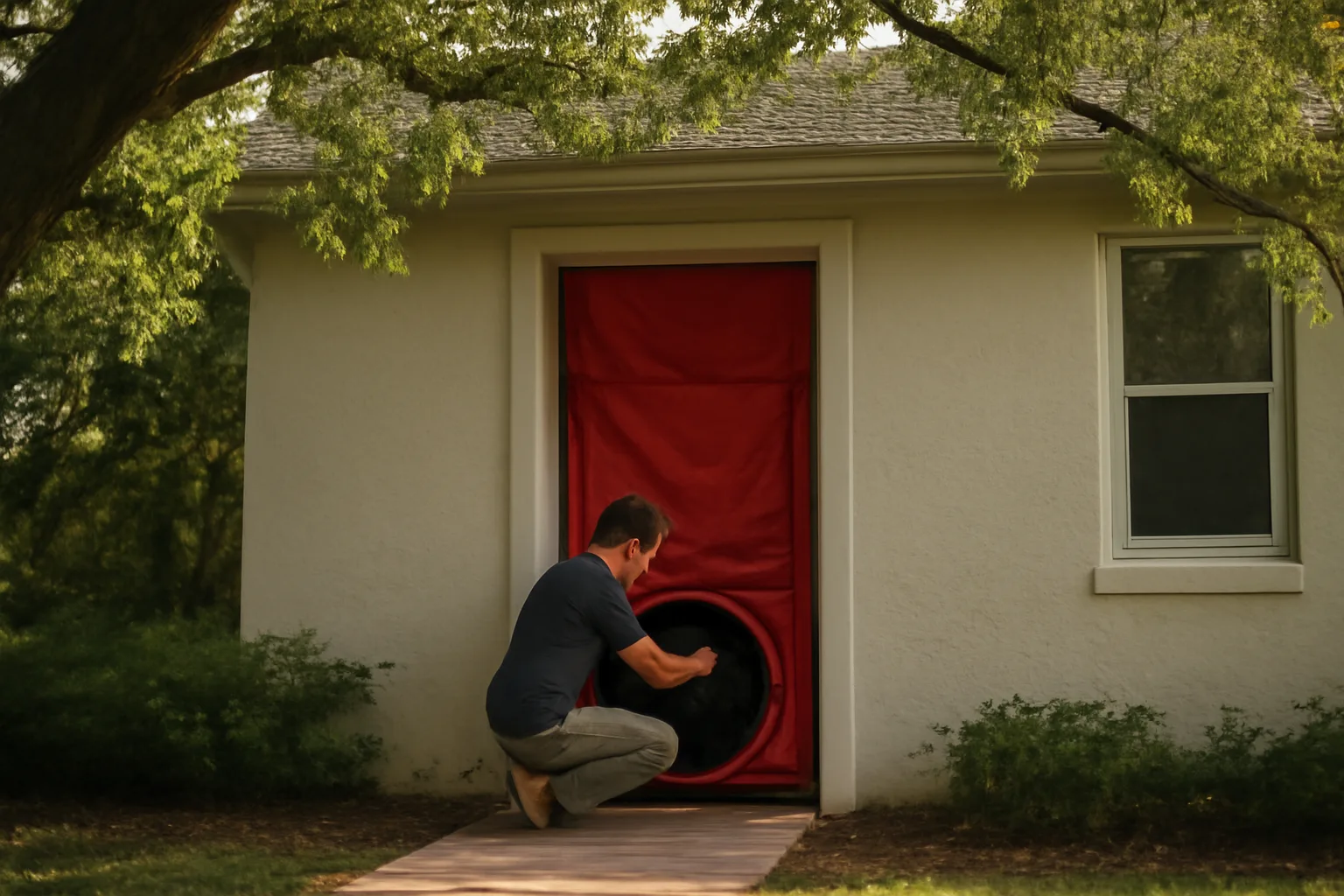
Equipment is where new raters get surprised. A calibrated blower door and a duct leakage rig are capital purchases. Used kits exist. Uncalibrated bargain fans waste your first year when a provider asks for calibration papers. Software is another recurring bill. EnergyGauge USA, from the Florida Solar Energy Center at the University of Central Florida, is common on Florida jobs.[12] Other RESNET-accredited tools exist. Buy what your provider actually supports.
Insurance is not optional if you want production-builder work. General liability is the baseline. Errors and omissions is harder to place and still worth asking about. Local business tax under Chapter 205 is small next to fans and insurance.[13]
If you only need study orientation and a simple blower-door learning kit, HERSPath sells a $179 one-time RESNET + Blower-Door Kit. That does not replace accredited training or a Rating Provider. It is a study aid, not a credential.
My take: pay for a current accredited course and calibrated fans first. A wrapped truck can wait. Fancy photo gear can wait. If a sales page bundles "your Florida HERS license" into the tuition, they are selling a phrase Florida does not issue.
How long does HERS rater take in Florida?
Plan on weeks to a few months, not a long weekend. Classroom or online rater training often runs several days to about two weeks depending on the provider. You still have field evaluations, probationary ratings, and Rating Provider onboarding after the lectures end. RESNET sets those competency steps in MINHERS.[1][3]
Nobody should promise you a finish date. Class seats fill. Builders cancel walk-throughs. Providers have their own QA queues. Confirm the current sequence with RESNET and the provider you pick. Processing time is not a Florida DBPR clock because Florida is not issuing this card.
Already run duct tests or install insulation? You move faster. Never set a blower door? Add practice time in real houses. I would not quit a paycheck on a marketing line that says you will be rating closings next month.
Florida weather shapes the calendar too. Midday summer testing in an unconditioned shell is miserable and slower. Occupied existing homes are harder to schedule than vacant production units. Coastal metro counties have more doors. The rural Panhandle is a different book of business. Your timeline is really "when can I get into homes," not "how long is the PDF course."
What does Florida energy code actually require from a HERS rater?
Florida's residential energy rules live in the Energy Conservation volume of the Florida Building Code, adopted by the commission under s. 553.73, Florida Statutes.[5] DOE tracks Florida as a statewide residential energy-code state, so you are not inventing a local patchwork from scratch, though counties still enforce and may carry amendments.[11]
The 8th Edition (2023) Florida Building Code, Energy Conservation, Chapter 4 is the document to open. It includes the Energy Rating Index compliance alternative that people mean when they say a HERS-style score is used for a permit. Read Section R406 in the published code, not a conference slide.[4]
The ERI method in this code family is built on ANSI/RESNET/ICC 301. That is why a RESNET rater, RESNET-accredited software, and a provider file are the practical paper path for an ERI submittal.[3][4] Prescriptive and simulated performance paths still exist. Not every Florida house needs a HERS rating to get a certificate of occupancy.
The rater's job shows up when a builder wants the ERI path, ENERGY STAR, or a federal credit that needs a rating file.[8][10] Code editions change. Confirm the edition your county has adopted, and any local amendments, before you tell a superintendent that a given Index "passes." I have watched raters embarrass themselves by quoting last cycle's table.
Is a Florida home inspector license the same as HERS rater?
No. They are different legal things, and the paperwork does not substitute. Florida licenses home inspectors under Part XV of Chapter 468. Section 468.8314 states: "A person may not provide, or offer to provide, home inspection services for compensation unless the person is licensed in accordance with this part."[6]
Home inspection services are defined in s. 468.8311 as a limited visual examination of readily accessible installed systems and components. That is not a RESNET energy model and not a HERS Index.[7]
You can be a HERS rater and never hold a Florida home inspector license if you do not sell statutory home inspections. You can be a licensed home inspector and still be unable to issue a HERS Index until RESNET certifies you and a provider backs the file.[1][6]
Some people hold both because a buyer asks for a combo visit. That is a business choice. It is also more continuing education, more insurance, and more complaint risk. I would not get the inspector license just to look official on a HERS bid.
| Role | Who credentials you | What you may sell | Main Florida paper |
|---|---|---|---|
| HERS rater | RESNET plus a Rating Provider | Energy ratings, HERS Index, ERI support | MINHERS and FBC Energy Conservation R406 |
| Home inspector | DBPR | Home inspection services for pay | ss. 468.8311 and 468.8314 |
| Contractor | CILB / DBPR | Construction contracting | s. 489.113 |
What training and tests does RESNET require for Florida work?
RESNET requires rater candidates to complete training through a RESNET Accredited Training Provider, pass the national rater assessment, and finish the field evaluation and probationary work that MINHERS describes. Then you work under a Rating Provider that reviews ratings.[1][3]
The written test is national. It is not a Florida DBPR exam. There is no Florida HERS law exam hiding behind the RESNET test. Field work is the real filter. You will grade insulation, measure envelope and duct leakage, and enter the house in accredited software until the work meets the standard. Providers fail sloppy files. That is the point.
Continuing education is a RESNET and provider issue, not a Florida HERS board issue, because Florida does not run a HERS board. Confirm current CE hours with RESNET. Do not rely on a number you memorized years ago. Requirements get revised.
If a sales page says their weekend class includes your Florida license, walk away. They are mixing a national certification with a state card that does not exist. For a side-by-side of how another sun-belt state handles the same gap, see HERS rater license in Arizona.
What equipment and software do Florida HERS raters use?
You need a blower door, a duct leakage tester, pressure gauges you trust, and a repeatable way to document insulation grade, window specs, and mechanical systems. Calibration records matter the first time a provider or a builder's QA person asks. "The fan worked last spring" is not a record.
Software has to produce a rating that meets RESNET rules and, for code work, the ERI rules in the Florida Energy Conservation volume.[3][4] EnergyGauge USA is widely used on Florida jobs because FSEC at UCF has sat inside this state's energy-code world for a long time.[12] Other RESNET-accredited tools are fine if your Rating Provider will accept the file. Ask before you buy an annual seat.
I would spend more on fans and gauges than on a logo. A rater with a weak door fan and a pretty website is still a weak rater. Your phone can take photos. You still need the fan. Coastal salt air is rough on cases and gaskets. Budget for that, more than the day-one kit.
Can you work as a HERS rater without a contractor license?
Yes, if all you do is test, collect the rating data, model the home, and deliver a rating report. Contracting is a different statute. Chapter 489 restricts who may engage in the business of contracting without being certified or registered.[14]
Do not pull permits. Do not install a handful of baffles "while you are there" unless you hold the right contractor license. Do not let a builder treat your rating fee as a construction line that implies you built the house. Rating and contracting blur fast on a messy jobsite.
Add weatherization or HVAC changeouts later? Stop and get the CILB answer in writing. That is no longer a HERS-only shop. Out-of-state raters run into the same line. RESNET is national, so the certification travels. Your Rating Provider, your insurance, and the local building department still have a say. Confirm with the authority having jurisdiction in that county before you drive six hours for one final.
People coming from how to start HERS rater in California sometimes expect a thicker state overlay than Florida actually has. The hard line here is still Chapter 489, not a special rater card.
How do ENERGY STAR and the 45L credit change Florida HERS work?
A lot of paid HERS rater Florida work is not code-minimum ERI. It is ENERGY STAR Certified Homes, DOE Zero Energy Ready Home, and the federal 45L credit. EPA's ENERGY STAR residential new construction pages say certified homes must be verified by a qualified third party. Raters fill a large part of that role under the program rules.[10]
The IRS page for the New Energy Efficient Home Credit (Section 45L) is the document to read before you promise a builder a dollar amount.[8] The statute is 26 U.S.C. § 45L.[9] The IRS currently describes 45L as $2,500 for a qualifying ENERGY STAR home and $5,000 for a qualifying Zero Energy Ready Home, with extra eligibility rules in the statute. Confirm the live figures and wage rules on the IRS page. I am not your tax advisor.[8][9]
Florida volume builders care about this. Cannot support 45L documentation? You will lose those accounts to a rater who can. The rating file, the ENERGY STAR checklist, and the closing calendar all have to line up. That is operations, not a badge on LinkedIn.
What should you confirm with RESNET and Florida agencies first?
Confirm five things in writing before you spend serious money.
One, that your trainer is a current RESNET Accredited Training Provider.[1] Two, which Rating Provider will take you and what they charge. Three, the current Florida Building Code edition and the R406 table your county uses.[4][5] Four, whether your business model trips Chapter 468 home inspector rules or Chapter 489 contracting rules.[6][14] Five, local business tax and the insurance minimums the builders in your market actually put in a vendor packet.[13]
Florida has no HERS rater board. People still say "the board" out of habit. For this job the confirmable bodies are RESNET, your Rating Provider, the Florida Building Commission for the code, DBPR only if you also hold a licensed trade, and the county building department. No approval timeline is honest to promise.
HERSPath is an independent publisher, not a law firm and not a rating company. If you want the study kit after you have read the RESNET pages, start at /start. Confirm live fees and forms on the primary sites, not on this article.
How does a HERS rater Florida startup compare with other states?
Same national RESNET spine. Different code wrappers. Alabama, Arizona, Arkansas, California, and Colorado also do not replace RESNET with a unique state HERS occupational license the way they license electricians. The differences are energy-code editions, utility programs, and how hard the state leans on ERI. Compare how to start HERS rater in Alabama, HERS rater license in Colorado, and HERS rater license in Arkansas if you work a multi-state book.
Florida's twist is a true statewide Florida Building Code, a long FSEC and EnergyGauge habit, humidity-driven envelope details, and a huge production-home market along I-4 and in South Florida.[11][12] I would learn this state's ERI table and moisture control details before I copied a desert-state field checklist from how to start HERS rater in Arizona.
Want only one state? Stay in Florida until your provider QA notes look boring. Multi-state work is a second business, not a free extra.
What does first-year operations look like for a Florida HERS rater?
First year is relationship work. Production builders want a rater who shows up at rough-in and final, writes clean files, and does not hold up a closing. Custom homes are slower and often pay better per door. You will spend more time in unfinished garages than in an office.
Paper you will actually keep: rating files, calibration certificates, provider QA responses, ENERGY STAR or ERI certificates, invoices, and your local business tax receipt.[10][13] Cash flow is lumpy. A storm year can freeze starts. A rate hike can too. Keep a reserve.
Do not buy a second vehicle wrap before you have a provider and three builders who return your calls. That is a waste of money. Existing-home ratings for listings happen, but Florida's bigger HERS market is still new construction plus program verification. Price the drive time. A final in Naples from a shop in Jacksonville is not a favor. It is a lost day.
I would rather under-buy marketing and over-buy calibration than the reverse. The builders who last already have a rater. You win the next subdivision by being on time and boring on QA, not by promising a score you have not modeled yet.
Frequently asked questions
Do you need a license for HERS rater in Florida?
No standalone Florida occupational license exists for this job. You need RESNET HERS Rater certification and a RESNET Accredited Rating Provider to issue ratings people will accept. Local business tax still applies. A DBPR home inspector or contractor license is only required if you also sell those licensed services.
How much does HERS rater cost in Florida?
There is no official state fee. Budget for accredited RESNET training, testing, Rating Provider dues, software, insurance, local business tax, and calibrated blower-door and duct-testing gear. Training is usually a multi-thousand-dollar class, not a cheap webinar. Confirm every live price with RESNET and the provider. Do not treat an old blog number as current.
How long does HERS rater take in Florida?
Most people should plan on weeks to a few months. The class itself may last several days to about two weeks, then field evaluations and provider onboarding still have to happen. Florida does not publish a processing clock because it does not issue this license. Confirm the current RESNET candidate sequence. Nobody can honestly guarantee a finish date.
Does Florida accept ratings from an out-of-state RESNET rater?
RESNET certification is national, so the credential travels. The rating still has to meet ANSI/RESNET/ICC 301, your Rating Provider's QA, and the Florida Building Code edition that county is enforcing. Insurance and a local business tax receipt can still apply. Ask the building department before you schedule a one-off final across the state line.
Do I need EnergyGauge if I already use REM/Rate or Ekotrope?
Not automatically. You need RESNET-accredited software your Rating Provider will accept and that can support the Florida ERI path when you are doing code work. EnergyGauge is common in Florida because FSEC built it, but it is not the only legal tool. Ask the provider before you buy another annual seat.
Is duct testing the same as a HERS rating in Florida?
No. A duct leakage test is one input. A HERS rating is a whole-home energy model plus field inspection that produces an Index under RESNET rules. Florida jobs often need both. Passing a duct number does not, by itself, create a HERS certificate or an ERI compliance report.
Can a HERS rater pull a building permit in Florida?
Not by holding RESNET certification. Permits sit with licensed contractors and the local building department under Chapter 489 and the Florida Building Code. If you only rate, you should not pull permits or install work. Crossing that line is how raters accidentally become unlicensed contractors.
How often do I renew RESNET rater status?
Renewal and continuing education are RESNET and Rating Provider rules, not a Florida HERS statute. The hour counts have changed before. Confirm the current cycle, fees, and CE list on RESNET's site and with your provider. Do not copy a number from an old syllabus.
Does a HERS rating replace a Florida energy code inspection?
No. An ERI rating can support one compliance path in the Energy Conservation volume. The building department still enforces the code. Inspectors can still fail work that does not match the permitted documents. Treat the rating as evidence for a path, not as a substitute for the AHJ.
Can I rate a home I built or a home I own?
Usually you should not. RESNET MINHERS conflict-of-interest rules limit rating work where you have a financial interest beyond the rating fee. Builders who self-rate through a captive shop create QA problems and program risk. Read the current MINHERS text and ask your Rating Provider before you model your own spec house.
What insurance do Florida builders usually ask a rater to carry?
There is no single state minimum for HERS raters because Florida does not license the occupation. Production builders often ask for general liability at a limit they set in the vendor packet. Some also ask about errors and omissions. Confirm the figure in the contract. Do not invent a number and hope it matches their risk desk.
Is there a Florida HERS rater board I apply to?
No. Confirm credentials with RESNET and your Rating Provider. Confirm the energy code with the Florida Building Commission and the county building department. Use DBPR only if you also hold a home inspector or contractor license. Anyone selling an application to a Florida HERS board is selling a process that does not exist.
Do I need a Florida home inspector license to do blower-door tests?
Not if the visit is part of a HERS rating and you are not offering statutory home inspection services for pay. Blower-door testing by itself is not the Chapter 468 home inspection. If your contract language starts promising a full visual inspection of systems and components, you have crossed into licensed inspector territory.
Sources
- RESNET, Become a HERS Rater: HERS Raters are credentialed through RESNET accredited training, testing, field evaluation, and Rating Provider affiliation, not through a Florida occupational license.
- RESNET, What is the HERS Index: RESNET publishes the HERS Index with a standard new home at 100 and a net-zero energy home at 0, with each point below 100 roughly a 1 percent efficiency gain.
- RESNET, MINHERS standards: The Mortgage Industry National Home Energy Rating Standards set the national rules for rater training, testing, quality assurance, and accredited ratings.
- ICC, 8th Edition (2023) Florida Building Code, Energy Conservation, Chapter 4: Florida's residential Energy Conservation code, Chapter 4, includes the Energy Rating Index compliance alternative used on HERS-style submittals.
- Florida Senate, s. 553.73, Florida Statutes (2024): Florida Statute 553.73 authorizes the Florida Building Commission to adopt the Florida Building Code, including energy provisions.
- Florida Senate, s. 468.8314, Florida Statutes (2024): Florida law requires a license before a person may provide home inspection services for compensation.
- Florida Senate, s. 468.8311, Florida Statutes (2024): Home inspection services are defined as a limited visual examination of readily accessible installed systems and components, which is not a HERS energy rating.
- U.S. Code, 26 U.S.C. § 45L: Section 45L of the Internal Revenue Code is the statute for the New Energy Efficient Home Credit, including the $2,500 and $5,000 credit tiers as amended.
- U.S. DOE Building Energy Codes Program, Florida state status: DOE tracks Florida as a statewide residential energy-code state under the Florida Building Code.
- University of Central Florida FSEC, EnergyGauge: EnergyGauge software from the Florida Solar Energy Center at UCF is a Florida-built tool used to model residential energy performance.
- Florida Senate, s. 205.032, Florida Statutes (2024): Florida counties are authorized to levy a local business tax, which can apply to a rater's shop even without a state HERS license.
- Florida Senate, s. 489.113, Florida Statutes (2024): Florida restricts who may engage in the business of contracting without being certified or registered, which is separate from RESNET rater certification.