Last updated 2026-08-19
TL;DR
Connecticut does not issue a HERS rater license. To produce a HERS Index you need RESNET HERS Rater certification through an accredited trainer and Rating Provider. A DCP home improvement registration can also apply if you sell remodeling work. Plan on a training block plus mentored field ratings. That often spans weeks to several months. Confirm current fees and any DCP filing with the provider and the board. Nobody can promise an approval date.
Do you need a license for HERS rater in Connecticut?
No. Connecticut does not issue a state occupational license called HERS rater. The paper that lets you produce a RESNET HERS Index is RESNET HERS Rater certification, completed through a RESNET-accredited trainer and a Rating Provider.[1] If you only test houses and write rating files, you will not find a DCP category with that name.
That still is not a blank check.
Connecticut does license home inspectors. It also registers home improvement contractors.[5][6][7] Those statutes are easy to mash together when you are new. A HERS rating is a modeled energy score under ANSI/RESNET/ICC 301. It is not a Chapter 400f home inspection. It is not automatically home improvement under Chapter 400.[3][6][13]
I treat the RESNET path as required if the product is a HERS rating. I treat DCP as a scope question. If you sell insulation, window replacement, or air sealing as a contractor, read the DCP home improvement page and talk to a Connecticut attorney before you print the card.[7] This site is a reference, not a law firm.
People arriving from Alabama or Arizona keep asking for a state rater number. Connecticut does not hand you one.
| Paper | Who issues it | Needed to produce a HERS Index? |
|---|---|---|
| RESNET HERS Rater certification | RESNET, through a Rating Provider | Yes |
| Home inspector license | Connecticut DCP | No |
| Home improvement contractor registration | Connecticut DCP | Only if you sell home improvement work |
A HERS rater Connecticut builders will actually call has a live RESNET ID, a provider that will QA the file, and a written scope that does not pretend to be a code official.
How does Connecticut energy code use a HERS or ERI score?
Connecticut's 2022 State Building Code adopts the 2021 International Codes, including the International Energy Conservation Code, plus state amendments.[4] A new house can comply with prescriptive tables, simulated performance, or an Energy Rating Index path. ERI math sits in the same family as a HERS Index. Both rest on ANSI/RESNET/ICC 301.[3] Confirm the adopted edition and the current Connecticut amendments on the Office of the State Building Inspector code page before you tell a builder the house passes.[4]
RESNET states the scale in one clean line. "A home built to the specifications of the HERS Reference Home (based on the 2006 International Energy Conservation Code) scores a HERS Index of 100, while a net zero energy home scores a HERS Index of 0."[2]
The unamended 2021 IECC Table R406.5 sets a maximum ERI of 55 in Climate Zone 5.[12] Every Connecticut county is Climate Zone 5A in the 2021 IECC county table.[12] Amendments can change the target. Read the adopted book, not a national slide deck.
A HERS file can also support ENERGY STAR certified new homes. That program has its own rater rules on top of the index.[8] Code ERI and ENERGY STAR share testers. They do not share one checklist.
I would not quote an ERI number from memory on a permit set. Pull the current Connecticut text. Local building officials vary in how they want the report labeled. Ask the official on that job, in writing.
What credential lets you issue a HERS rating in Connecticut?
You issue a HERS rating when you are a certified HERS Rater in good standing with RESNET and you work under a RESNET-accredited Rating Provider that quality-assures the file.[1][14] No Connecticut card replaces that stack.
RESNET's published path is training with an accredited training provider, the national HERS Rater test, probationary ratings, and affiliation with a provider.[1] Field tests have to meet ANSI/RESNET/ICC 380. The rating itself follows Standard 301 and the MINHERS quality rules.[3][14]
If a school sells a weekend certificate with no provider, no QA, and no RESNET ID, skip it. Builders here want a rating that can land in the national registry. A classroom printout does not.
Raters who already hold the credential in another state usually keep it when they move. The certification is national. What you rebuild is the provider relationship, insurance, and your feel for local housing. The California HERS rater license path is a different stack because California layers Title 24 onto the work. Connecticut does not run a Title 24 analog for this.
Software has to implement the standard your provider accepts. Do not buy a random modeling tool because a Facebook group likes the color scheme. Ask the provider first.
How much does HERS rater cost in Connecticut?
There is no official Connecticut HERS rater fee, because the state does not sell that license. Your spend is training, the RESNET exam path, Rating Provider dues, per-file QA, software, insurance, and test equipment. Those line items move by vendor and by year. Confirm every number with the trainer, the provider, and (if you register) DCP before you pay.[1][7]
I will not invent a tuition. National rater courses come as multi-day packages. Some include the exam sitting. Some do not. Provider annual dues are a second bill. QA on each rating is a third. If a sales page gives you one bundled figure and will not break it out, that is a bad sign.
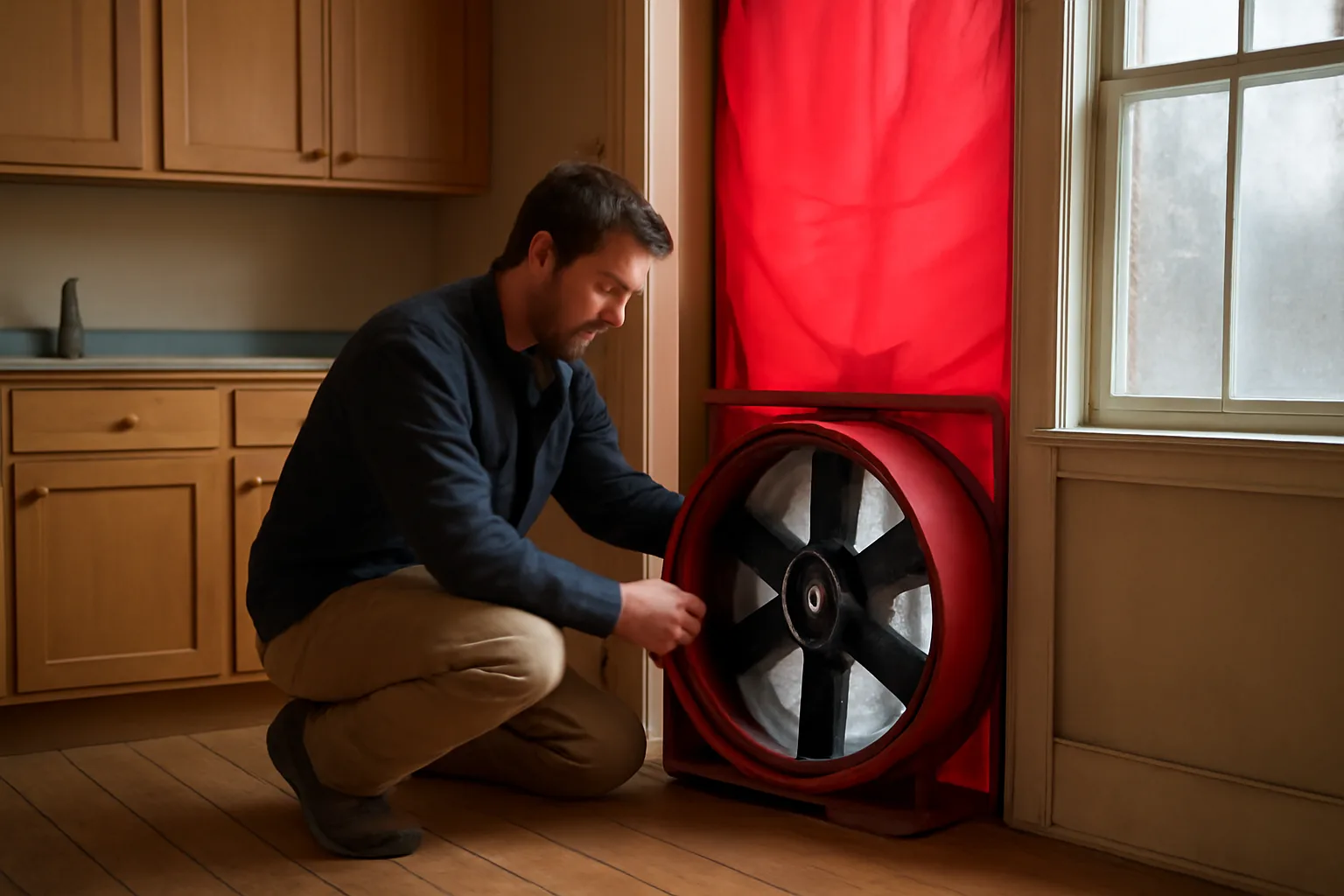
Equipment is the line people underestimate. A calibrated blower door, manometer, duct leakage rig, and a decent infrared camera cost more than the class. Confirm the exact kit your Rating Provider will accept. A bargain fan that fails calibration is scrap.
If you also register as a home improvement contractor, DCP charges its own application and renewal fees. Those amounts live on the department's current materials and they change. Read the DCP page. Do not copy a fee from a two-year-old forum thread.[7]
I'd spend first on a provider that already has Connecticut files and a mentor who will show up in February. Fancy branding can wait. The $179 one-time RESNET + Blower-Door Kit from HERSPath is a cheap way to get a paper checklist and a starter kit on the table. It does not replace a provider-approved door fan or RESNET certification. Confirm gear specs before you buy a second of anything.
Nobody has good public data on average first-year rater overhead in this state. The closest honest method is a spreadsheet with every vendor quote dated, plus a line for winter retests you will eat.
How long does HERS rater take in Connecticut?
There is no statutory Connecticut processing clock for a HERS rater, because there is no state license to process. Calendar time is the training block, exam scheduling, and how fast you finish probationary ratings under your provider.[1] I have watched people wrap classroom work in a week and then sit two months waiting on mentor ride-alongs. New-home volume here is lumpy. January can be dead. A dry September can be stacked.
RESNET does not hand the state a deadline, and I will not either. Confirm the current training calendar and the number of required probationary ratings with the provider you pick.[1] If a school promises you will be fully licensed in Connecticut by a date certain, they are selling a myth.
If you also file a DCP home improvement registration, that is a separate queue with its own instructions. Do not plan a grand opening around an assumed DCP turnaround. Read what the department says right now.[7]
People who already rate in Colorado can move faster because the RESNET ID already exists. They still need a provider that will cover Connecticut work, plus time on local housing stock.
Build the calendar backward from houses, not from the class brochure. If your mentor cannot name a Connecticut site you will test in the next month, your clock is already slipping.
Do you need a Connecticut home inspector license to be a HERS rater?
No. A Connecticut home inspector license is not what authorizes a HERS rating. Chapter 400f is a separate practice act for people who conduct home inspections.[6] A HERS rating is an energy modeling and testing protocol under RESNET standards.[1][3]
Do not buy the inspector license as a shortcut. The inspector education and exam do not put you in the RESNET registry. If you want to sell a buyer's inspection and a HERS rating, that is two credentials and two scopes. Keep the reports from bleeding into each other.
Inspectors who casually drop a HERS score on a walk-through without a real rating file create liability. Raters who casually write repair lists as if they were hired as inspectors do the same thing in reverse.
If your only product is ratings for builders, ENERGY STAR, or the ERI path, I would stay on the RESNET side and leave Chapter 400f alone unless you actually intend to inspect houses for buyers.[6] Confirm the current inspector statute and DCP rules if your marketing starts to sound like an inspection.
When does DCP home improvement registration apply to a HERS rater?
Chapter 400 says you cannot hold yourself out as a home improvement contractor or salesperson without a certificate of registration from the commissioner.[5] The statute is blunt. "No person shall hold himself or herself out to be a contractor or salesperson without first obtaining a certificate of registration from the commissioner as provided in this chapter."[5]
Home improvement in Conn. Gen. Stat. § 20-419 includes repair, replacement, remodeling, alteration, conversion, modernization, improvement, and rehabilitation of a private residence, among other listed work.[13] Writing an energy rating is not on that list in so many words. Selling and installing insulation, replacing windows, or running a weatherization crew is exactly the kind of work that list is built for.
I am not your lawyer. If the website says we air seal and insulate, you are in DCP territory until a competent Connecticut attorney says otherwise. If the website says we test and rate homes to RESNET standards, you are in a different box. Do not let a marketing person blur that line.
Registration details and current forms live on the DCP home improvement contractor page.[7] Confirm fees and any insurance exhibits there. Other states run this split differently. The Arkansas HERS rater license writeup is another RESNET-first path with a separate contractor overlay.
I'd rather lose a small install upsell than get tagged for unregistered home improvement. Ratings pay. Consent orders do not.
What training and exams does a HERS rater need in Connecticut?
Connecticut does not write a HERS rater curriculum. RESNET does. Complete rater training with a RESNET-accredited training provider, pass the national HERS Rater test, finish the mentored ratings your provider requires, and work under that provider's quality assurance.[1][14]
Class time mixes envelope science, Standard 301, software, and field tests. I like at least one in-person field day. Connecticut housing is leaky in ways a Sun Belt tract home is not. A 1920s triple-decker will teach you more than another sample file.
The exam is national. Studying from old quiz dumps is a waste. Read the standards. Run the software on two ugly existing homes, more than the tutorial.
Probationary ratings are where calendars die. You need houses, a mentor, and weather you can work in. Ask how many probationary files the provider wants and whether they have Connecticut mentors before you pay tuition.[1]
Continuing education is part of staying in good standing on the RESNET side. Confirm the current hour requirement with RESNET and your provider. I would not budget zero for CE, and I would not assume a Connecticut code class automatically counts unless the provider says it does.
Pick the provider before you pick the cheapest Zoom class. A bargain course with no local mentor is how people stall out after the test.
What equipment does a HERS rater need in Connecticut?
You need a blower door, a calibrated manometer, duct testing gear if you will test ducts, thermometers, and a reliable way to capture geometry. An infrared camera is not always mandatory for a minimum rating. I still want one on a New England shell in January.
Providers set equipment lists and calibration intervals. ANSI/RESNET/ICC 380 is the measurement standard your field tests have to meet.[3] A fan that cannot hold calibration will get ratings bounced in QA.
Buy used only if you can see a fresh calibration sheet. I would not cheap out on the manometer. Software is a subscription. Your provider will tell you which packages they accept.
Connecticut basements, balloon framing, and attached townhouses will humble a rater who only trained on a slab ranch. Practice on ugly houses. Price a second set of door-fan panels if you will work a lot of odd openings. Confirm that purchase with the provider too.
I would rather own one honest, in-cal kit than a truck full of almost-right toys. Failed tests cost more than the upgrade you skipped.
Do ENERGY STAR and a Rating Provider matter in Connecticut?
Yes. A Rating Provider is the firm that holds the RESNET accreditation, reviews your files, and transmits ratings. You do not freelance a HERS Index into the void.[1][14] QA is the unglamorous part. Expect file reviews, occasional field shadowing, and corrections you will not enjoy.
ENERGY STAR certified new homes need raters who follow current EPA program rules, more than a code ERI.[8] If a Connecticut builder wants the ENERGY STAR label, you need those credentials and checklists on top of the HERS rating. Read the current EPA rater page. Program versions change.
DOE also publishes consumer material on home energy assessments and on Home Energy Score. That material is useful for clients. It is not your rating standard.[9][10] Do not mix Home Energy Score with a HERS Index. They are different scales. I have seen sales decks treat them as synonyms. That is sloppy.
Pick a provider with reviewers who have seen Climate Zone 5A files and Connecticut basements. A shop that only knows desert slabs will slow you down on foundations and heating systems common here.
If you later add how to start a HERS rater path in California to your territory, you will rebuild this stack under Title 24. Do not assume one provider covers every state the same way.
What does the first year look like for a HERS rater in Connecticut?
First-year work here clusters around new single-family, some multifamily, ENERGY STAR, and code ERI. Existing-home ratings happen. They are a harder sell unless a program, a lender, or a gut rehab is paying.
Utility conservation work in Connecticut sits under the conservation and load management structure DEEP oversees.[11] Program names, rebates, and rater participation rules change with each plan cycle. Confirm the current program manual with the utilities before you quote a builder a rebate you cannot deliver.
Insurance is not optional in my book. General liability plus professional liability is what I would carry before a logo goes on a truck. Ask your provider what they require. Then buy more than a joke minimum.
You will need a business entity, a bookkeeping habit, and a written scope that says what a rating is and is not. Put in writing that you are not the code official and not the home inspector.
Winter testing is miserable and necessary. Door fans in 15 F air, snow against the sill, oil boilers in tight utility rooms. Dress for it. Follow your provider's combustion-safety protocol when the house has atmospherically vented appliances.
Mileage is a real cost. Fairfield County traffic can erase a second rating. Price the drive. I would rather do two houses in Tolland than one hero trip that dies on I-95.
Can you use an out-of-state HERS rater credential in Connecticut?
Yes, because RESNET certification is national.[1] If you already rate in Alaska or you followed how to start in Arizona, your rater ID does not expire at the state line. What changes is the energy code you score against, the climate zone, the typical HVAC, and any local program checklists.
You still need a Rating Provider that will QA Connecticut files. You still need the 2022 Connecticut State Building Code if you are selling an ERI compliance rating.[4] You still need to stay out of DCP trouble if you start offering install work.[5]
I would spend a week on housing stock, not on a new license class. Walk a 1910 two-family in New Haven and a 2019 code house in Tolland. The software fields are the same. The mistakes are local.
Multistate raters fail when they paste a Florida duct strategy onto a Connecticut basement. Don't do that. Confirm infiltration assumptions, foundation types, and heating fuel mixes with people who already rate here.
What would you do first to become a HERS rater in Connecticut?
If I were starting a HERS rater practice in Connecticut this year, I would pick the Rating Provider before I picked a class. I would ask for two Connecticut mentors and how many probationary ratings they actually finished with new people in the last year. If they cannot answer, I would call the next shop.
Then I would sit the training and the exam.[1] I would not print business cards until I had a RESNET ID and a signed provider agreement.
I would read the 2022 Connecticut State Building Code energy provisions and the current amendments, not a national summary.[4] I would read Chapter 400 and Chapter 400f so I know what I am not.[5][6] I would only file a DCP home improvement registration if the offer includes contractor work.[7]
I would buy one good blower door system with a current calibration, not three half kits. I would price jobs with winter retests in mind. I would ignore anyone selling a Connecticut HERS license number. That product does not exist.
For a simple paperwork checklist you can start from, see /start. HERSPath is an independent publisher, not a law firm and not a rating company. Confirm fees, forms, and timelines with RESNET, your provider, DCP, and the Office of the State Building Inspector.
Frequently asked questions
Do you need a license for HERS rater in Connecticut?
No. Connecticut does not issue a HERS rater license. You need RESNET HERS Rater certification through an accredited trainer and a Rating Provider if you want to produce a HERS Index. A DCP home improvement registration is a separate question that depends on the work you sell. Confirm mixed scopes with DCP. There is no state rater card to hang on the wall.
How much does HERS rater cost in Connecticut?
There is no state fee for a HERS rater license, because that license does not exist. Budget for training, the RESNET exam path, provider dues, QA, software, insurance, and calibrated test gear. Those vendor prices change. Confirm every line with the trainer, the Rating Provider, and DCP if you also register as a contractor. I would not trust a single bundled quote that will not itemize.
How long does HERS rater take in Connecticut?
There is no official state processing time. Classroom training can be about a week. Mentored field ratings often add weeks to several months, depending on houses and mentor availability. Nobody can promise an approval date. Confirm the current training calendar and probationary rating count with your Rating Provider before you quit a day job or print a launch date.
Is RESNET certification enough to rate ENERGY STAR homes in Connecticut?
Not by itself. ENERGY STAR certified new homes need a rater following current EPA program rules and checklists, on top of a RESNET HERS rating. Program versions change. Read the current ENERGY STAR rater and verifier page and confirm with your Rating Provider before you sell the label to a builder.
Do I need a Connecticut home inspector license to be a HERS rater?
No. Chapter 400f covers home inspectors. A HERS rating is a RESNET energy modeling and testing protocol. The inspector license does not put you in the RESNET registry. Buy it only if you actually intend to conduct home inspections. Keep inspection reports and rating files on separate scopes if you hold both.
Does BPI certification replace a HERS rater credential?
No. BPI is a different credential family, useful for weatherization and some audit work. It does not authorize a RESNET HERS Index. If the deliverable is a HERS rating, you still need RESNET HERS Rater certification and a Rating Provider. Some people hold both. I would not treat BPI as a shortcut around RESNET.
Can I transfer my HERS rater credential from another state?
The RESNET ID is national, so you do not sit a Connecticut rater license exam. You still need a Rating Provider that will QA Connecticut files, plus fluency in the 2022 Connecticut State Building Code if you sell ERI compliance. Local housing stock and HVAC norms are the real transfer work. Confirm provider coverage before you move a pipeline of jobs.
What climate zone is Connecticut for HERS and IECC?
Every Connecticut county is Climate Zone 5A in the 2021 IECC county table. The unamended 2021 IECC Table R406.5 sets a maximum ERI of 55 in Zone 5. Connecticut amendments can change the target you must hit on a permit. Confirm the adopted code text on the Office of the State Building Inspector page before you quote a pass/fail number.
Who quality-assures my Connecticut HERS ratings?
Your RESNET-accredited Rating Provider. They review files, may shadow field work, and transmit ratings under MINHERS rules. You do not self-certify a HERS Index. Ask any provider how they handle Connecticut basements and Zone 5A models before you sign. Weak QA is how ratings bounce after the builder already promised a score.
Do I need DCP home improvement registration to test a house?
Testing and writing a RESNET rating is not the same as selling home improvement. Chapter 400 registration applies when you hold yourself out as a contractor or salesperson for listed home improvement work. If you also install insulation or remodel, confirm registration with DCP. If you only rate, stay inside that written scope. This is not legal advice.
Where do I confirm the current Connecticut energy code edition?
Use the Office of the State Building Inspector Connecticut State Building Code page at the Department of Administrative Services. The 2022 Connecticut State Building Code is built on the 2021 International Codes, with state amendments. Do not rely on a national blog for the ERI target. Pull the adopted text for the town and the permit date you are rating.
Is a HERS Index the same as DOE Home Energy Score?
No. A HERS Index of 100 is the 2006 IECC reference home and 0 is net zero, per RESNET. DOE Home Energy Score is a separate 1 to 10 scale. Clients mix them up. Your report should name the scale you used. Do not paste a Home Energy Score into a HERS file or the reverse.
What software can I use for a Connecticut HERS rating?
Only a package your Rating Provider accepts that implements ANSI/RESNET/ICC 301. Confirm the approved list before you subscribe. A cheap tool that cannot produce a registry-ready file is a wasted year of logins. Ask about Connecticut climate files, foundation types, and how QA wants the upload formatted.
Are there continuing education requirements for a HERS rater in Connecticut?
Connecticut does not set a HERS rater CE hour, because it does not license the trade. RESNET and your Rating Provider do set ongoing education and quality rules. Confirm the current hour count and accepted courses with them. A Connecticut code update class may or may not count. Ask before you pay.
Sources
- RESNET, HERS Raters: HERS Rater certification is earned through RESNET-accredited training, the national rater test, probationary ratings, and work under a Rating Provider.
- RESNET, HERS Index: A home built to the 2006 IECC HERS Reference Home scores 100 and a net zero energy home scores 0 on the HERS Index.
- RESNET, ANSI/RESNET Standards: ANSI/RESNET/ICC 301 governs HERS rating calculations and ANSI/RESNET/ICC 380 governs envelope and duct leakage measurement.
- Connecticut DCP, License Services: DCP publishes the current home improvement contractor and salesperson registration materials and fees.
- EPA ENERGY STAR, Residential New Construction: ENERGY STAR certified new homes require credentialed raters and verifiers working under current EPA program rules.
- Connecticut DEEP, Energy: Connecticut DEEP oversees the state's energy efficiency and conservation and load management framework that utilities implement.
- ICC, 2021 IECC Chapter 4 Residential Energy Efficiency (Table R406.5): Unamended 2021 IECC Table R406.5 sets maximum Energy Rating Index values by climate zone, including 55 in Climate Zone 5.
- RESNET, MINHERS Standards: MINHERS sets the quality assurance and Rating Provider rules that govern how certified raters produce and transmit HERS ratings.