Last updated 2026-08-18
TL;DR
Arkansas has no state-issued HERS rater license. You get certified through RESNET by completing an accredited training course, passing the rater exam, and joining a RESNET-accredited Rating Provider. Expect to spend $1,200 to $3,500 total in year one, including training, the exam, and basic field equipment. The whole process usually takes 4 to 12 weeks depending on course format and scheduling.
Do you need a state license to be a HERS rater in Arkansas?
No. Arkansas does not issue a state-level HERS rater license, and no Arkansas agency regulates the credential directly. The credential that matters is RESNET certification, issued by the Residential Energy Services Network, which is the national standards body for home energy ratings in the United States. [1]
RESNET is a private nonprofit, but its rating standard (ANSI/RESNET/ICC 301) is what lenders, builders, and code officials actually reference when they ask for a HERS score. The U.S. Department of Energy's Building America program, HUD, and the EPA's ENERGY STAR Certified Homes program all point back to RESNET-certified raters. [2]
That said, check your specific work context. If a builder or contractor wants HERS ratings used for Arkansas energy code compliance, some jurisdictions may ask for additional documentation. Arkansas adopted the 2009 International Energy Conservation Code (IECC) as its mandatory statewide residential energy code, and local amendments can vary. [3] Confirm current code adoption and any local requirements with your county building department or the relevant jurisdiction before you assume zero local obligations.
So the short answer: you don't apply to an Arkansas board. You apply to RESNET, go through a RESNET-accredited Rater Training Provider, and then operate under a RESNET-accredited Rating Provider while you build the field experience to become fully certified.
What is RESNET certification and why does it matter in Arkansas?
RESNET is the organization that wrote and maintains ANSI/RESNET/ICC 301, the measurement standard behind every HERS Index score. A house with a HERS score of 70 uses roughly 30% less energy than a home built to the 2006 IECC reference standard. That number means something to a lender, an appraiser, or an ENERGY STAR certifier only because a RESNET-certified rater produced it.
RESNET runs a two-tier system. First you become a Certified HERS Rater Candidate (sometimes called a Trainee Rater). You work under supervision during this period. Once you've completed a set number of supervised ratings and met RESNET's quality assurance requirements, you become a fully Certified HERS Rater.
The RESNET Rating Registry is a public database. Every rating a certified rater produces gets recorded there. Arkansas builders, code officials, and program administrators can look up any rating. That public record is what gives the credential its weight in the market. [1]
For a closer look at the credential structure itself, the HERS rater license in Arkansas page covers how RESNET certification functions as the operative license in this state.
What are the step-by-step requirements to become a HERS rater in Arkansas?
Here's the sequence RESNET requires. None of these steps is optional, though the order of some can flex slightly depending on the training provider.
Step 1: Enroll in a RESNET-accredited Rater Training Course RESNET maintains a list of accredited Rater Training Providers (RTPs) on its website. Course formats range from in-person week-long intensives to self-paced online programs with virtual blower door labs. Course length is typically 24 to 40 contact hours depending on format. [1]
Step 2: Pass the RESNET HERS Rater Exam After finishing the training course, you sit a proctored written exam. The exam fee is set by RESNET and paid separately from training. Confirm the current exam fee at resnet.us because RESNET has adjusted it periodically. The exam covers building science fundamentals, RESNET standards, and rating software use.
Step 3: Affiliate with a RESNET-accredited Rating Provider (RAP) You cannot legally issue HERS ratings on your own as a candidate. You must work under a Rating Provider, which is a company or organization that RESNET has accredited to oversee raters and submit ratings to the RESNET Registry. Rating Providers often charge a per-rating fee or a monthly membership, typically $15 to $50 per rating or $100 to $300 per month. Confirm current fee structures directly with each provider.
Step 4: Complete supervised ratings as a Trainee Rater RESNET requires you to complete a minimum number of ratings under the oversight of your Rating Provider before you achieve full certification. RESNET's published standards specify the required supervised rating count. Confirm the current threshold at resnet.us because RESNET has updated these requirements over time. [1]
Step 5: Annual RESNET membership and continuing education Once certified, you renew through your Rating Provider and complete RESNET's continuing education requirements each year. The annual RESNET individual rater fee has historically fallen in the range of $175 to $250 per year, but confirm current pricing directly with RESNET before budgeting. [1]
How much does becoming a HERS rater cost in Arkansas?
Here's a realistic first-year cost breakdown. These numbers come from publicly available RESNET guidance and training provider published rates as of 2024. Individual costs shift, so treat these as planning ranges and confirm everything directly before you pay.
| Cost Item | Typical Range | Notes |
|---|---|---|
| Rater Training Course | $700 to $1,500 | Online formats tend to run lower; in-person intensives higher |
| RESNET Rater Exam | $100 to $175 | Paid to RESNET directly; confirm at resnet.us |
| RESNET Annual Fee (first year) | $175 to $250 | Paid via your Rating Provider |
| Rating Provider fees (annual or per-rating) | $300 to $1,000+ | Varies widely by provider structure |
| Blower Door Equipment | $3,500 to $8,000 | New Minneapolis Model 4; used units run lower |
| Duct Blaster (optional year 1) | $1,500 to $4,000 | Needed for duct leakage testing |
| Rating Software | $0 to $600/yr | Several RESNET-approved tools; some RPs include this |
| Year 1 Total (equipment owned) | $6,500 to $15,000+ | Wide range based on equipment choices |
| Year 1 Total (equipment rented/shared) | $1,500 to $3,500 | Some Rating Providers rent equipment or allow sharing |
Equipment is the biggest variable. A new blower door kit is the main cost driver for most new raters. If your Rating Provider or a local energy auditor will let you rent or borrow equipment while you build your client base, your year-one cash outlay drops a lot. [4]
HERSPath ($179 one-time) bundles the resnet.us enrollment walkthrough with blower door kit basics. People use it at the start of the process, and the kit question comes up early, so it earns a mention here. You can also find RESNET-accredited training directly at resnet.us without using any intermediary.
The EPA's ENERGY STAR Certified Homes program treats raters as third-party independents whose certification relies on RESNET standards. That structure is why your own cost base matters when you price your services later. [5]
How long does it take to become a HERS rater in Arkansas?
Plan on 4 to 12 weeks from starting your training to your first supervised rating, and 6 to 18 months to full RESNET certification depending on how fast you accumulate supervised ratings.
Here's what drives the timeline:
Training course length is the first gate. An intensive in-person week-long course compresses the classroom work into 5 to 7 days. An online self-paced program can stretch to 4 to 8 weeks if you're balancing it with other work. Both paths are valid. The right choice depends on how you learn and what's available.
Exam scheduling is the second variable. RESNET's exam can be proctored in person or remotely, and scheduling windows vary. Plan for 1 to 3 weeks between completing training and sitting the exam.
Finding a Rating Provider is the step most new raters underestimate. You want to vet a few providers on their per-rating fees, quality assurance process, software support, and whether they actively help trainees build a client pipeline. Some providers are responsive and mentorship-oriented. Others are purely administrative. Ask directly how many Arkansas raters they currently support and what their turnaround time is on rating review and submission.
Supervised rating accumulation is the longest phase for most people. If you're starting with builders who want ratings on new construction, volume can be decent. If you're targeting existing homes, you'll be building relationships and marketing at the same time. Nobody has good data on the average Arkansas-specific timeline here. The variance is too high and sample sizes in a smaller state market are limited.
For comparison, states with mandatory HERS rating programs baked into their energy code (like California) have a built-in client base from day one. Arkansas's code adoption situation means you'll spend more time educating builders on the value of a HERS rating than fielding inbound requests. That's a longer ramp, but not a dealbreaker.
What equipment does a HERS rater need in Arkansas?
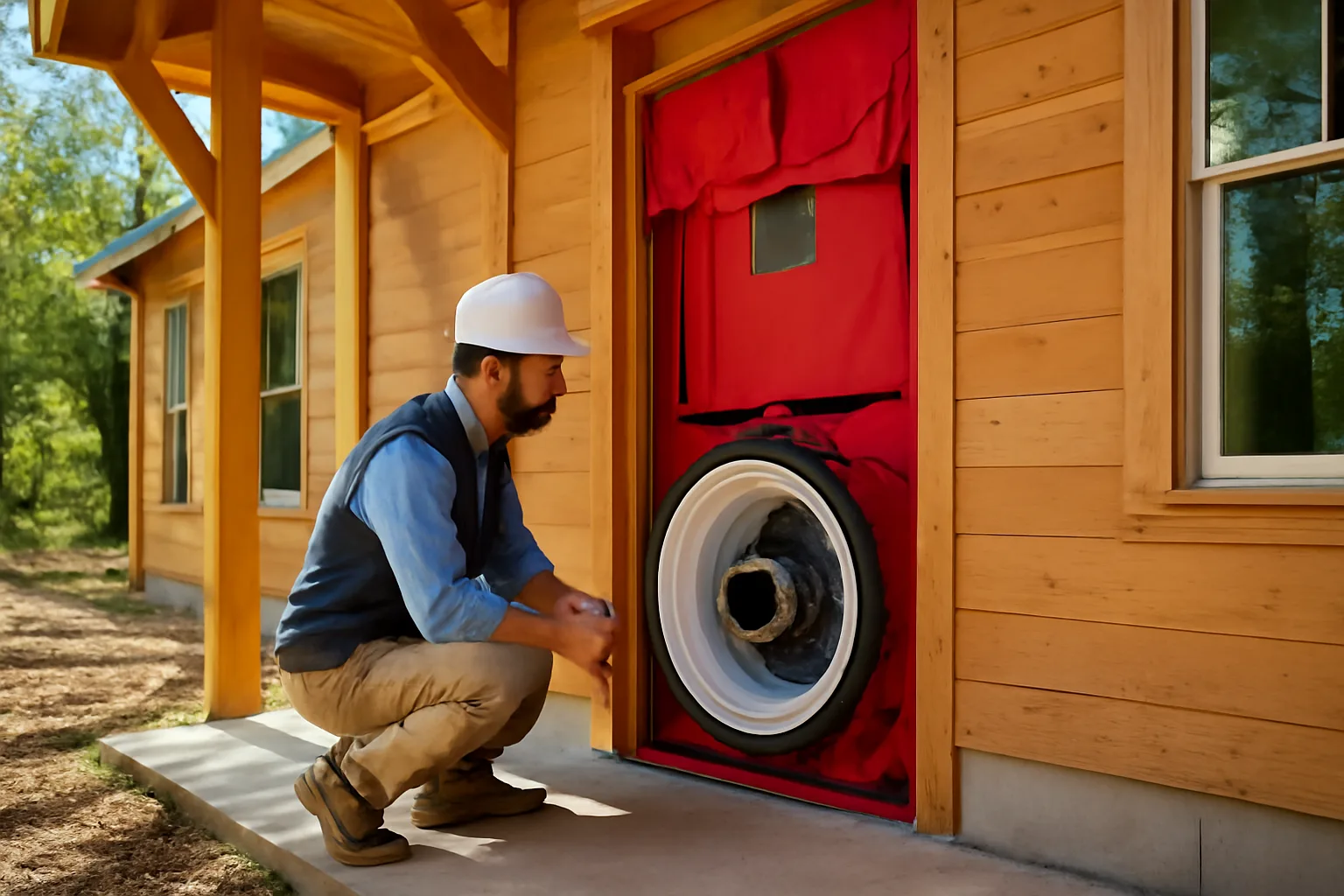
At minimum, every practicing HERS rater needs a blower door system and rating software. A duct blaster is needed for duct leakage testing, which most ratings that involve ductwork require. In practice, you'll also want a digital manometer, a combustion analyzer if you're rating homes with gas appliances, and a calibrated thermometer. [4]
The blower door is the tool most people focus on first, and for good reason. The Minneapolis Blower Door Model 4 is the industry standard and runs around $3,500 to $5,000 new as a basic package. Retrotec makes a competing unit. RESNET-approved equipment lists are maintained at resnet.us. Confirm what's on the current approved list before purchasing.
Rating software also has to be RESNET-approved. REM/Rate, EnergyGauge, and OptiMiser are the main options in use. Some Rating Providers include a software license in their membership fee. Others require you to license it separately, which runs $300 to $600 per year depending on the tool and tier.
If you're in Arkansas and doing mostly new construction ratings for builders seeking ENERGY STAR or code compliance documentation, a blower door and duct blaster will cover the bulk of your test-in and test-out work. For retrofit or existing home ratings, you may add a duct-leakage-to-outside test setup and possibly thermal imaging equipment over time.
What does the Arkansas energy code require, and does it affect demand for HERS raters?
Arkansas adopted the 2009 IECC as the state mandatory residential energy code, administered through the Arkansas Fire Prevention Code and enforced locally by building departments. [3] The 2009 IECC is several generations behind the current 2021 IECC, which means Arkansas's mandatory code requirements are less demanding than in states that have adopted more recent editions.
For HERS raters, this matters because the tougher the energy code, the more builders look to HERS ratings as a compliance path (the IECC's performance compliance path lets a HERS score demonstrate equivalence). In a state with a 2009 IECC baseline, builder demand for HERS ratings as a code compliance tool is lower than in states with 2015, 2018, or 2021 IECC adoptions.
The stronger market drivers in Arkansas are voluntary programs: ENERGY STAR Certified Homes, DOE Zero Energy Ready Homes, and green building programs through local utilities or the Arkansas Energy Office. [6] Some lenders also use HERS scores as part of energy-efficient mortgage (EEM) underwriting, which creates demand independent of code.
Entergy Arkansas and other regulated utilities have historically run energy efficiency programs that involve home energy assessments. Check whether those programs have current pathways that require RESNET-certified raters. Program specifics change with utility rate cases and legislative cycles, so confirm directly with each utility's energy efficiency team.
If you're sizing up the Arkansas market: demand exists, especially in the Little Rock metro and the Northwest Arkansas (Fayetteville/Bentonville) growth corridor, but you'll do more business development work than in a state with a strong mandatory code tie-in.
How do you find work as a HERS rater in Arkansas?
New construction is the clearest first path. Production builders and custom home builders who participate in ENERGY STAR Certified Homes need RESNET-certified raters to verify and certify each home. The EPA's ENERGY STAR for New Homes program requires a rater to perform both a pre-drywall inspection and a final blower door test. [5]
Northwest Arkansas is one of the fastest-growing metro areas in the country and has a busy new construction market. Little Rock has steady residential construction. Both markets have active home builder associations where you can make initial contacts.
Existing home retrofits and energy audits are a secondary revenue stream. RESNET's HERS Index can be used on existing homes, and some homeowners want a rating to document improvements or qualify for rebates. The overlap with BPI (Building Performance Institute) certification is real here. Many raters in smaller state markets hold both credentials to reach utility program work.
Utility efficiency programs are worth tracking. The Arkansas Public Service Commission oversees utility energy efficiency program filings. [7] When Entergy Arkansas or other utilities run rebate programs requiring third-party verification, they sometimes specify RESNET-certified raters. Program structures change, so check current PSC filings or contact the utility directly.
For context on how neighboring states approach the same career start, how to start a HERS rater career in Alabama covers similar southern market dynamics.
How does Arkansas compare to neighboring states for HERS rater requirements?
Arkansas sits in a middle-ground position compared to its neighbors. Here's a quick orientation:
| State | IECC Adoption | State Rater License? | Market Driver |
|---|---|---|---|
| Arkansas | 2009 IECC [3] | No | Voluntary programs, ENERGY STAR |
| Texas | Statewide, varies by jurisdiction | No | High volume new construction |
| Oklahoma | 2009 IECC | No | Voluntary |
| Missouri | Local option, no statewide mandate | No | Voluntary |
| Tennessee | 2009/2012 IECC varies | No | Voluntary, some utility programs |
| Colorado | 2021 IECC [8] | No | Code compliance, strong HERS demand |
No southern state in this peer group requires a state-issued HERS rater license. The federal RESNET credential is the operative requirement everywhere. Colorado's newer code adoption creates more mandatory demand than Arkansas's 2009 baseline. See how to start a HERS rater career in Colorado for how a stronger code environment changes the business case.
If you're already working in Texas or Missouri and want to expand into Arkansas, your RESNET certification transfers with no additional steps. There's no reciprocity issue because there's no state license to reciprocate.
What ongoing requirements do HERS raters face after certification in Arkansas?
Once you're fully certified, the ongoing obligations come from RESNET, not from Arkansas. RESNET requires annual renewal, continuing education, and quality assurance oversight through your Rating Provider.
RESNET's quality assurance (QA) system requires a percentage of your ratings to be reviewed by your Rating Provider and a percentage of those to be field-verified. RESNET standards specify that at least 10% of a rater's files must be desk-reviewed by the Rating Provider, and 1 in 10 of those (or 1% of total ratings) must get field QA. [1] These thresholds can change; confirm current QA requirements in RESNET's published standards.
Continuing education is required annually. RESNET specifies the number of continuing education hours required for renewal. Confirm the current requirement at resnet.us because this has shifted over the years.
Your Rating Provider relationship is ongoing and matters more than most new raters expect. A good Rating Provider gives you QA turnaround fast (important when builders have a closing deadline), offers software support, and handles your RESNET registry submissions. A slow or unresponsive provider can cost you builder relationships. Ask providers what their average file review turnaround time is before you sign on.
For more detail on how the credential functions year to year, the HERS rater license in Arkansas page covers renewal and what RESNET's ongoing requirements mean in practice.
What resources are available for new HERS raters starting in Arkansas?
Start with RESNET's own website (resnet.us). The public side lists all accredited Rater Training Providers, Rating Providers, and the RESNET standards documents. The RESNET Rating Registry is also publicly searchable, which lets you see how many active certified raters are currently operating in Arkansas. That tells you something about market saturation and opportunity.
The Arkansas Energy Office, housed within the Arkansas Economic Development Commission, publishes information on state energy programs and occasionally has resources relevant to residential energy efficiency professionals. [6] Their contacts are worth having.
The Arkansas Home Builders Association (AHBA) is the practical networking hub for new construction market entry. Builder association meetings are where you'll meet the project managers and purchasing agents who actually decide to use HERS ratings on a subdivision.
HERSPath (herspath.com/start) maintains a resource kit covering the RESNET enrollment process and blower door kit basics for $179 one-time. It's a reasonable starting point for getting oriented before you commit to a full training course, but it's no substitute for the accredited training itself.
For comparison on how neighboring state markets work, how to start a HERS rater career in Arizona and how to start a HERS rater career in California show what a mandatory code environment looks like for rater business development.
Frequently asked questions
Do you need a license for a HERS rater in Arkansas?
No state-issued license exists. Arkansas has no board that certifies or licenses HERS raters independently. The operative credential is RESNET certification, issued by the Residential Energy Services Network, a national private standards body. You earn it through accredited training, a proctored exam, and supervised field experience under a RESNET-accredited Rating Provider. Confirm any local jurisdiction requirements before starting work in a specific county or municipality.
How much does it cost to become a HERS rater in Arkansas?
Plan for $1,200 to $3,500 in year one if you share or rent equipment, or $6,500 to $15,000+ if you buy a new blower door and duct blaster. Training courses run $700 to $1,500. The RESNET exam adds roughly $100 to $175. Annual RESNET fees and Rating Provider fees together typically run $400 to $1,000 per year. Confirm all current fees directly with RESNET and your chosen Rating Provider before budgeting.
How long does it take to become a HERS rater in Arkansas?
From starting your training course to completing your first supervised rating: 4 to 12 weeks. Reaching full RESNET certification (more than trainee status) usually takes 6 to 18 months, depending on how quickly you accumulate the required supervised ratings. The training course itself is 1 to 8 weeks depending on format. Exam scheduling adds another 1 to 3 weeks. Finding a Rating Provider and lining up your first builder clients is the unpredictable part.
What RESNET training providers serve Arkansas?
RESNET maintains the official list of accredited Rater Training Providers at resnet.us. Many providers offer online formats that serve Arkansas students from anywhere. Some regional providers in neighboring states like Texas, Missouri, and Tennessee also run in-person programs accessible to Arkansas residents. Check the RESNET site directly for the current list, since providers gain and lose accreditation over time.
Does Arkansas require HERS ratings for new construction?
Not as a blanket mandate. Arkansas's statewide residential energy code is based on the 2009 IECC, which does not require a HERS rating for compliance. However, HERS ratings are required for ENERGY STAR Certified Homes and DOE Zero Energy Ready Homes programs, and some local jurisdictions may have adopted stricter standards. Confirm current code requirements with your local building department.
What is a RESNET Rating Provider and do I need one in Arkansas?
Yes, you need one. A Rating Provider is a RESNET-accredited organization that oversees trainee raters, performs quality assurance review on ratings, and submits completed ratings to the RESNET Registry. You cannot legally issue HERS ratings as a trainee without being affiliated with a Rating Provider. They typically charge a per-rating fee ($15 to $50) or a monthly/annual membership. Confirm current fee structures directly with each provider.
Can an existing contractor or energy auditor add HERS rating to their services in Arkansas?
Yes, and this is a common path. Home performance contractors, BPI-certified auditors, and HVAC contractors who already own blower door equipment can add HERS rating with relatively low marginal investment. The main requirements are completing the RESNET accredited training course, passing the exam, and affiliating with a Rating Provider. The field skills transfer well; the main new learning is rating software and RESNET standards.
Do HERS rater certifications from other states transfer to Arkansas?
There's nothing to transfer because there's no state license. RESNET certification is national. If you're already a RESNET-certified rater in Texas, California, or anywhere else, you can rate homes in Arkansas immediately with no additional steps. You just need to make sure your Rating Provider can submit ratings originating in Arkansas, which almost all can.
What equipment is required to conduct HERS ratings in Arkansas?
At minimum: a RESNET-approved blower door system (the Minneapolis Model 4 is the industry standard), a calibrated digital manometer, and RESNET-approved rating software. For homes with ductwork, a duct blaster for duct leakage testing is also required. RESNET maintains an approved equipment list at resnet.us. Confirm current approved equipment before purchasing, as the list is updated periodically.
How many HERS raters are currently active in Arkansas?
The RESNET Rating Registry is publicly searchable at resnet.us and shows certified raters by state. Check there for the current count. Arkansas is a smaller market than neighboring Texas or a larger Sun Belt state, which means less competition but also less built-in demand from mandatory code requirements. The Northwest Arkansas metro and Little Rock are the highest-density markets.
What is the HERS Index and why does it matter for Arkansas homes?
The HERS Index is a numerical score where 100 represents the energy use of a standard reference home built to the 2006 IECC, and lower scores mean better efficiency. A home scoring 70 uses roughly 30% less energy than that reference. Lenders use it for energy-efficient mortgages, builders use it for ENERGY STAR certification, and some buyers use it as a buying signal. The standard is defined in ANSI/RESNET/ICC 301.
Is the HERS rater career financially viable in Arkansas?
It can be, particularly in the Northwest Arkansas growth corridor and Little Rock, but Arkansas's older energy code baseline means fewer mandatory rating requirements than in states with 2018 or 2021 IECC adoptions. Most successful Arkansas raters combine HERS work with energy audits, utility program work, or BPI certification to build adequate volume. Expect a longer client development period than in high-code states.
What is the difference between a HERS rater and a home energy auditor in Arkansas?
A HERS rater uses the RESNET HERS Index standard (ANSI/RESNET/ICC 301) to produce a numeric energy score, primarily for new construction and ENERGY STAR programs. A home energy auditor typically uses BPI standards to assess existing homes and recommend upgrades. The two credentials overlap heavily in field skills and equipment. Many Arkansas practitioners hold both. Neither requires a separate Arkansas state license.
Where can I find more information about HERS rater requirements in neighboring states?
HERSPath covers state-specific guidance for each state. For nearby markets, see how to start a HERS rater career in Alabama, how to start a HERS rater career in Arizona, or how to start a HERS rater career in Colorado for comparison. Colorado in particular shows what the career looks like in a state with a 2021 IECC adoption, where mandatory code creates more baseline demand.
Sources
- RESNET, Residential Energy Services Network: RESNET is the national standards body for HERS ratings; raters must be RESNET-certified and affiliated with an accredited Rating Provider to issue HERS scores
- U.S. Department of Energy, Building America Program: DOE Building America and related federal programs reference RESNET-certified raters for home energy rating verification
- U.S. Department of Energy, Building Energy Codes Program: Arkansas: Arkansas adopted the 2009 IECC as the statewide mandatory residential energy code
- RESNET, Residential Energy Services Network: RESNET maintains a list of approved blower door equipment and rating software required for conducting HERS ratings
- U.S. EPA, ENERGY STAR Certified Homes: ENERGY STAR Certified Homes requires a RESNET-certified rater to conduct pre-drywall inspection and final blower door testing
- Arkansas Economic Development Commission, Arkansas Energy Office: The Arkansas Energy Office publishes state energy program information relevant to residential energy efficiency professionals
- U.S. Department of Energy, Building Energy Codes Program: Colorado: Colorado adopted the 2021 IECC, creating stronger mandatory demand for HERS ratings as a code compliance path compared to states with older code adoptions
- U.S. EPA, ENERGY STAR for Homes: Rater Role: ENERGY STAR Certified Homes requires raters to be RESNET-certified third-party independents; rater certification is based on RESNET standards