Last updated 2026-08-19
TL;DR
California does not issue a HERS rater license. You renew through a CEC-approved HERS Provider for Title 24 work, and through a RESNET Rating Provider if you issue a national HERS Index. Expect annual standing, Energy Code update training, and QA. Confirm current fees and timelines with those bodies. There is no statewide processing clock.
What is HERS rater renewal in California?
HERS rater renewal in California is not a state plastic card you renew at a counter. You stay listed with a Provider so you can keep filing ratings. That is the whole job.
California runs its own Home Energy Rating System through the Energy Commission. Public Resources Code section 25942 directed that work. The statute says, "On or before July 1, 1995, the commission shall establish criteria for adopting a statewide home energy rating program for residential dwellings." [1] Title 20 of the California Code of Regulations then tells Providers how to certify raters and how to run quality assurance. The Commission approves Providers. Providers certify you. [3]
That structure is why your renewal email comes from a company, not from a bureau. If the Provider locks your registry login, you cannot register a CF3R-style HERS certificate. Builders notice that on closing day.
A second stack exists if you produce a national HERS Index. RESNET and a Rating Provider own that card. [11] Plenty of people hold both. Plenty of people only need one. Figure out which jobs you actually sell before you pay for two recertification paths.
The national myth is that one RESNET card covers every state the same way. California is the exception people trip on. Title 24 field verification is a state energy-code function. The HERS Index is a national scoring function. Renewal paperwork follows that split. Remember which registry your builder actually needs you to touch, and the rest gets simple.
I treat renewal as a file problem. Can you upload? Are you on the current Energy Code training list? Is QA clean? If those three are yes, you are renewed in the only way that matters.
Do you need a license for HERS rater in California?
No. There is no California occupational license called HERS rater. You need a current certification from a CEC-approved HERS Provider to file Title 24 field verification. That is a certification, not a CSLB license.
The Contractors State License Board licenses construction. Business and Professions Code section 7026 says, "Contractor, for the purposes of this chapter, is synonymous with builder," and then ties the term to people who construct, alter, repair, or improve buildings. [7] Blower-door testing and a registered certificate are not construction. Opening a wall and installing insulation is construction.
People still ask about the small-job exemption. Section 7048 is about contracting price thresholds, not about inventing a rater license. Confirm the current dollar figure in the statute, because the Legislature has amended that number. [8][9]
A city business license is a local tax registration. Buy it if the city requires it. It will not put you in the HERS registry. An insurance binder will not either.
If a website sells a California HERS rater license kit, you are looking at marketing. Close the tab.
How much does HERS rater cost in California?
There is no official statewide HERS rater fee. Anyone quoting one number for every rater in California is guessing or selling.
Your real costs come in layers. Confirm each layer with the party that invoices it.
Training and exams. New-rater Title 24 classes are usually a multi-day course with a written piece and a field piece. I treat them as a four-figure line item until the school sends a current invoice. National RESNET rater training is a separate invoice if you need the Index. Do not assume one class covers both.
Provider standing. Application fees, annual dues, and registry access are Provider prices. I will not invent this year's number for any Provider. Ask for the fee schedule in writing. [3]
Per-rating or software charges. Some of this is per certificate. It adds up fast on production builders.
Equipment. A calibrated blower door, duct leakage tester, and manometer are the painful purchase. Full retail kits often run into the multiple thousands of dollars. Buy used only if you can still get a calibration cert. A cheap uncalibrated gauge will fail QA, and then the kit was not cheap.
Insurance. General liability plus errors and omissions. Read the professional-services exclusion. The cheap policy that excludes testing opinions is a donation.
Time and mileage. First-year raters go broke on drive time, not on the class.
HERSPath sells a $179 one-time RESNET + Blower-Door Kit if you want a low-cost start on the national intro and the door fan. It does not enroll you with a CEC Provider. It does not replace Title 24 rater school. If your only work is California compliance testing, pay the Provider class first.
Waste of money: framed license plaques, two software subscriptions before you have a mentor, and any course that will not name the Provider you will be listed under.
How long does HERS rater take in California?
Nobody publishes a legal processing time for becoming or renewing a HERS rater in California. Calendar time usually runs weeks to a few months for a new rater, and shorter for a clean renewal. That is a field estimate, not a promise.
New raters wait on three things. The next class date. Exam results and any retake. Mentored or probationary ratings on real houses. The houses are the slow part. Your mentor has a day job.
Renewal classes for a new Energy Code cycle are shorter. Often a day or a short module set. Confirm the current outline. I have watched people sit the wrong cycle class and then sit it again.
I would not resign from a paycheck because a landing page said you can get certified this weekend. I also would not promise a builder a start date until the Provider login works on my phone.
Coming in from HERS rater renewal in Arizona or HERS rater renewal in Colorado does not skip the California Provider class. There is no handshake reciprocity for Title 24 HERS.
Is California HERS the same as a RESNET HERS Index?
No. You may be renewing California HERS, RESNET HERS, or both. They do different jobs and neither replaces the other.
California HERS is the Energy Commission program used for field verification under the Building Energy Efficiency Standards. The Reference Appendices set the verification process and the diagnostic tests: duct leakage, quality insulation installation, and the other measures the Standards send to a rater. [4] Your product is a registered compliance certificate through a CEC-approved Provider.
RESNET HERS is the national Index. ENERGY STAR certified new homes and the federal Energy Efficient Home Credit (Internal Revenue Code 45L) live in that world. [12][13] Your product is a HERS Index score and the files a Rating Provider will defend in QA.
| Track | Who lists you | What you can sign | What forces new training |
|---|---|---|---|
| CEC HERS (Title 24) | CEC-approved HERS Provider | Registered field verification certificates | New Building Energy Efficiency Standards cycle |
| RESNET HERS | RESNET Rating Provider | National HERS Index and related program files | Rating Provider QA and MINHERS recertification rules |
A HERS Index is not a Title 24 HERS certificate. I keep saying that because salespeople blur it. A production builder in Riverside still needs the CEC track for required measures even if the brochure has a 55 on it.
DOE also runs a separate Home Energy Score tool. That is not California HERS and it is not a RESNET Index. Do not buy a class that mixes the three names and hopes you will not notice.
My rule. If you only test compliance measures, renew CEC HERS and ignore RESNET until a contract names 45L or ENERGY STAR. If you sell scores, budget both.
How do you renew a California HERS rater certification?
You renew California HERS with your CEC-approved Provider. You do not mail a form to a state license unit.
Email the Provider and ask for your status, the current rater agreement, the Energy Code update class that matches your permits, and any open QA. Do those items. Pay the invoice they send. That is the paper path.
Title 20 requires Providers to certify raters and to run the rating system the Commission approved. The Energy Commission HERS program page is where you confirm who those Providers are right now. [3] Do not rely on a Facebook comment from 2019.
The 2022 Building Energy Efficiency Standards took effect January 1, 2023. [4] The 2025 Building Energy Efficiency Standards took effect January 1, 2026. [5] Those two dates drive most renewal training. I put both on a wall calendar.
Write a short email. Subject line with your rater ID. Ask the Provider to reply with status, fee schedule, the next class that matches the 2025 Standards (or whichever cycle is on your permits), and QA holds. Save the reply. If you ever have to show a building department you were current on a given date, that email beats your memory.
If QA failed a rating, fix that before you argue about dues. A dirty QA file will stall you after you sit the class.
CalCERTS is the Provider most crews name. Confirm the live list anyway. Providers have come and gone. Your check should follow the Commission list, not a habit.
How do you renew RESNET HERS if you work in California?
RESNET renewal is a Rating Provider problem under MINHERS, even if every house you score sits in California. [11]
Ask that Provider for the current recertification list. I will not invent a required hour count, exam name, or dues figure. Those change inside MINHERS and inside Provider policy.
Expect QA on ratings you already submitted, some form of professional development, software updates, and an invoice. If you cannot produce the rating file, you are not renewed in any way a builder can use.
Read the IRS Energy Efficient Home Credit page before you tell a builder you can support 45L. [12] Read ENERGY STAR's partner path before you say you can label a house. [13] Those federal pages are the ones underwriters actually open.
A CEC rater ID does not impress a RESNET QA reviewer. File national ratings in the national software.
If you also keep papers current for HERS rater renewal in Florida or HERS rater renewal in Illinois, you still need a Rating Provider that will support California climate zones and the software you run here.
What papers should you keep for a clean renewal?
Keep one folder you can send as a single attachment. Renewal fights are document fights.
I want to see the Provider rater agreement and your rater ID, the training certificate for the Standards cycle on your current permits, a registry login that works, calibration certificates for the blower door, duct tester, and manometer, QA letters and any closeout, the declarations page of your E&O policy, a city business license if you hold one, and the RESNET rater ID plus Rating Provider agreement if you keep that track.
The Reference Appendices care how you ran the test. [4] QA will ask for the gauge serial number and the calibration date. Saying you usually use the red one is not an answer.
Back this up off your phone. Phones overheat on dashboards in July and then your only copy of the 2025 class certificate is gone.
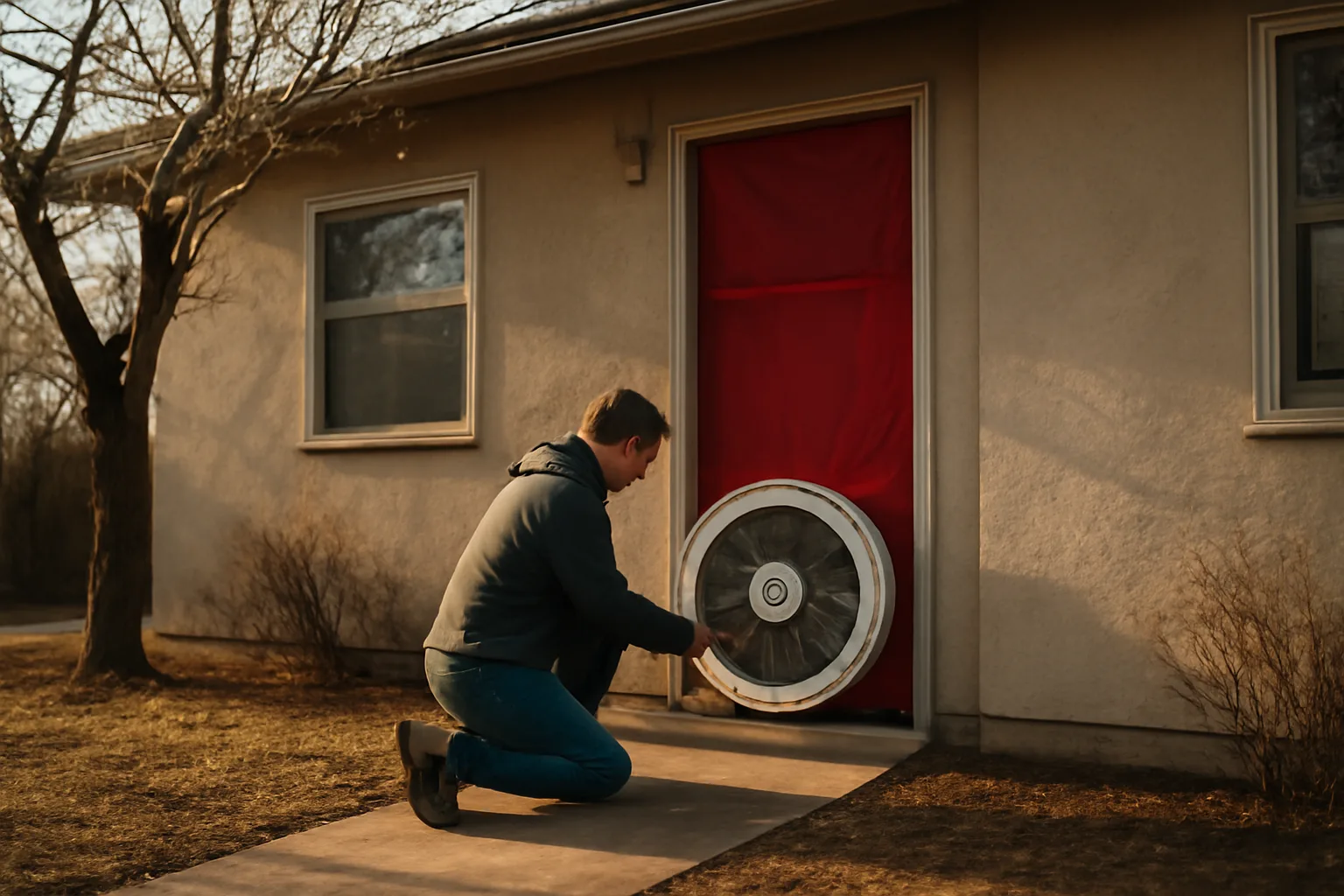
I also keep a short photo log of the fan setup on a couple of jobs. When a superintendent swears the door was in the garage, the photo ends the argument.
What happens if your HERS rater certification lapses?
If certification lapses, you cannot register HERS documents. The builder cannot use you for required measures. Superintendents do not wait.
There is no statewide late-fee table I can cite without making it up. Reinstatement is whatever your Provider wrote into the rater agreement. Some people retake training. Some people pay a lapsed-status bill and sit a short module. Confirm it in writing before you tell a client you will be back on Thursday.
The two tracks lapse separately. You can be live for Title 24 and dead for RESNET, or the other way around. Check both logins.
Do not keep circulating last year's certificates with a new date typed in. That is how a house fails a building-department audit and you get to explain it.
Production builders run tight inspection sequences. HERS is often the last signature before drywall or before the final. If your login dies on a Thursday, Friday's finals slip. That is why I renew weeks before a code switch, not the week after.
If you already lapsed, stop bidding HERS measures until the registry accepts a test file from your account. Pride is expensive here.
Which Energy Code cycle are you renewing against?
You renew against the Building Energy Efficiency Standards that apply to the permit. Permit application date and local adoption control that, not the day you showed up with the fan.
Bookmark the Energy Commission pages for the 2022 Standards and the 2025 Standards. [4][5] Those are the primary documents. DOE's Building Energy Codes Program keeps a California status page if you want a federal cross-check. [14]
Cycles run about every three years. Update classes follow that drumbeat. If your last classroom day was a 2019 class, you are not current for a 2025 permitted house.
Reach codes (city or county amendments) do not create a second rater license. They can add tests. Read the amendment before you bid a jurisdiction you have never worked.
Raters who last renewed in HERS rater renewal in Hawaii or HERS rater renewal in Idaho often treat duct forms as close enough. California protocols are not close enough. Follow the appendix.
Do you need a contractor license to renew as a rater?
Provider renewal does not require a CSLB number. Construction work does.
If you only test and register results, you are not acting as a contractor under section 7026. [7] If you start sealing, installing, or altering building systems for pay, you walked into licensed contracting. Section 7048's small-job exemption is a contracting threshold, not a rater loophole. Confirm the current dollar amount in the statute. [8][9]
City business licenses are local revenue rules. They vary. They do not certify raters.
Insurance does not renew a rater ID. I would still carry general liability and errors and omissions before I pressurize a finished house. One cracked sidelight or one blown claim about a score costs more than the premium. Read whether testing opinions are covered.
If you hire help, California workers compensation is its own problem. Confirm with a broker. It is not a rater credential.
Paying someone to register your HERS company with the State of California is a waste. There is no central company license that replaces Provider listing.
What should you confirm with the Provider before you pay?
Before you pay a trainer or a renewal service, get five answers in email from the Provider.
Are you on the current CEC-approved list? [3] Which exact class matches the Standards cycle on my permits? What is this year's fee, line by line? What QA is open on my account? If I already lapsed, what is the reinstatement path and what does it cost?
Ask the same five on the RESNET side if you keep an Index practice. [11]
I would also ask whether your software will file the new registry documents on the first day of the cycle. Software lag is common. There is no honest public dashboard for it.
If a trainer cannot name the Provider and the code cycle, keep your card in your pocket.
The paper path in HERS rater renewal in Georgia or HERS rater renewal in Connecticut is mostly RESNET. California adds the CEC Provider layer. Budget a second login and a second class.
What does first-year work look like after you renew?
Once you are listed again, first-year operations are about not getting kicked back off.
Register the test the day you leave the site. Batching a week's houses on Sunday looks sloppy in QA.
Calibrate on the interval the manufacturer and the Provider both accept. Keep the paper.
Match the form to the permit cycle. A 2022 house and a 2025 house are not the same XML.
Keep RESNET files in RESNET software. Do not try to invent an Index out of a Title 24 worksheet.
I would pick a tight set of climate zones and get fast there before I chase mountain work from a coastal shop. Mileage wrecks first-year margins.
If you are still assembling a starter kit, go to /start. HERSPath sells a one-time $179 RESNET + Blower-Door Kit. It will not list you with a CEC Provider and it will not talk to the compliance registry. Use it for the national intro and the fan, then sit the real Provider class.
Frequently asked questions
Do you need a license for HERS rater in California?
No. California does not issue a HERS rater occupational license. You get certified by a CEC-approved HERS Provider to register Title 24 field verification. A CSLB license is only in play if you perform construction, not if you only test and report. Confirm contractor rules in Business and Professions Code section 7026 if your work creeps into installation.
How much does HERS rater cost in California?
There is no single state fee. Budget separately for Provider dues, the rater class, software or registry charges, calibrated equipment, and insurance. Class and equipment are the large lines. Confirm every current dollar amount with the Provider and the school. Ignore anyone who quotes one statewide price for every HERS rater California job type.
How long does HERS rater take in California?
There is no statutory clock. A new rater often needs several days of class, exams, and then mentored field ratings, which is why the calendar usually runs weeks to a few months. A clean renewal can be a short update class plus paperwork. Confirm class dates with the Provider. Nobody can honestly guarantee a finish date.
Is CalCERTS a state license?
No. CalCERTS is a HERS Provider. The Energy Commission approves Providers under Title 20. The Provider certifies raters and runs the registry you file through. Confirm on the Commission HERS program page that the Provider you are paying is still approved. A Provider ID is not a CSLB license and it is not a RESNET card.
Can I do Title 24 HERS work with only a RESNET card?
Not as a substitute. RESNET lets you produce a national HERS Index. Title 24 field verification has to go through a CEC-approved Provider registry. Some raters hold both. If the job is a California compliance test, the builder needs the CEC-track certificate. Confirm with the Provider before you bid.
How often does the Energy Code change for raters?
The Building Energy Efficiency Standards typically update on a three-year cycle. The 2022 Standards took effect January 1, 2023. The 2025 Standards took effect January 1, 2026. Your Provider will push update training around those dates. Permit application date, not the test date, usually controls which cycle applies. Confirm on the Energy Commission cycle pages.
What if my rater ID expires?
You cannot register certificates. Builders cannot use you for required HERS measures until the Provider restores you. Reinstatement steps and fees are Provider rules, not a statewide late-fee chart. Ask for the reinstatement path in writing. Do not keep issuing old PDFs with new dates.
Do I need a CSLB C-20 license to test ducts?
Not to test and register results. A C-20 is an HVAC contractor classification for people who install and service systems. If you only run a duct leakage test and file the HERS certificate, you are not contracting. If you repair the ducts for pay, you have left rater work. Confirm with CSLB and section 7026 if the job mixes testing and repair.
Are HERS ratings required on every California home?
No. HERS field verification is required when the Energy Code or the compliance method sends a measure to a rater. Many new homes have required measures. Existing homes vary. A national HERS Index is a different product and is not automatically required for a permit. Read the Standards and the registered compliance forms for that job.
Does a city business license make me a rater?
No. A city business license is a local tax registration. It does not put you in a HERS registry and it does not satisfy RESNET. Get one if the city requires it for a home-based service business. Then still complete Provider certification for the work you intend to sign.
Can I renew after moving from another state?
You can bring RESNET standing with you if your Rating Provider still lists you, but California Title 24 work still needs a CEC-approved Provider certification. There is no automatic reciprocity that turns an out-of-state rater card into a California compliance rater. Sit the California class. Confirm both accounts before you bid.
Is a HERS Index required for Title 24 compliance?
No. Title 24 compliance uses the Energy Commission's forms and, when required, Provider-registered field verification. A HERS Index is a national score used for programs such as ENERGY STAR and the federal 45L credit. Builders sometimes want both. They are different files in different systems.
What equipment calibration do Providers want?
They want current calibration certificates on the gauges you used, usually the blower door, duct leakage rig, and manometer. Serial numbers should match the test file. Confirm the accepted interval with your Provider and the manufacturer. An uncalibrated bargain gauge is how QA fails a whole week of houses.
Sources
- California Legislative Information, Public Resources Code § 25942: PRC 25942 directed the Energy Commission to establish criteria for a statewide home energy rating program for residential dwellings by July 1, 1995.
- California Energy Commission, Home Energy Rating System (HERS) Program: The Energy Commission administers the California HERS Program and is the place to confirm approved Providers.
- California Energy Commission, 2022 Building Energy Efficiency Standards: The 2022 Building Energy Efficiency Standards took effect January 1, 2023, and its Reference Appendices set the HERS field verification process and diagnostic tests.
- California Energy Commission, 2025 Building Energy Efficiency Standards: The 2025 Building Energy Efficiency Standards took effect January 1, 2026.
- California Legislative Information, Business and Professions Code § 7026: BPC 7026 defines contractor as synonymous with builder and ties the term to construction, alteration, repair, and related building work.
- California Legislative Information, Business and Professions Code § 7048: BPC 7048 sets the small-job contracting exemption threshold, which is a construction-price rule rather than a rater license.
- Contractors State License Board, Licensing Classifications library: CSLB licensing classifications cover contractor trades, not a standalone HERS rater license.
- RESNET, MINHERS standards: MINHERS is the national standard that governs RESNET rater certification, QA, and recertification rules.
- IRS, Energy Efficient Home Credit (Internal Revenue Code 45L): The federal Energy Efficient Home Credit under IRC 45L relies on a national HERS Index rating, not a Title 24 compliance certificate.
- U.S. DOE Building Energy Codes Program, California status: DOE tracks California's adopted Building Energy Efficiency Standards status as a federal cross-check on the state code cycle.