Last updated 2026-08-18
TL;DR
Becoming a HERS rater in Arizona costs roughly $1,500 to $4,500 all-in during your first year, covering RESNET membership, a Rating Provider affiliation fee, online training, field mentorship hours, and a blower-door kit. Arizona has no state-issued HERS license; all credentialing runs through RESNET. The process typically takes two to six months depending on how fast you schedule your supervised ratings.
Do you need a state license to be a HERS rater in Arizona?
No state license exists. Arizona does not issue a "HERS rater license" through any state agency. The credential that matters is the RESNET HERS Rater certification, issued by the Residential Energy Services Network, a private nonprofit that sets national standards for home energy ratings. [1]
Here's what that means for your wallet. You skip any state application fee, any state exam, and any state renewal paperwork. Your entire credentialing relationship is with RESNET and the Rating Provider (RP) you affiliate with. Rating Providers are RESNET-accredited companies that supervise new raters, review your ratings, and sign off on your work until you build up the supervised-rating hours the standards require. [2]
Arizona does have a state contractor licensing system run by the Arizona Registrar of Contractors, but that license applies to people who build or repair things. Energy rating is classified as a consulting or inspection activity, not a construction trade, so most HERS raters work without an ROC license. If your business expands into air-sealing or duct-sealing work, though, check with the Arizona Registrar of Contractors whether that scope triggers a contractor license requirement. [3]
Some Arizona municipalities, and the state's residential building code adoption, reference the International Energy Conservation Code, which recognizes HERS ratings as a compliance path. That recognition gives your RESNET credential real legal weight on permitted jobs, even though it isn't a state license itself. [4]
How much does HERS rater certification cost in Arizona?
There's no single price. The total depends on five buckets: RESNET membership, Rating Provider affiliation, training coursework, supervised field work, and equipment. Here's how each one breaks down.
RESNET membership fee. RESNET charges an annual membership fee for individual raters. Individual rater membership generally runs in the range of $150 to $200 per year, but RESNET adjusts fees periodically, so confirm the current figure at resnet.us before budgeting. [1]
Rating Provider affiliation fee. This is the cost most candidates underestimate. Every new rater must affiliate with a RESNET-accredited Rating Provider, and each RP sets its own affiliation and supervision fee. Arizona RPs charge anywhere from $300 to $1,500 or more for the affiliation period that covers your supervised ratings. Some RPs bundle training into this fee. Others charge separately. Get itemized quotes from two or three RPs before you commit.
Training coursework. RESNET requires candidates to complete an approved training curriculum before they can submit ratings. Third-party course providers typically charge $300 to $800 for a self-paced online course. Some Rating Providers include a training component, which can lower your out-of-pocket cost if you're already paying them a supervision fee.
Supervised field ratings. RESNET's Mortgage Industry National Home Energy Rating Standards (MINHERS) require new raters to complete a set of supervised ratings before they earn full certification. The current MINHERS document spells out the supervised field work requirements; confirm the exact count with your Rating Provider because RESNET has updated these requirements more than once. [2] The cost here is mostly your time and travel, but some RPs charge a per-rating review fee of $25 to $75.
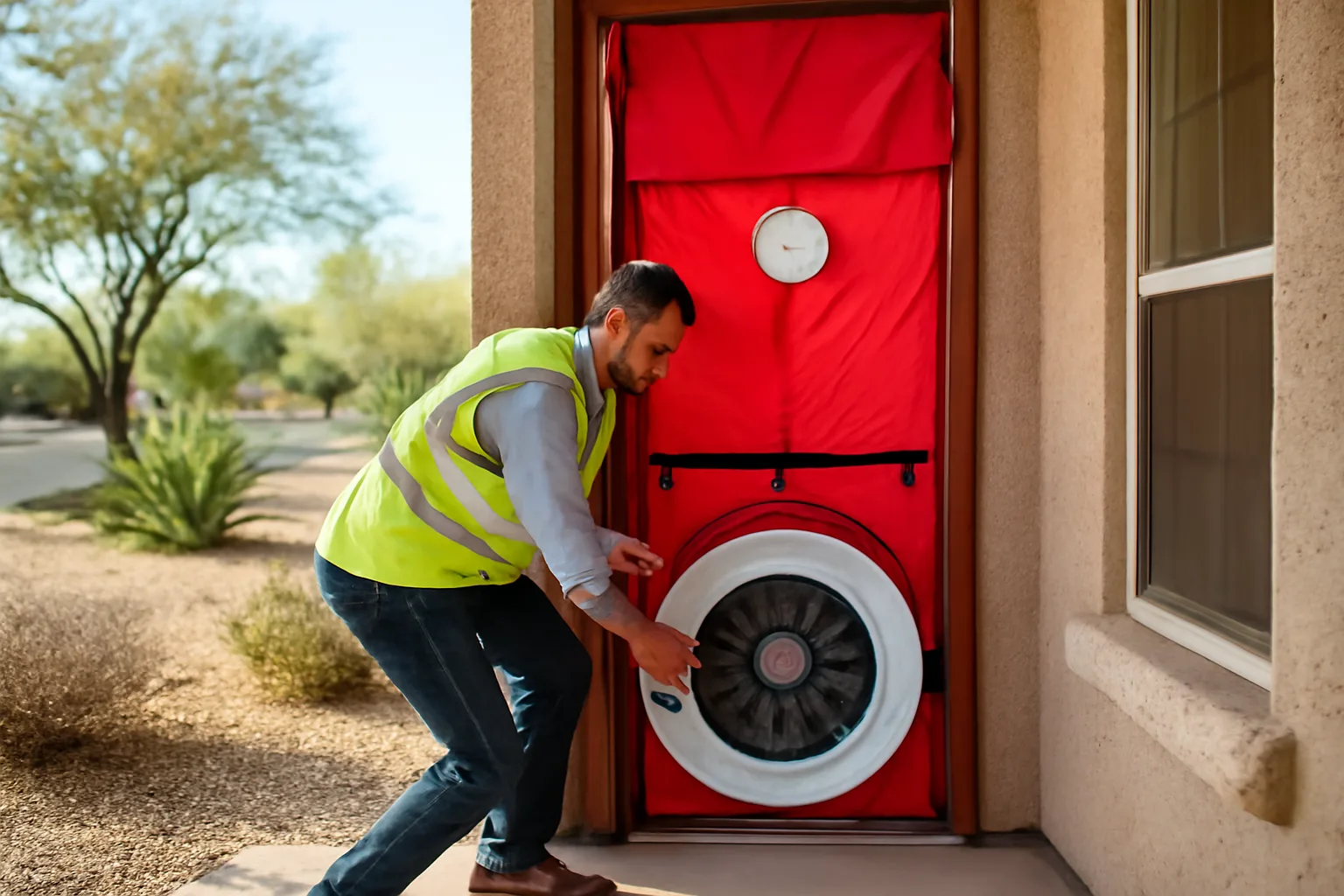
Equipment. A blower door is non-negotiable. A new mid-range blower door (the Minneapolis Blower Door Model 4 is the most common) lists around $3,500 to $4,000. A duct leakage tester (Duct Blaster) adds another $1,500 to $2,500 if you buy new. Buying used gear is common and can cut these figures a lot. Software for energy modeling is often included in your Rating Provider or RESNET membership tier, but verify that before assuming.
If you want a starting point for the RESNET and blower-door piece specifically, HERSPath's own $179 bundle covers the RESNET membership filing step and a blower-door kit path in one place, which is a reasonable baseline to compare against buying each piece separately. You can review what's included at /start before deciding.
| Cost bucket | Typical low | Typical high |
|---|---|---|
| RESNET annual membership | $150 | $200 |
| Rating Provider affiliation/supervision | $300 | $1,500 |
| Training coursework | $300 | $800 |
| Field supervision review fees | $0 | $300 |
| Blower door (new) | $3,500 | $4,000 |
| Duct leakage tester (new) | $1,500 | $2,500 |
| First-year total (gear included) | $5,750 | $9,300 |
| First-year total (gear excluded or used) | $750 | $2,800 |
The wide range reflects real variation in RP pricing and whether you buy equipment new. Arizona's market has enough raters that used blower-door equipment shows up periodically through RESNET forums and regional energy conferences. Factor that in before assuming the high end.
For how Arizona stacks up against neighboring states, see what HERS rater cost in California and HERS rater cost in Colorado look like, since both states have larger rater communities and sometimes more competitive RP pricing.
How long does it take to become a HERS rater in Arizona?
Two to six months is the honest range for most candidates. The variance comes from two things: how fast you complete training, and how fast you can schedule your supervised field ratings.
Training itself is not the bottleneck. Most online coursework can be finished in two to four weeks if you put in consistent hours. The bottleneck is scheduling supervised field ratings with your Rating Provider, especially if you're in a slower construction market or your RP has a packed calendar. Phoenix and Tucson both have active new-construction markets, which usually means more supervised rating opportunities than rural areas.
Here's a rough sequence:
1. Choose and affiliate with a Rating Provider: one to two weeks. 2. Complete approved training curriculum: two to four weeks. 3. Complete required supervised field ratings: four to twelve weeks depending on scheduling and local construction pace. 4. RESNET processes your certification application: two to four weeks after your RP submits.
Total: roughly eight to twenty-two weeks from start to certification in hand. Most Arizona candidates fall in the ten-to-sixteen-week range when they're actively pushing it.
One honest caveat: RESNET processing times bounce around. Nobody has published precise current processing-time data. Ask your Rating Provider what they're seeing right now, because they deal with RESNET submissions regularly and have better real-world numbers than any published estimate.
What does RESNET membership actually include for Arizona raters?
Your RESNET membership is the credential itself. It gives you a RESNET rater ID, access to the RESNET registry where your completed ratings are logged, and the right to issue HERS Index scores that builders and code officials recognize. [1]
Membership also plugs you into RESNET's Quality Assurance system, which means your Rating Provider will periodically audit a sample of your ratings. That oversight is actually useful in your first year because it catches methodology errors before they turn into habits.
For Arizona specifically, RESNET membership lets you submit ratings for homes seeking ENERGY STAR certification, an EPA program where the agency sets efficiency thresholds and HERS scores are the primary compliance metric. [5] Arizona builders pursuing ENERGY STAR certifications on new homes need a certified RESNET rater on those projects, which creates ongoing demand for credentialed raters in the Phoenix and Tucson metro areas.
Membership does not automatically include software. Most raters use either REM/Rate or EnergyGauge USA for energy modeling. Check whether your Rating Provider has a site license that covers affiliated raters, because a standalone software subscription can add $300 to $600 per year to your operating costs.
What is a Rating Provider and how do you find one in Arizona?
A Rating Provider is a RESNET-accredited organization that mentors new raters, reviews their field work, and submits certification paperwork to RESNET on their behalf. Without a Rating Provider affiliation, you cannot submit ratings or earn your RESNET certification.
RESNET maintains a public directory of accredited Rating Providers at resnet.us. Filter for Arizona or the Southwest and you'll find both in-state providers and national providers that accept Arizona candidates remotely. [2]
The practical difference between a local Arizona RP and a national remote RP matters mostly for your supervised field ratings. A local RP may be able to physically accompany you on some inspections or connect you with builders they already work with. A national remote RP reviews your blower-door reports and modeling files digitally, which works fine but gives you less direct mentorship.
When you compare RPs, ask four specific questions. What is your affiliation fee? How many supervised ratings do you require? Do you include training or software? What is your typical turnaround time for rating reviews? The answers vary enough to matter to your budget and your timeline.
What equipment do HERS raters need in Arizona, and what does it cost?
The blower door is the core piece of equipment. You cannot complete a HERS rating without one. The Minneapolis Blower Door Model 4 is the industry standard; new units sell in the $3,500 to $4,000 range from distributors like RetroTec or The Energy Conservatory. [6] The DG-1000 pressure gauge that pairs with it is often included.
A duct leakage tester, commonly the Minneapolis Duct Blaster, is the second major item. New units run $1,500 to $2,500. Some raters start without one and subcontract duct testing, but that limits your service scope and your earnings ceiling.
Arizona's climate adds one practical wrinkle: summer heat. Blower-door fans and their vinyl panels don't like sitting in a vehicle in Phoenix summer heat for long stretches. Budget for a cargo-area shade setup or plan your schedule to avoid midday equipment storage in direct sun.
Software, as mentioned, runs $300 to $600 per year for standalone licenses unless your RP covers it. A laptop with enough processing power to run REM/Rate or EnergyGauge without lag adds a one-time cost of $800 to $1,500 if you don't already have one that qualifies.
For how raters in other neighboring states handle similar gear decisions, the HERS rater cost in Idaho and HERS rater cost in Colorado articles are worth a read, since climate and construction type drive similar choices.
How much can HERS raters earn in Arizona?
Per-rating fees in Arizona typically run $150 to $400 per home for a standard HERS rating on a new single-family home, though larger or more complex homes can command more. Those numbers are market-reported ranges from RESNET's rater community; there's no official wage survey with Arizona-specific precision.
A rater doing 10 ratings per month at $200 average grosses $2,000 per month before expenses. At 25 ratings per month, that's $5,000 gross. Equipment depreciation, software, RESNET membership renewal, and vehicle costs pull the net down, but the model is real and sustainable once you build a builder client base.
Phoenix metro consistently ranks among the top U.S. metros for single-family building permits, which sustains genuine demand for HERS raters. [9] Scottsdale, Mesa, and the West Valley submarkets all have active homebuilder pipelines. Raters who set up direct relationships with production builders can reach volume quickly.
Tucson's market is smaller but also real, especially for raters willing to cover both new construction and existing-home ratings for programs like energy audits tied to utility rebates from Tucson Electric Power or APS. [7]
Nobody has published a rigorous Arizona-specific HERS rater income study, so treat any precise income claim you see elsewhere with skepticism.
Does Arizona's building code require HERS ratings?
Arizona adopted the 2018 International Energy Conservation Code (IECC) as its statewide residential energy code, with some local amendments. The 2018 IECC includes a performance path that accepts HERS ratings as a compliance option. [4] Builders who want to use the performance path instead of the prescriptive checklist need a certified HERS rater.
Arizona gives local jurisdictions latitude to adopt amendments or newer code versions, so Maricopa County, Phoenix, Scottsdale, and Tucson may have local energy code adoptions that differ slightly from the state baseline. Confirm the adopted code version with the specific jurisdiction where you plan to work. [8]
The practical effect: HERS ratings are not mandatory for every Arizona home, but they are a recognized and widely used compliance pathway. Builders who build to higher efficiency levels often find the HERS performance path easier to document than the prescriptive alternative, which drives consistent demand for raters even when ratings aren't legally required.
ENERGY STAR for New Homes is entirely voluntary but requires HERS ratings, and several Arizona builders use it as a marketing differentiator. [5]
How do Arizona's HERS rater costs compare to neighboring states?
The RESNET membership and training costs are basically national constants, so the main variation between states is Rating Provider pricing and equipment availability. Arizona sits in the middle of the range.
California has more RPs competing for candidates, which can lower affiliation fees, but California also carries additional state-level energy code complexity (Title 24) that sometimes requires extra training investment. See HERS rater cost in California for a detailed comparison.
Colorado's market is active but geographically spread out, so travel costs for supervised ratings in rural areas can push the effective cost up. HERS rater cost in Colorado breaks that out.
Florida has a high volume of new construction, which tends to keep per-rating fees competitive (lower) but also means more potential volume. HERS rater cost in Florida covers that market.
For states with smaller rater markets and possibly thinner RP competition, compare HERS rater cost in Idaho and HERS rater cost in Arkansas to see how market size affects your options.
The core lesson: the national cost floor (RESNET fees plus equipment) is fixed. Everything above that floor is negotiable through RP selection and equipment sourcing.
What ongoing costs should Arizona HERS raters budget for each year?
First year is the expensive year. After that, your annual carrying costs drop a lot.
Annual RESNET membership renewal is the baseline. Confirm current renewal fees at resnet.us. [1] Some Rating Providers also charge an annual continuation fee after your initial certification, ranging from $200 to $600 per year depending on the RP's model. Ask your RP straight out what the post-certification annual cost is before you sign on.
Software subscription or license renewal: $300 to $600 per year if you're not covered under an RP site license.
Continuing education: RESNET requires raters to complete continuing education credits to keep their certification. The specific credit requirements are published in the MINHERS standards. [2] Most providers offer CE courses for $50 to $200 per course. Budget $100 to $300 per year.
Equipment calibration: blower-door fans and pressure gauges need periodic calibration. The Energy Conservatory recommends calibration every one to two years. Calibration costs $150 to $300 per piece sent in.
Vehicle and travel: this is real and often underestimated. If you're driving Phoenix metro traffic to three or four job sites per week, annual mileage adds up fast. Factor in fuel, maintenance, and insurance.
Total ongoing annual cost after year one, excluding vehicle: roughly $700 to $1,500 for a solo rater with equipment already paid off. That's manageable overhead relative to the earning potential at volume.
Frequently asked questions
Do you need a license to be a HERS rater in Arizona?
No. Arizona does not issue a state HERS rater license. Your credential comes entirely from RESNET, a national nonprofit standards body. You affiliate with a RESNET-accredited Rating Provider, complete training and supervised field ratings, and RESNET issues your certification. The Arizona Registrar of Contractors is a separate system for construction trades and generally does not apply to energy rating work.
How much does HERS rater certification cost in Arizona?
First-year all-in cost typically runs $750 to $2,800 if you source used equipment, or $5,750 to $9,300 if you buy a new blower door and duct tester. The main variables are your Rating Provider's affiliation fee (anywhere from $300 to $1,500) and whether you buy equipment new. RESNET membership and training together generally run $450 to $1,000.
How long does it take to become a HERS rater in Arizona?
Most Arizona candidates complete the process in ten to sixteen weeks when actively pursuing it. Training takes two to four weeks. Supervised field ratings take four to twelve weeks depending on your Rating Provider's schedule and local construction activity. RESNET processing after your RP submits your application adds two to four weeks. Rural Arizona candidates may take longer due to fewer supervised rating opportunities.
What is a RESNET Rating Provider and do I need one in Arizona?
Yes, you need one. A Rating Provider is a RESNET-accredited organization that supervises new raters, reviews your field work, and submits your certification to RESNET. You cannot earn RESNET certification without Rating Provider affiliation. RESNET's website maintains a searchable directory of accredited Rating Providers, and you can work with either a local Arizona RP or a national provider that operates remotely.
Can I use a used blower door for HERS ratings in Arizona?
Yes. RESNET requires that equipment meet calibration standards, but there's no requirement to buy new. A used Minneapolis Blower Door or RetroTec unit in good condition, calibrated within the manufacturer's recommended interval, is fully acceptable. Used equipment shows up through RESNET forums, regional energy conferences, and rater networks. It can cut your startup equipment cost by 30 to 50 percent.
How much do HERS raters charge per rating in Arizona?
Per-rating fees in Arizona typically run $150 to $400 for a standard new single-family home HERS rating, based on market-reported ranges from the RESNET rater community. Larger or more complex homes can command higher fees. Phoenix metro's active new-construction market supports reasonable volume. There is no official regulated fee schedule, so rates vary by rater, builder relationship, and rating complexity.
Does Arizona require HERS ratings for new home permits?
Not universally. Arizona adopted the 2018 IECC, which includes a performance compliance path that accepts HERS ratings, but builders can also use the prescriptive checklist. HERS ratings are optional unless a specific jurisdiction or builder program requires them. ENERGY STAR for New Homes is voluntary but does require a certified HERS rater. Confirm local code adoption with the specific permitting jurisdiction where you work.
What software do HERS raters in Arizona use?
The two most common platforms are REM/Rate (from Noresco) and EnergyGauge USA (from Florida Solar Energy Center). Both are RESNET-approved for generating HERS scores. Standalone licenses run $300 to $600 per year. Many Rating Providers hold site licenses that cover affiliated raters, so ask your RP before purchasing software separately.
Are there Arizona utility rebate programs that create demand for HERS raters?
Arizona Public Service (APS) and Tucson Electric Power (TEP) have both run energy efficiency programs tied to home energy performance, though program specifics and availability change year to year. Some programs have referenced HERS scores or audits as eligibility documentation. Check current program offerings directly with APS and TEP, since rebate programs can launch, pause, or change requirements without broad public notice.
How do I renew my HERS rater certification in Arizona?
Renewal is through RESNET, not any state agency. RESNET requires annual membership renewal and periodic continuing education credits as specified in the MINHERS standards. Your Rating Provider may also have annual continuation requirements. Check resnet.us for current renewal fees and CE credit requirements. Missing renewal deadlines can require re-certification steps, so set a calendar reminder well before your anniversary date.
What is the HERS Index score and why does it matter in Arizona?
The HERS Index is a numerical score where 100 represents a home built to the 2006 IECC standard and lower numbers represent better efficiency. A score of 70 means the home uses 30 percent less energy than that baseline. In Arizona, HERS scores are used on ENERGY STAR certifications, performance path code compliance, and some builder marketing. Most new Arizona production homes score in the 55 to 75 range, though high-performance builders target below 50.
Is the HERS rater market saturated in Phoenix or Tucson?
Not based on available market signals. Phoenix consistently ranks among the top U.S. metros for new single-family home construction, which sustains demand for raters. Tucson has a smaller but real market. That said, per-rating fees in high-volume markets can compress as competition increases. New raters typically build volume by establishing direct relationships with one or two production builders rather than trying to compete on price in the open market.
Can I become a HERS rater in Arizona part-time while keeping another job?
Yes, and many candidates do. The training is self-paced online. Supervised field ratings can be scheduled around a work calendar, though you'll need availability during normal construction inspection hours on weekdays. Building enough volume to make it a full-time income takes longer on a part-time schedule, but the certification itself has no full-time-employment requirement.
What is the difference between a HERS rater and an energy auditor in Arizona?
A HERS rater issues HERS Index scores used primarily for new construction code compliance and ENERGY STAR certifications. An energy auditor typically assesses existing homes for weatherization and retrofit opportunities. The credentials overlap: RESNET has a separate Home Energy Auditor certification. Many practitioners hold both. BPI (Building Performance Institute) also certifies energy auditors. In Arizona, utilities with rebate programs may specify one credential over the other depending on the program.
Sources
- RESNET, Residential Energy Services Network: RESNET issues HERS rater certifications nationally and charges annual membership fees; there is no state-level HERS license in Arizona
- RESNET, Mortgage Industry National Home Energy Rating Standards (MINHERS): MINHERS specifies supervised field rating requirements and continuing education obligations for RESNET-certified raters
- Arizona Registrar of Contractors, Licensing: Arizona contractor licensing covers construction trades; energy rating consulting is a separate activity not typically requiring an ROC license
- Arizona Department of Housing, Arizona Building Codes: Arizona adopted the 2018 IECC as its statewide residential energy code, which includes a performance compliance path accepting HERS ratings
- U.S. EPA, ENERGY STAR Single-Family New Homes Program: ENERGY STAR for New Homes requires a certified RESNET HERS rater to verify that homes meet program efficiency thresholds
- The Energy Conservatory, Blower Doors: New Minneapolis Blower Door Model 4 units are priced in the $3,500 to $4,000 range; this is the industry standard blower door for HERS ratings
- Tucson Electric Power, Energy Efficiency Programs: TEP offers residential energy efficiency programs in the Tucson market that create some demand for energy performance assessments
- City of Phoenix, Planning and Development Department: Phoenix and other Arizona jurisdictions may adopt local energy code amendments that differ from the statewide baseline
- U.S. Census Bureau, New Residential Construction (Building Permits Survey): Phoenix metro consistently ranks among top U.S. metros for single-family building permits, supporting ongoing demand for HERS raters
- Florida Solar Energy Center, EnergyGauge USA Software: EnergyGauge USA is a RESNET-approved energy modeling software used by HERS raters, with annual licensing costs in the $300 to $600 range