Last updated 2026-08-18
TL;DR
Alabama has no state license for HERS raters. Your real costs are RESNET membership (around $175/year), an accredited training course ($500-$1,500), the RESNET rater exam (usually bundled), and field equipment. Plan on $1,500 to $3,500 total to get certified and operational if you already own a blower door. Add $5,000 to $9,000 if you're buying gear new.
Do you need a state license to be a HERS rater in Alabama?
No. Alabama does not issue a license for HERS raters. There's no state board, no state application fee, and no state exam. The credential that matters is your RESNET-certified HERS Rater designation, and it comes entirely from the national body, RESNET (Residential Energy Services Network).
That's good news for anyone entering the field from Alabama. You skip the state paperwork layer that exists in some other markets. The catch is that RESNET's own requirements still apply in full: training, field mentorship, exams, and annual dues. None of those go away just because Alabama doesn't stack a second layer on top.
Some Alabama municipalities and utility programs set their own rules for auditors or raters working on specific incentive programs. Confirm with the program sponsor, more than RESNET, before bidding work tied to a rebate or code-compliance path. For the credential itself, RESNET is the only gatekeeper [1].
How much does becoming a HERS rater cost in Alabama?
The total splits into a few clear buckets. Here's how they stack up.
| Cost item | Typical range | Notes |
|---|---|---|
| Accredited training course | $500 to $1,500 | Varies by provider and format (in-person vs. online) |
| RESNET annual membership | ~$175/year | Required to keep active rater status |
| Rater exam | Often bundled | Many courses include it; standalone fee varies by provider |
| Rating software license | $200 to $600/year | REM/Rate or EnergyGauge are the common choices |
| Blower door kit (new) | $3,500 to $6,000 | Biggest upfront cost; used gear runs cheaper |
| Duct leakage tester | $1,500 to $3,000 | Duct Blaster or equivalent |
| Provider field supervision | $0 to $500 | Some Rater Providers charge for mentorship |
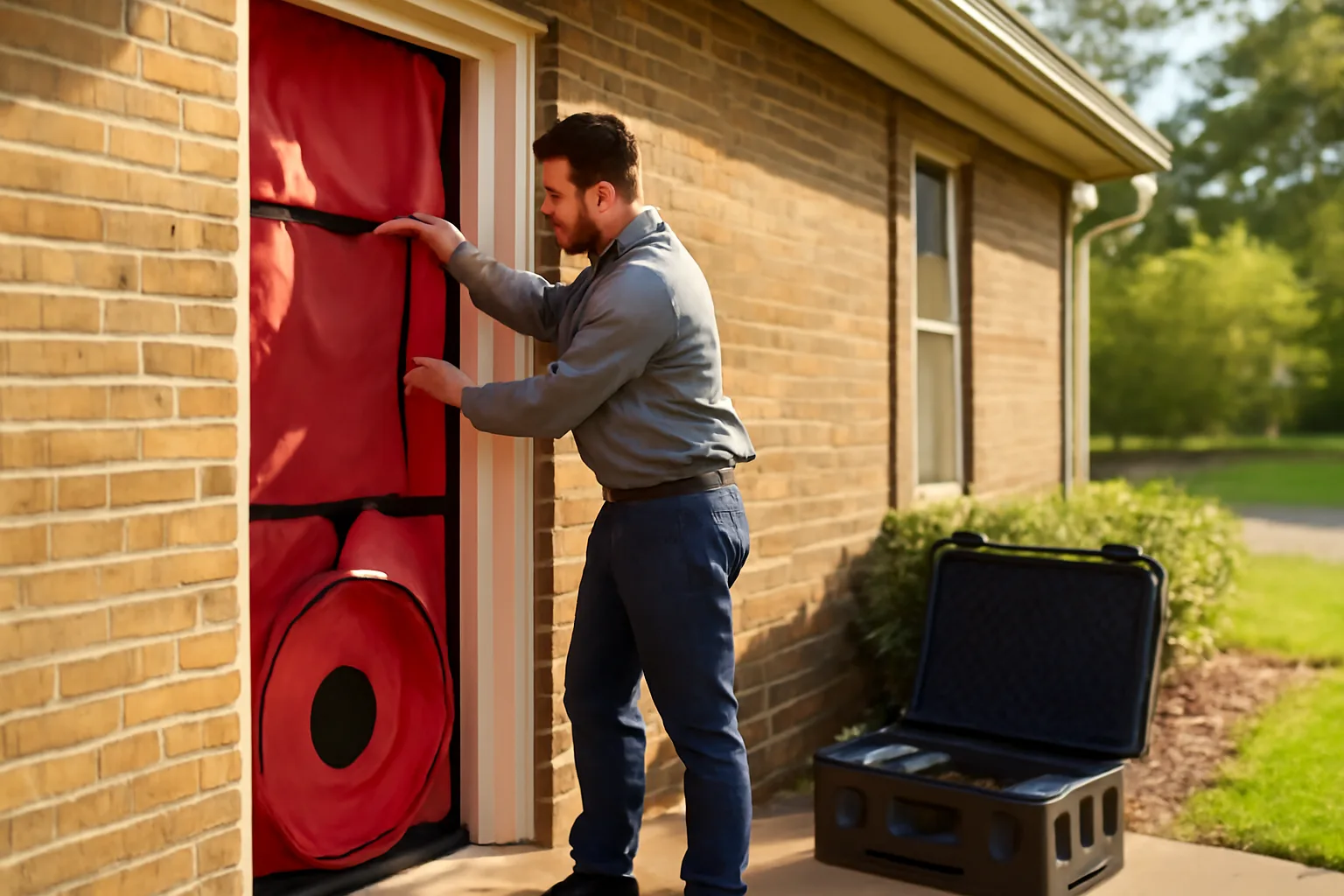
Equipment is the number that surprises people. If you're going solo, you need a calibrated blower door to run the airtightness test required under RESNET standards [2]. That single line can cost more than everything else combined. Buying used gear from a rater who's retiring is worth chasing down. The savings are real.
Join an existing rating company as an employee and they often supply the equipment. Your out-of-pocket cost drops hard, maybe to $700 to $2,000 for training and membership.
For software, EnergyGauge USA comes from the Florida Solar Energy Center and gets used across the Southeast, Alabama included [3]. REM/Rate, now owned by Ekotrope, is the other major platform. Both bill annually. Some training programs bundle a trial license.
HERSPath offers a $179 bundle covering RESNET membership and a blower door kit reference, which lowers startup friction for people who want a single starting point. Check /start for current details.
Want a sense of how Alabama compares to a busier neighbor? Read HERS rater cost in Georgia or HERS rater cost in Florida. Both markets have more new construction and more local training options.
How long does it take to become a HERS rater in Alabama?
From first research to your first fully rated home, most people take 2 to 6 months. Here's why the range is that wide.
Training is the short part. Most accredited HERS rater courses run 3 to 5 days of instruction, either in person or spread across several weeks online [4]. The exam usually comes at or right after the training.
Field work is what stretches the timeline. RESNET requires candidates to complete a set of supervised field ratings under a certified trainer before full certification. Under RESNET's published standards, that means a minimum of supervised homes signed off by your trainer [1]. Scheduling those days depends entirely on your trainer's availability and the pipeline of homes they're actively rating. In a slow market, waiting for those homes to line up can take weeks.
After you submit your supervised ratings for review, RESNET processes your certification. That step can run a couple of weeks on its own.
Already working in construction or energy auditing, with a trainer who has active projects? You might finish in 6 to 8 weeks. Starting cold, with a trainer running a thin pipeline? Four to six months is honest. Don't promise a client a specific start date without confirming the current processing window with your Rater Provider and RESNET first.
What is RESNET membership and why does it cost money every year?
RESNET is the nonprofit that owns and administers the HERS Index standard. Every certified HERS rater has to belong to RESNET and renew that membership every year [1]. The fee pays for RESNET's accreditation system, quality assurance oversight, and the national registry of rated homes.
The annual fee has sat in the $175 range for individual raters, though you should confirm the current rate with RESNET because it moves [1]. Let your membership lapse and your ability to issue official HERS ratings lapses with it. Builders and lenders rely on ratings from active, credentialed raters, so a lapsed membership means you can't deliver a compliant rating.
Beyond the base fee, RESNET charges for things like rating software registration and continuing education. That last part matters for your budget: this isn't a one-time price you pay and then coast on. You're buying into a system that bills you every year.
What training courses are available to Alabama residents?
RESNET publishes a directory of accredited Rater Training Providers on its site [4]. Alabama residents usually pick one of two paths: travel to an in-person course (Atlanta and Nashville are common nearby spots for Southeast raters) or take an online course.
Online courses have grown since 2020 and work fine for the classroom portions. The field work still has to happen in person with a qualified trainer. So even an "online" path pulls in some in-person days for blower door and duct testing practice.
Some utilities and state energy offices co-sponsor training events that bring instructors into Alabama. The Alabama Department of Economic and Community Affairs (ADECA) runs energy programs statewide and sometimes posts local training info, though ADECA doesn't certify raters itself [5].
States with bigger new-construction markets, like the ones covered in HERS rater cost in Arkansas or HERS rater cost in Arizona, tend to host more frequent in-state training. Alabama raters often travel or commit to a fully online track.
What does a HERS rating actually cost the homeowner or builder in Alabama?
Different question from what it costs to become a rater, but builders in Alabama search it first. A HERS rating on a new home here typically runs $300 to $600, though the price shifts with market, home complexity, and whether the builder buys ratings in volume.
That fee covers the rater's time to review plans, inspect the site, run blower door and duct leakage tests, enter the data, and produce the HERS Index certificate. Rural projects can carry a travel surcharge.
Projects chasing Energy Star certification or DOE Zero Energy Ready Home status add verification steps and cost. Energy Star Single-Family New Homes Version 3.2 requires a certified HERS rater to conduct mandatory inspections and testing, so builders in that program treat ratings as a line item, not an optional extra [6].
The 2021 IECC, which Alabama has not fully adopted statewide as of 2025, would mandate HERS verification for certain compliance paths if it were in force. Alabama's code adoption moves slower than many states, and that holds down demand for ratings in the pure code-compliance context [7].
How does Alabama's HERS rater market compare to nearby states?
Alabama sits in a middle tier for HERS activity. It's not Florida or Georgia, where high new-construction volume and stronger code rules create steady demand. It's busier than rural markets with almost no new construction.
The absence of a statewide code mandate requiring HERS ratings is the main limiter on organic demand here. In California, a HERS rating is required by code for most new construction [8]. In Alabama, demand comes mostly from builders chasing Energy Star, utility rebate programs, or buyers who specifically ask for third-party verification.
That reality shapes whether Alabama works as a home base for a full-time rater. Already in construction or home performance contracting and want to add HERS rating as a service line? The math works well. Planning to build a standalone business on HERS ratings alone in a rural Alabama market? The volume may not carry full-time work unless you also offer energy audits, Manual J load calculations, or related services.
Compare the cost and demand profiles next door: HERS rater cost in Florida, HERS rater cost in Georgia, and HERS rater cost in Arkansas.
What equipment do you actually need to start rating homes in Alabama?
Two pieces of test gear are non-negotiable for field verification: a blower door system and a duct leakage tester.
The blower door measures whole-house air leakage. The dominant device in RESNET ratings is the Minneapolis Blower Door, though other ASTM E779-compliant systems are acceptable [2]. A new Minneapolis Blower Door Model 3 retails around $4,500 to $5,500. The Duct Blaster, used to measure duct leakage to outside, runs $1,500 to $2,500 new.
Beyond those two, you'll want a combustion analyzer if you plan to offer energy audits (separate from HERS ratings but a natural add-on), a digital manometer, extension cords and ring adapters for different door sizes, and a reliable laptop loaded with your rating software.
Some Alabama raters start by borrowing or renting equipment from their Rater Provider while finishing supervised ratings. Once you're credentialed and taking independent jobs, you need your own kit. Budget at least $6,000 to $9,000 for a complete new setup, or hunt for used gear in the $3,000 to $5,000 range if you find a reputable seller.
HERSPath's $179 starting package is built to cut the friction of early decisions around RESNET membership and blower door selection. More at /start.
Are there any Alabama-specific energy programs that hire HERS raters?
A few programs in Alabama create real demand for ratings.
The Tennessee Valley Authority (TVA) serves a large chunk of northern Alabama and has run home energy programs that use ratings and audits. TVA's EnergyRight program has involved certified raters in energy assessments, though the structure changes periodically [9]. Confirm current details with TVA before banking on that demand.
Alabama Power serves central and southern Alabama and has offered energy efficiency programs for new homes. Programs like these sometimes reward HERS-rated homes, which builds builder demand [10]. Terms change, so verify current requirements.
The U.S. Department of Energy's Weatherization Assistance Program, run in Alabama through ADECA, funds efficiency work in low-income housing. Some WAP work uses energy auditors whose skills overlap with HERS raters, though WAP auditors operate under BPI or SWS standards rather than RESNET [5].
Thinking about the wider Southeast? HERS rater cost in Georgia is worth a read, because Georgia's market often spills over to Alabama-based raters working the Columbus and Chattanooga corridors.
What ongoing costs should Alabama HERS raters budget for each year?
Year one is front-loaded with training and equipment. After that, annual overhead looks more like this.
| Annual item | Estimated cost |
|---|---|
| RESNET membership renewal | ~$175 |
| Rating software subscription | $200 to $600 |
| Continuing education | $0 to $300 |
| Equipment calibration | $200 to $500 |
| Business insurance (E&O, general liability) | $500 to $1,500 |
| Travel and vehicle costs | Varies by market |
Calibration is the item people underestimate. Blower door fans need periodic calibration to hold their accuracy, and The Energy Conservatory recommends recalibrating on a regular schedule [2]. Add shipping if you're sending gear out.
Errors and omissions (E&O) insurance isn't required by RESNET, but it's strongly advisable. If a rating error leads to a failed Energy Star inspection or a loan problem, you want coverage. E&O policies for energy raters vary widely. Get quotes from specialty insurers who cover building science professionals.
Total annual operating cost for a solo Alabama rater, excluding vehicle costs, realistically runs $1,200 to $3,000 a year. At $400 per rating, you'd need roughly 3 to 8 ratings a year just to cover overhead before paying yourself. That's the minimum viable volume picture.
Frequently asked questions
Do you need a state license to be a HERS rater in Alabama?
No. Alabama does not require a state license to work as a HERS rater. The credential you need is RESNET certification, a national designation administered entirely by RESNET (Residential Energy Services Network). There are no state applications, fees, or exams. Some local utility programs set their own rules, so confirm with any specific program sponsor before starting work.
How much does it cost to become a HERS rater in Alabama?
Plan on $1,500 to $3,500 in first-year costs if you're joining an employer who supplies equipment. If you buy your own blower door and duct tester, add $5,000 to $9,000 for new gear. The main buckets: accredited training ($500-$1,500), RESNET membership (~$175/year), rating software ($200-$600/year), and field equipment. Used equipment can cut the startup cost sharply.
How long does it take to become a HERS rater in Alabama?
Most people finish in 2 to 6 months. Training courses run 3 to 5 days. RESNET then requires supervised field ratings under a certified trainer before you can rate independently. Scheduling those field days depends on your trainer's workload. Don't commit to a firm start date for client work without confirming the current processing timeline with RESNET directly.
Is there a HERS rater exam, and what does it cost?
Yes. RESNET requires candidates to pass a written exam covering energy efficiency principles and HERS rating procedures. Many accredited training courses bundle the exam fee into the course price, so you may not see it as a separate line. Take it standalone and the fee varies by provider. Confirm the current exam structure and cost with your chosen Rater Training Provider before enrolling.
What is the HERS Index and why does it matter in Alabama?
The HERS Index is a numerical score measuring a home's energy efficiency against a reference home. A 100 equals the reference; lower scores mean more efficient. In Alabama, builders use HERS scores to qualify for Energy Star certification, DOE Zero Energy Ready Home status, and some utility rebates. Alabama hasn't mandated HERS ratings in its statewide code, so demand is program-driven rather than code-driven.
What rating software do HERS raters in Alabama typically use?
The two common platforms are EnergyGauge USA (developed by the Florida Solar Energy Center and widely used across the Southeast) and Ekotrope (formerly REM/Rate). Both are RESNET-accredited and produce compliant HERS certificates. Annual subscriptions run $200 to $600. Some training programs include a trial license. Ask your Rater Training Provider which software they teach, since starting with that one cuts your learning curve.
Can I do HERS ratings part-time in Alabama?
Yes, and many Alabama raters do. The credential doesn't require full-time practice. You maintain RESNET membership and meet continuing education requirements each year, but there's no minimum number of ratings to stay certified. Part-time raters here often work in adjacent trades like home inspection, HVAC, or general contracting and add HERS rating as a service. The work volume in many Alabama markets suits part-time practice anyway.
Do HERS raters in Alabama need errors and omissions insurance?
RESNET doesn't require E&O insurance, but it's strongly advisable. A rating error that causes a home to fail an Energy Star inspection or creates a financing problem can result in a claim against you. General liability insurance is worth carrying too if you're on job sites. Specialty insurers who cover home inspectors and energy auditors often have relevant products. Get quotes before your first independent rating.
How much can a HERS rater charge per rating in Alabama?
Typical per-home fees in Alabama run $300 to $600 for a standard new construction rating. Rural projects with long drive times may carry travel surcharges. High-performance certifications like Energy Star or Zero Energy Ready require extra inspection steps and often bill higher, in the $500 to $800 range. Volume relationships with production builders can involve negotiated lower per-home rates for steady work. These are market norms, not regulated prices.
Is the HERS rater market in Alabama growing?
Modestly. Alabama's new-construction market has grown in metro areas like Huntsville, Birmingham, and the Gulf Coast, which pulls in more demand for ratings tied to Energy Star and utility programs. The lack of a mandatory statewide energy code requiring HERS verification holds down baseline demand compared to states like California or Georgia. Raters serving Alabama often expand into Georgia, Tennessee, or Florida to build sustainable volume.
What is a Rater Provider and do I need one in Alabama?
A Rater Provider is a RESNET-accredited company that sponsors and quality-assures individual raters. Every HERS rater must be affiliated with an accredited Rater Provider. The Provider reviews your ratings before they hit the national registry and carries responsibility for your quality assurance. You can find current Rater Providers through RESNET. Some charge affiliation fees; others fold the cost into a broader business arrangement. Confirm current terms directly with any Provider you consider.
Does Alabama follow the 2021 International Energy Conservation Code?
As of 2025, Alabama has not adopted the 2021 IECC statewide. Alabama's code adoption process moves slowly and adoption varies by jurisdiction. This matters for HERS raters because in states with current IECC versions, some compliance paths require HERS rating verification. In Alabama, that code-driven demand is limited. Check the specific jurisdiction you're working in and confirm current code status with the local building department.
How do Alabama HERS rater costs compare to neighboring states?
The credential costs (training, RESNET membership, exam) are similar across state lines since national providers set them. Equipment costs are the same everywhere. The real difference is market opportunity: Georgia and Florida have higher new-construction volume and stronger code requirements, which supports better rating volume for raters based there. See our breakdowns for HERS rater cost in Georgia and HERS rater cost in Florida for direct comparisons.
Sources
- RESNET, Standards and Certification: RESNET administers HERS rater certification requirements including minimum supervised field ratings and annual membership
- The Energy Conservatory: Blower door equipment specifications, pricing range, and calibration recommendations
- Florida Solar Energy Center, EnergyGauge: EnergyGauge USA is a RESNET-accredited rating software widely used in the Southeast
- RESNET, Directory of Rater Training Providers: RESNET publishes a directory of accredited Rater Training Providers
- Alabama Department of Economic and Community Affairs, Energy Division: ADECA administers federal energy programs in Alabama including Weatherization Assistance Program
- U.S. EPA, ENERGY STAR Single-Family New Homes Program Requirements: Energy Star Single-Family New Homes Version 3.2 requires a certified HERS rater to conduct mandatory inspections and testing
- U.S. DOE, Building Energy Codes Program: Alabama's current energy code adoption status and comparison to the 2021 IECC
- California Energy Commission, 2022 Building Energy Efficiency Standards: California requires HERS verification for most new construction under its energy code
- Tennessee Valley Authority, EnergyRight Program: TVA's EnergyRight program has offered home energy efficiency programs serving northern Alabama
- Alabama Power: Alabama Power offers energy efficiency programs for residential customers that may involve HERS-rated homes