Last updated 2026-08-21
TL;DR
Illinois has no HERS rater license. Certification is RESNET training, the National Rater Test, mentored ratings, and a Rating Provider. There is no official state price. Year-one money goes to class tuition, a blower door and duct tester, software, and provider fees. Confirm every fee with RESNET and your provider. What you charge a builder is a separate market price.
How much does HERS rater cost in Illinois?
There is no official Illinois price for becoming a HERS rater. The state does not collect a rater license fee. You pay private training shops, RESNET exams, a Rating Provider, software, insurance, and field gear.[1]
I treat year-one cost as three large invoices and a pile of small ones. Training is the first invoice. A blower door and a duct leakage tester are the second. Provider dues, software, and quality-assurance fees are the third. Everything else is smaller.
Nobody publishes a clean Illinois HERS rater startup study I would hang a budget on. Vendor prices move. Confirm every number before you write a check.
Skip the hunt for one magic total. Open a spreadsheet instead. Put a line for class tuition, a line for the national test, a line for mentor time if your provider charges it, a line for the fan and manometer, a line for software, and a line for E&O insurance. Then add a cash buffer. Travel to mentored ratings is real money in a state this long.
The fee you charge a builder is not your certification cost. That is revenue. In many Midwest markets a single-family rating lands in the low-to-mid hundreds, sometimes more with extra testing and distance. That is a market read, not a published Illinois tariff. Call two Rating Providers that already work Cook County, the collar counties, or a downstate metro and ask what builders actually pay.
| Cost bucket | Who sets the price | What you should do |
|---|---|---|
| Training tuition | RESNET accredited training provider | Confirm the invoice before you enroll |
| National Rater Test | RESNET | Get the live candidate fee from RESNET |
| Provider dues and QA | Rating Provider | Get the schedule in writing |
| Blower door and duct tester | Equipment vendors | Get two quotes and a calibration path |
| Rating software | Software vendor, often steered by the provider | Match the tool your provider files |
| Illinois HERS license | Does not exist | Do not pay anyone for one |
The certification rules are national. If you want a side-by-side feel, read HERS rater cost in california and HERS rater cost in florida. Illinois does not tack on a state board exam.
Why do Illinois builders pay for HERS ratings at all?
Builders buy ratings because a file opens a code path, a label, or a tax credit. The rater invoice is small next to those outcomes.
ENERGY STAR Certified Homes and the DOE Zero Energy Ready Home program both put a rater in the process.[11][8] Those labels are private programs. They still show up in Illinois subdivisions because buyers and accountants recognize them.
Federal 45L is the loud one. The IRS Energy Efficient Home Credit page is the place to confirm current rules for eligible contractors on qualified new energy efficient homes.[6] In the statute, "the energy efficient home credit determined under this section for the taxable year is the applicable amount for each qualified new energy efficient home which is constructed by the eligible contractor and acquired by a person from such eligible contractor for use as a residence during the taxable year."[7]
The applicable amounts people use in builder meetings are $2,500 for a qualifying ENERGY STAR home and $5,000 for a qualifying DOE Zero Energy Ready Home on eligible single-family units acquired after December 31, 2022. Multifamily rules and prevailing-wage add-ons are different. Confirm eligibility, acquisition dates, and unit type on the IRS page before you put those figures in a proposal.[6][8][14]
A few hundred dollars of rater time against a $2,500 or $5,000 credit is easy math for a production builder. That is demand. It is not your salary.
Code work is quieter. Some houses use the Energy Rating Index path in the Illinois Energy Conservation Code. Others stay prescriptive and never call you. Do not model a living on every permit in the county.
Do you need a license for HERS rater in Illinois?
No. Illinois does not license HERS raters. Certification comes from RESNET. You complete accredited training, pass the National Rater Test, finish probationary field work, and work under a RESNET Accredited Rating Provider that runs quality assurance.[1][9]
Home inspectors are a different job. The Home Inspector License Act is the Illinois statute that licenses people who sell home inspections, and IDFPR runs that program.[5][12] A HERS rating is not a home inspection. Keep the scopes apart on the contract. If you also sell whole-house inspections, get the inspection license. Confirm current inspector rules on the IDFPR site.[12]
The Energy Efficient Building Act points the Capital Development Board at an energy code for residential buildings. It does not create a rater board and it does not collect a rater fee.[3][4]
You still need ordinary business paper. Register the entity that sends invoices. Check the city or county business license where you operate. That is not a HERS credential.
Ignore anyone selling an "Illinois HERS permit." Pay RESNET and a provider instead.
How long does HERS rater take in Illinois?
Plan on a few months, not a weekend. RESNET requires accredited training, a passing score on the National Rater Test, and probationary ratings under a provider's rules before you rate on your own.[1][9]
Class time is often concentrated. Some people finish the classroom piece in one or two weeks. The calendar stretch is the field work. You need houses. You need a mentor. You need a day when you can run a blower door.
Winter in northern Illinois can slow the field piece. Builders still close homes, so ratings happen, but your mentor's schedule and the job sites will set the pace more than any statute. Nobody publishes a state processing clock because there is no state application.
Do not quit a job on a 30-day plan. Line up the Rating Provider first. Book training second. Buy the heavy gear last. Confirm the current mentored-rating count with that provider. MINHERS sets the national certification framework. Providers apply it.[9]
If you already work in weatherization or HVAC, you will move faster. If you have never stood in a mechanical room, give yourself a full building season.
There is no Illinois board that stamps your card in 6 weeks. Anyone promising a fixed approval date is selling you a story.
What training and exam fees should you budget?
RESNET does not let you self-certify from a PDF. You complete a RESNET Accredited Rater Training course, then you sit the National Rater Test.[1]
Tuition is a private price. Courses I have seen advertised sit in a band from a bit over $1,000 to several thousand dollars. That spread comes from format (online versus in-person), whether field days are included, and whether the school bundles software time. It is not an Illinois fee. Confirm the invoice with the school and confirm the school is actually accredited.
I will not print a National Rater Test price here. RESNET changes candidate fees. Get the current amount from RESNET before you register.
Some providers charge for mentor ride-alongs. Some fold that into membership. Ask in writing.
Study kits are optional. A $179 paper kit can help you learn blower-door theory. It does not replace accredited training and it does not put you in the RESNET registry. HERSPath sells a one-time RESNET + Blower-Door Kit if you want that kind of reading. Use it as reading, then pay for the real class.
Waste of money: a second full tuition from a shop that is not on RESNET's accredited list. If they cannot show that status, stop.
CE later is a provider question, not an Illinois statute. Confirm it when you join.
What field equipment do you actually need?
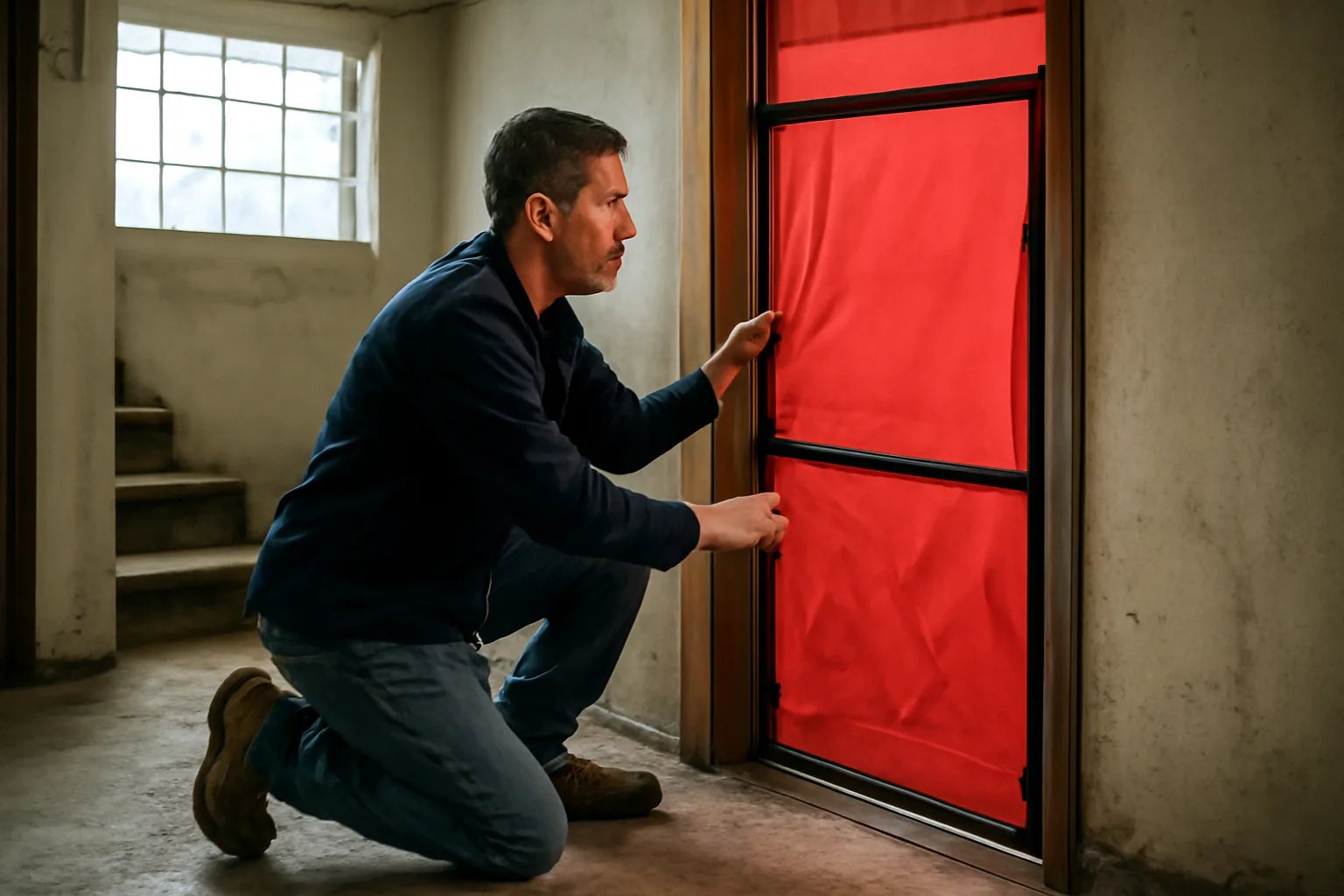
You need a blower door you can calibrate, a manometer, a duct leakage tester if you will do ducts (you will), and the cloth, frame, and hose that let you seal a rough opening. ANSI/RESNET/ICC 301 is the calculation standard your software implements. Field tests have to be real.[10]
There is no state equipment grant I would count on. Buy used only if you can still get calibration and parts.
Prices move with brand and whether the kit includes a duct system. Complete blower-door setups commonly land in the low thousands. Duct testers add another large invoice. I will not invent a 2026 catalog number. Get quotes from the manufacturers raters actually use and add shipping plus a calibration cycle.
A decent laptop, a reliable way into attics, and a way to measure rooms are not glamorous. They are how you finish a file.
Skip a thermal camera in year one unless a client pays for the pictures. Nice images. Rarely what files the rating.
Software is a yearly bill. RESNET-approved tools are the usual options. Confirm which package your Rating Provider wants. Buying the wrong one is a real way to light money on fire.
Share a duct tester with another rater until the calendar is full if you can do it without wrecking scheduling. Owning two of everything in month one is how people overspend.
What does a HERS rating cost a builder in Illinois?
Builders pay a service fee, not your tuition. Illinois has no posted statewide rate card for that fee.
In practice the number follows house size, number of visits (pre-drywall plus final is common), travel, and whether the file is for code, ENERGY STAR, or a tax credit.[11][8]
I have not seen a current, citable Illinois builder survey. Ask for real quotes in the metro you will work. A Chicago-suburb production house does not price like a custom home outside Peoria.
Quote the work in writing. State how many site visits, which tests, and what happens if the house fails and you come back. Change orders are how you stay solvent.
Do not undercut so hard you cannot drive back for a retest. Mileage across Illinois will eat a cheap bid.
If a builder wants 45L support, your job is still the rating file and the program checklists. Their CPA owns the credit. Point them at the IRS Energy Efficient Home Credit page and stay in your lane.[6][14]
What first-year business costs do Illinois raters pay?
After credentials, you still have a business. Illinois will want the entity paper for whoever invoices. I am not your tax advisor. Confirm sales tax and income tax treatment with a CPA who works Illinois service businesses.
Insurance is not optional if a provider or builder requires it. E&O and general liability prices vary with your history. Get two quotes.
A Rating Provider membership is the gate. MINHERS puts certified raters under providers for quality assurance and file review.[9] Annual dues plus per-rating registry or QA fees are normal. Confirm the live schedule with the provider. I will not invent their current price list.
Vehicle costs in Illinois get ugly if you chase scattered starts. Pick a county cluster for year one. Chasing one house in Cairo from Rockford is how you lose money on a $400 rating.
Chicago and some suburbs want local business licenses. Those fees are usually small next to a duct blaster. Confirm with the clerk. Do not treat a city license as RESNET certification.
Compare the same stack in HERS rater cost in arizona or HERS rater cost in colorado if you want to see how little the state line changes the national bills.
How does the Illinois energy code use a HERS score?
Illinois adopts an energy code through the Capital Development Board under the Energy Efficient Building Act.[3][4] The Illinois Energy Conservation Code is the document plan reviewers use. Confirm the current IECC edition and Illinois amendments with CDB before you tell a builder what score passes.[4]
IECC has a prescriptive path and a performance path. The Energy Rating Index path is where a HERS Index often shows up. A HERS Index of 100 is the RESNET reference home based on the 2006 IECC. RESNET's HERS Index materials state that a home built to the specifications of the HERS Reference Home (based on the 2006 International Energy Conservation Code) "scores a HERS Index of 100, while a net zero energy home scores a HERS Index of 0."[2]
Lower is better. Code target numbers change when Illinois updates the Code. I will not lock a passing ERI in this article because the number lives in the edition CDB has in force. Read the current code book, then the local amendments.
HERS files also support ENERGY STAR and ZERH labels, which sit on top of code.[11][8]
DCEO's energy office publishes state energy programs that sometimes touch new construction. Those are incentive programs, not rater licenses. Confirm what is open with DCEO.[13]
Who hires HERS raters in Illinois?
Production builders who want ENERGY STAR or 45L. Custom builders who picked the ERI path. A few architects. Rating Providers who need contract raters. Occasionally a utility new-construction program.
ComEd and Ameren Illinois run efficiency programs that change. I will not print a rebate that may already be closed. Ask the utility's current new-construction materials, then confirm the rater's role in writing.
You do not need 200 homes on day one. You need a provider who already has builder accounts, or a builder who already promised you the next community.
If you cannot name three likely buyers before you buy a fan, wait.
Neighboring-state writeups will not get you Illinois clients. They help you see that HERS rater cost in georgia and HERS rater cost in connecticut sit on the same RESNET chassis. Volume and travel change. The test does not.
What yearly fees continue after you certify?
Certification is not a one-time stamp. Providers recertify, pull files, and charge QA. RESNET maintains the national registry and the standards you rate against.[9][1]
Expect a yearly provider bill, software renewal, calibration, insurance, and whatever continuing education your provider requires. Confirm CE with them. I have no Illinois CE statute for HERS because there is no Illinois HERS board.
If you let provider membership lapse, you stop submitting ratings. That is the real enforcement.
Budget calibration before the next busy spring. A cheap manometer that fails a check costs more than the cal lab.
Registry or per-rating QA fees add up if you finally get busy. Ask for the per-file number in the same email as the annual dues. People forget the per-file number. Then they wonder why month six feels tight.
What paper do you file, and how do other states compare?
Your rating file goes through your Rating Provider into RESNET's processes. Builders may also need ENERGY STAR checklists and, for 45L, their own tax paper such as the documentation the IRS describes for the Energy Efficient Home Credit.[6][11][14] You do not file 45L for the builder unless you are also their tax person, which you are not.
Illinois code officials may want a compliance report that matches the path on the permit. Ask the jurisdiction. Do not assume Chicago, Naperville, and a downstate county want the same PDF.
Conflict-of-interest rules live in MINHERS. Confirm them before you rate a house you have a financial stake in.[9] Builders who want to "just rate their own homes" usually cannot treat that as a shortcut.
Cost structure is national. HERS rater cost in delaware uses the same RESNET test. HERS rater cost in hawaii has travel problems you will not have. Stick to Illinois job density when you model year one.
HERSPath is an independent publisher, not a law firm and not a rating company. If you want the study kit, go to /start. Confirm live fees with RESNET, your training provider, and your Rating Provider. No article can freeze those invoices.
Frequently asked questions
Do you need a license for HERS rater in Illinois?
No. Illinois does not issue a HERS rater license. You certify through RESNET, pass the National Rater Test, finish mentored ratings, and join a Rating Provider. A home inspector license is a separate IDFPR credential and is only required if you also sell home inspections. Confirm inspector rules with IDFPR if that is part of your plan.
How much does HERS rater cost in Illinois?
There is no state fee and no official total. Year-one cost is accredited training (often a bit over $1,000 to several thousand), the RESNET exam, a blower door and duct tester in the low thousands each, plus software, insurance, and provider dues. Confirm every live price with RESNET, the school, and the provider before you budget.
How long does HERS rater take in Illinois?
Most people should plan on a few months. The class can be one or two weeks. Mentored field ratings set the real calendar, and winter plus mentor availability can stretch that. There is no Illinois processing clock because there is no state application. Confirm the mentored-rating count with your Rating Provider.
Is a HERS rater the same as an Illinois home inspector?
No. A HERS rater produces a RESNET energy rating. An Illinois home inspector performs a home inspection under the Home Inspector License Act and needs an IDFPR license. You can hold both. You should not treat a HERS visit as a home inspection or the reverse. Keep the contracts and the scope separate.
Does Illinois require a HERS rating on every new house?
No. The Illinois Energy Conservation Code, adopted through the Capital Development Board, allows more than one compliance path. The Energy Rating Index path is where a HERS Index often appears. Prescriptive projects may never call a rater. Confirm the edition and amendments with CDB for the house you are discussing.
Can I work as a HERS rater in Illinois with out-of-state training?
Yes, if the course is RESNET accredited. The credential is national. You still need a Rating Provider, you still need to hit Illinois code and program targets, and you still need local job access. Training in another state does not create an Illinois license, because Illinois does not license this job.
What score is a good HERS Index in Illinois?
Lower is more efficient. RESNET sets 100 as the 2006 IECC reference home and 0 as a net zero energy home. A "good" score for a permit is whatever the current Illinois Energy Conservation Code ERI path requires, which changes when CDB updates the Code. ENERGY STAR and ZERH have their own targets. Read the program in force.
Do I need a blower door to be a HERS rater in Illinois?
Yes, in practice. A RESNET rating depends on tested enclosure leakage, and you will also need a duct leakage tester for most new-house work. Illinois does not issue the fan. You buy or borrow calibrated equipment that your provider and the 301 standard will accept. Confirm calibration before you file ratings.
How much do Illinois builders pay per HERS rating?
There is no statewide rate card. Many Midwest single-family ratings land in the low-to-mid hundreds and rise with extra visits, ducts, and travel. That is a market range, not a published tariff. Call two providers already working the counties you want and ask what production builders actually pay.
Does 45L require a HERS rater in Illinois?
45L is a federal credit for eligible contractors on qualified new energy efficient homes. ENERGY STAR and DOE Zero Energy Ready Home paths, which support the common $2,500 and $5,000 amounts, put a rater in the certification process. Confirm current unit types, dates, and amounts on the IRS Energy Efficient Home Credit page before you sell the credit.
Are there Illinois grants to pay for HERS rater training?
I have not found a standing statewide tuition grant that pays ordinary HERS rater class fees. DCEO posts energy programs that open and close. Do not model free school. If a workforce or utility scholarship appears, get the terms in writing. Otherwise plan to pay the training provider yourself.
Can I rate my own homes as a builder in Illinois?
Usually that is the wrong plan. MINHERS conflict-of-interest rules limit rating homes where you have a financial stake. Confirm the current independence rules with RESNET and your Rating Provider before you assume you can file your own subdivision. Most builders hire an independent rater and keep 45L paper with their tax advisor.
What is a Rating Provider and do I need one in Illinois?
Yes. A RESNET Accredited Rating Provider is the company that holds your certification relationship, reviews files, and runs quality assurance under MINHERS. Illinois does not replace that role with a state board. You pick a provider, pay their dues and QA fees, and file through them. Confirm the live fee schedule before you join.
Do Chicago or Cook County add a HERS rater license?
They do not create a HERS rater occupational license. A city or county may still want a general business license for the entity that invoices. That is ordinary local paper. It is not RESNET certification and it is not an IDFPR HERS card, because IDFPR does not issue one. Confirm with the local clerk where you operate.
Sources
- RESNET: HERS Raters are certified by RESNET through accredited training, the National Rater Test, and work with a Rating Provider, not by a state rater board.
- RESNET, HERS Index: A home built to the HERS Reference Home based on the 2006 IECC scores a HERS Index of 100, and a net zero energy home scores 0.
- Illinois Capital Development Board: CDB maintains the Illinois Energy Conservation Code and is the place to confirm the current edition and amendments.
- IRS, Energy Efficient Home Credit (45L): The IRS describes the 45L energy efficient home credit for eligible contractors on qualified new energy efficient homes, including current applicable amounts.
- 26 U.S.C. § 45L (Cornell LII): Section 45L sets the energy efficient home credit as the applicable amount for each qualified new energy efficient home constructed by an eligible contractor and acquired for use as a residence.
- U.S. Department of Energy, Zero Energy Ready Home Program: DOE Zero Energy Ready Home is the federal high-performance new-home program tied to the larger 45L credit amount and requires program verification.
- RESNET, MINHERS standards: MINHERS sets national rules for rater certification, Rating Providers, quality assurance, and independence.
- RESNET, ANSI/RESNET/ICC Standards: ANSI/RESNET/ICC 301 is the standard that defines HERS calculations and related testing used in rating software.
- ENERGY STAR, National Program Requirements for Certified Homes: ENERGY STAR Certified Homes national program requirements put a rater in the certification process for labeled new homes.
- IDFPR: IDFPR administers Illinois home inspector licensing, which is separate from HERS rater certification.
- Illinois DCEO: DCEO's energy office publishes Illinois energy programs that may touch new construction incentives, not rater licensing.