Last updated 2026-08-18
TL;DR
Arkansas has no state HERS rater license. Renewal goes entirely through RESNET, the national standards body. You need 12 continuing education hours per two-year cycle, you pay a certification fee to your Rating Provider, and you keep your blower-door calibration current. Fees vary, so confirm exact amounts with your Rating Provider and RESNET directly.
Do you need a state license to be a HERS rater in Arkansas?
No. Arkansas issues no state-specific HERS rater license. There's no Arkansas Energy Office credential, no state board exam, and no Arkansas-only renewal form. That surprises people who came from states like California or Colorado, which stack their own rules on top of the national standard.
What governs your status is RESNET, the Residential Energy Services Network. RESNET sets HERS standards under ANSI/RESNET/ICC Standard 301 [1]. Your certification lives at the Rating Provider level. A RESNET-accredited Rating Provider trains you, quality-assures your work, and processes your renewal. If you're already rated and working in Arkansas, your Rating Provider is who you deal with for renewals. No Arkansas state agency touches it.
Here's the practical catch. If your Rating Provider closes or drops your file, you have to transfer to another accredited Rating Provider before your certification lapses. That transfer is a RESNET-level process, not an Arkansas one. Keep that relationship alive.
How does HERS rater renewal actually work in Arkansas?
RESNET certifies raters on a two-year cycle [2]. When your period ends, you renew by showing your Rating Provider you've met the continuing education and field activity requirements in RESNET's standards. Your Rating Provider confirms the renewal with RESNET, and your name stays on the active rater registry.
That registry is public and searchable [8]. Lenders, builders, and code officials in Arkansas check it before they accept a HERS score. Drop off the registry because you missed a renewal, and you can't certify new ratings. Anything you submit can be rejected.
The renewal path in brief: 1. Complete 12 hours of RESNET-approved continuing education within your two-year certification period [2]. 2. Confirm your field activity (ratings completed) meets your Rating Provider's minimum, which varies by provider. 3. Submit your renewal through your Rating Provider, paying any applicable fees. 4. Your Rating Provider updates the RESNET registry.
No Arkansas state form. No Arkansas fee. No Arkansas agency to notify. The whole thing runs between you, your Rating Provider, and RESNET.
How much does HERS rater renewal cost in Arkansas?
Costs vary, so be careful with anyone quoting a single number. RESNET does not publish one universal renewal fee. Your Rating Provider sets its own fees for training, quality assurance, and certification maintenance [3].
Here's what you can expect, based on publicly posted Rating Provider fee schedules:
| Cost item | Typical range | Who sets it |
|---|---|---|
| Annual or biennial Rating Provider membership/QA fee | $200 to $600+ per year | Your Rating Provider |
| RESNET-approved CE courses (12 hrs total) | $0 to $400 depending on format | Course provider |
| Field rating software subscription | $300 to $800+ per year | Software vendor |
| Blower door calibration (every 2 years) | $150 to $400 | Equipment service lab |
Nobody has one clean number for Arkansas, because the state sets none of these fees. The closest authoritative source is your Rating Provider's own fee schedule. Ask for it in writing before you commit. Confirm current fees with your Rating Provider and RESNET directly, because amounts change.
If you're shopping for training and need to get your blower-door work set up cheaply, HERSPath's $179 RESNET plus Blower-Door Kit is worth comparing against what individual course providers charge for the same hours.
How long does HERS rater renewal take in Arkansas?
The two-year certification cycle is fixed by RESNET [2]. How long the renewal itself takes comes down to two things: how fast you finish your 12 CE hours, and how fast your Rating Provider processes the paperwork.
Most Rating Providers process renewals within a few business days once you submit documentation. Some have online portals that update your RESNET registry status the same day. Others still run on email and take one to two weeks. Ask your provider what its typical turnaround is.
Don't wait until the last week of your certification period. If your rating expires, you can't submit new HERS ratings until it's reinstated. Reinstatement often adds requirements and fees beyond a normal renewal. Give yourself at least 30 days before expiration to gather CE certificates and submit your packet.
There's no Arkansas-side delay, since no state agency is in the loop. The bottleneck is always your Rating Provider's processing and your own CE completion.
What continuing education counts for Arkansas HERS rater renewal?
RESNET requires 12 hours of continuing education per two-year certification period [2]. The courses must be RESNET-approved. Not every online energy course qualifies. Your Rating Provider can hand you a list of approved courses, and RESNET lists approved providers too.
Topics that usually count include updates to ASHRAE 62.2 ventilation standards, ENERGY STAR program changes, changes to RESNET Standard 301, Manual J load calculation, and blower-door diagnostic technique. Some Rating Providers include free or low-cost CE webinars with your membership, so check what's already covered before you pay for outside courses.
One thing to watch. RESNET reworked its certification standards to align with ANSI/RESNET/ICC 301-2019 [1]. If you haven't taken a course covering those updates, spend a few of your 12 hours there. The standard governs which software inputs are acceptable and how HERS scores get calculated. Get that wrong in a filed rating and you create liability with the builder.
Does Arkansas have its own energy code that affects what HERS raters do?
Yes, and it shapes your day-to-day work even though it doesn't change your renewal path. Arkansas adopted the 2021 International Energy Conservation Code (IECC) for residential construction [4]. The 2021 IECC includes a performance path for compliance, which is where HERS ratings come in. Builders can use a certified HERS rating as an alternative to the prescriptive requirements.
Under the 2021 IECC performance path, a new home has to hit a HERS score at or below the HERS Reference Home score defined in ANSI/RESNET/ICC 301 [1][4]. Most of Arkansas sits in Climate Zone 3. The northwest corner, around Fayetteville and Fort Smith, sits in Climate Zone 4 [9]. Climate zone matters because IECC prescriptive thresholds differ between zones, and the reference home used in your HERS calculation is climate-zone-specific.
This adds no Arkansas-specific renewal step. It does mean you need to stay current on IECC changes as part of your professional competency. Those updates usually show up in RESNET-approved CE courses anyway.
What happens if your HERS rater certification lapses in Arkansas?
A lapsed certification means you can't file accepted HERS ratings. Builders relying on performance path compliance for permits can get stuck, and any ratings you submit may be returned or rejected by the code official.
Reinstatement after a lapse runs through your Rating Provider and RESNET. The process and any late fees depend on how long you've been inactive. Some Rating Providers give a grace period of 30 to 90 days with a late fee but no extra testing. Others make you retake field competency demonstrations if you've been lapsed more than a year. RESNET doesn't publish one universal reinstatement fee, so confirm the terms with your Rating Provider before your certification expires.
If you've been inactive more than two years, RESNET may treat you as a new applicant instead of a renewal. That means going back through initial certification steps, which costs far more and takes far longer than a standard renewal. The lesson is simple. Renew on time.
How do you find your RESNET Rating Provider in Arkansas?
RESNET maintains a public directory of accredited Rating Providers [3]. You can search by state. There are Rating Providers operating in Arkansas and neighboring states who accept Arkansas raters. Some large national Rating Providers work across many states and will take you regardless of where you're physically based.
When you choose or stay with a Rating Provider, ask four things: What is your annual or biennial membership fee? Which CE courses do you include? How fast do you process renewals? Do you require a minimum rating volume? Some providers make you file a set number of ratings per year to stay in good standing, which matters if you do HERS work part-time.
For how other states handle the Rating Provider relationship, see our guides to HERS rater renewal in Alabama, HERS rater renewal in Georgia, and HERS rater renewal in Florida. All three follow the same RESNET-centric model with no state overlay.
What equipment do Arkansas HERS raters need to keep current?
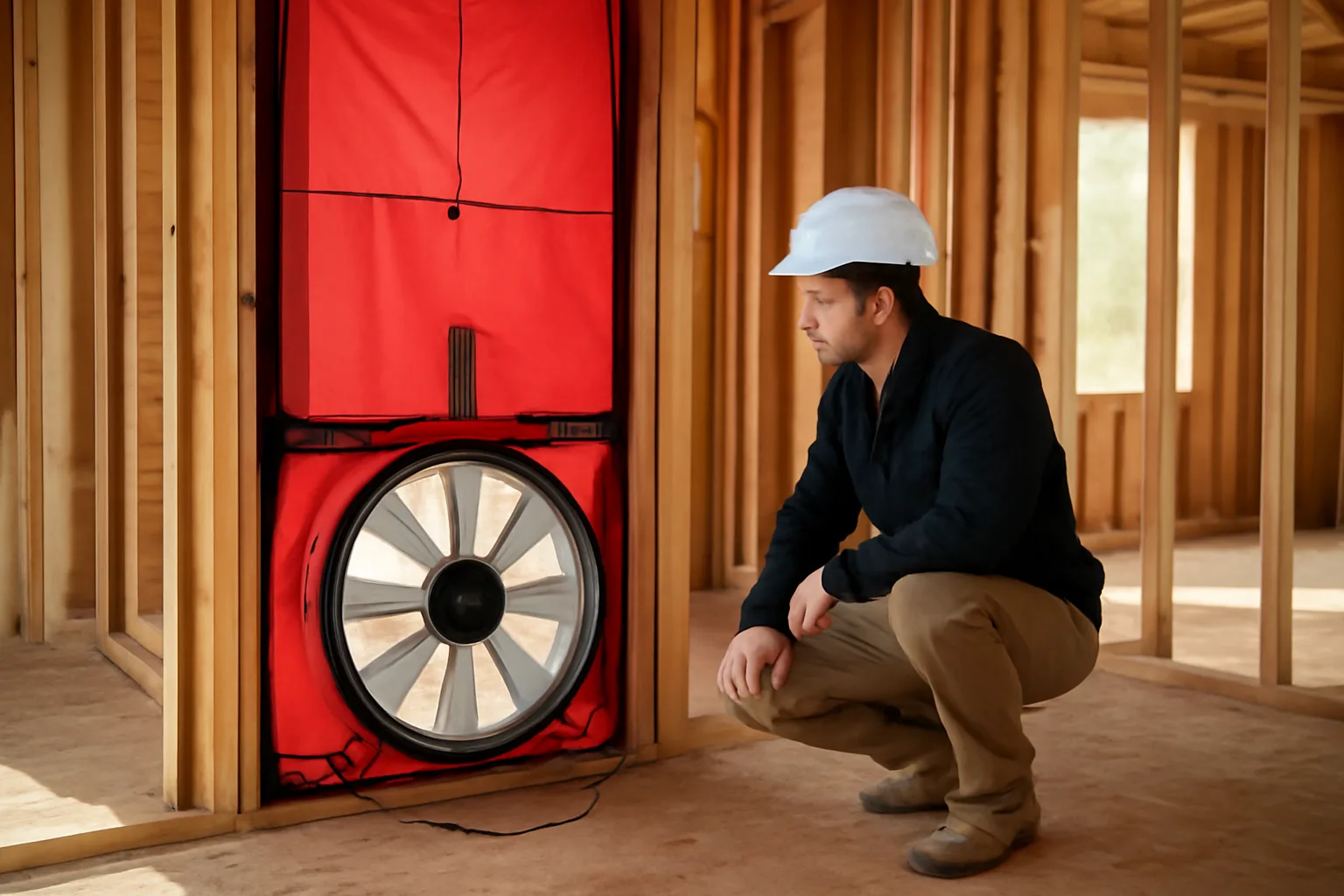
Your blower door is your most important piece of equipment, and RESNET requires it to be calibrated on a schedule to keep your ratings valid [2]. The calibration interval and the acceptable labs are set in RESNET standards. Most blower door makers (Minneapolis Blower Door, Retrotec) run calibration programs, or you can use an accredited third-party lab.
Past calibration, you have to keep current rating software. REM/Rate and EnergyGauge USA are the two most common RESNET-approved rating engines used in Arkansas [10]. Software subscriptions typically run $300 to $800 per year depending on platform and license tier. Keep it updated. RESNET approves specific software versions for compliance, and older versions may get rejected.
If you're just starting or replacing an aging setup, compare equipment bundles against buying piece by piece. HERSPath has a $179 RESNET plus Blower-Door Kit built for new raters putting together an initial field kit. Whether that fits your renewal situation depends on what equipment you already own.
For how equipment requirements work in neighboring states, see HERS rater renewal in Arizona and HERS rater renewal in Colorado.
How does Arkansas compare to other states for HERS rater renewal burden?
Arkansas is a light-burden state. No state license, no state renewal fee, no Arkansas-specific CE on top of RESNET's 12 hours. Compare that to California, which stacks its own Title 24 HERS rater requirements on RESNET credentials [6], or Connecticut, which adds state program participation rules for certain utility incentive programs.
The closest states in structure are the neighbors. Tennessee, Missouri, Oklahoma, and Mississippi all run the pure RESNET model with no state overlay, same as Arkansas. So if you work across state lines, common in border markets like the Memphis metro or Texarkana, your credential management stays simple: one RESNET certification, one Rating Provider relationship, valid across all of them.
See our guides to HERS rater renewal in Alabama and HERS rater renewal in Illinois for states with similar structures.
| State | State license required? | State CE on top of RESNET? | Notes |
|---|---|---|---|
| Arkansas | No | No | Pure RESNET model |
| Alabama | No | No | Pure RESNET model |
| California | Yes (HERS) | Yes | Title 24 requirements [6] |
| Colorado | No | No | Pure RESNET model |
| Florida | No | No | Pure RESNET model |
Where do you actually submit your Arkansas HERS rater renewal?
You submit to your Rating Provider, not to any Arkansas agency. The method depends on the provider. Some run online portals, some use email, a few still run paper packets. Your Rating Provider then updates the RESNET national registry.
After renewal processes, check your status yourself on the RESNET rater registry [8]. Look yourself up. Confirm your certification expiration date updated correctly. It takes two minutes and can save you a serious problem if an administrative error left your record stale.
Keep copies of your CE certificates, your Rating Provider's renewal confirmation, and a printout of the RESNET registry showing your active status. Builders and code officials in Arkansas may ask for proof of current certification before they accept a rating. Having it ready means you're not scrambling when a job is on the line.
For how renewal documentation flows in nearby markets, see HERS rater renewal in Georgia and HERS rater renewal in Delaware.
Frequently asked questions
Do you need a license for HERS rater in Arkansas?
No state license exists for HERS raters in Arkansas. Your credential comes entirely from RESNET through an accredited Rating Provider. There's no Arkansas Energy Office exam, no state board, and no state renewal form. You keep active certification through RESNET and stay on the public RESNET rater registry to legally file HERS ratings in the state.
How much does HERS rater renewal cost in Arkansas?
There's no single answer, because Arkansas charges no state fee. Your costs are Rating Provider membership or QA fees (commonly $200 to $600 per year), RESNET-approved CE courses (free to $400 for 12 hours depending on format), software subscriptions ($300 to $800 per year), and periodic blower-door calibration ($150 to $400). Confirm current fees directly with your Rating Provider, since amounts vary and change.
How long does HERS rater renewal take in Arkansas?
The certification cycle is two years, set by RESNET. The renewal processing time after you submit to your Rating Provider is typically a few business days to two weeks depending on the provider. Don't wait until the last week of your cycle. Give yourself at least 30 days before expiration to finish CE hours and submit paperwork, since a lapsed certification blocks you from filing accepted ratings.
How many CE hours do Arkansas HERS raters need for renewal?
RESNET requires 12 hours of continuing education per two-year certification period. The courses must be RESNET-approved. Topics typically cover updates to ASHRAE 62.2, IECC changes, RESNET Standard 301 updates, and blower-door diagnostics. Your Rating Provider can give you a list of qualifying courses. Not every online energy course counts, so verify approval before you pay for outside training.
Can you work as a HERS rater in Arkansas without being affiliated with a Rating Provider?
No. Individual rater certification through RESNET requires an accredited Rating Provider relationship. The Rating Provider quality-assures your work, processes your renewal, and maintains your RESNET registry status. You can't self-certify or operate independently outside the Rating Provider structure. RESNET publishes a searchable directory of accredited Rating Providers at resnet.us, where you can find providers accepting Arkansas raters.
What software do HERS raters use in Arkansas?
The two most common RESNET-approved rating engines in Arkansas are REM/Rate (from Noresco) and EnergyGauge USA (from the Florida Solar Energy Center). Both produce HERS-compliant output accepted under the 2021 IECC performance path. Software subscriptions typically run $300 to $800 per year. RESNET approves specific software versions, so keep your version current or older ratings may not be accepted by code officials.
What climate zone is Arkansas in for HERS ratings?
Most of Arkansas falls in Climate Zone 3 under the 2021 IECC. The northwest corner, including the Fayetteville and Fort Smith areas, falls in Climate Zone 4. Climate zone affects both the prescriptive thresholds builders are trying to beat and the reference home calculation used in the HERS index. Your rating software handles this automatically when you enter the project's zip code.
What happens if your HERS rater certification expires in Arkansas?
An expired certification removes your name from the RESNET active rater registry. Ratings you submit will likely be rejected by builders and code officials until reinstatement. Reinstatement terms vary by Rating Provider and how long you've been lapsed. Short lapses may carry only a late fee, while lapses over two years can require retesting. Confirm your Rating Provider's reinstatement policy before your expiration date.
Does Arkansas require HERS ratings for new home permits?
Not universally. Arkansas adopted the 2021 IECC, which allows a performance path using HERS ratings as an alternative to prescriptive compliance. Whether a specific builder or jurisdiction requires a HERS rating depends on the compliance path the builder chooses and local enforcement. Some jurisdictions may also require HERS ratings for utility incentive programs or ENERGY STAR certifications, but that's a program requirement, not a state code mandate.
Can a HERS rater from another state work in Arkansas?
Yes. RESNET certification is national, not state-specific. An active HERS rater certified through any RESNET-accredited Rating Provider can file ratings in Arkansas with no extra Arkansas credential. This is common in border markets like the Memphis metro (Tennessee/Arkansas) and Texarkana (Texas/Arkansas). Verify your certification is active on the RESNET registry before filing ratings in a new state.
How do you find a RESNET-accredited Rating Provider in Arkansas?
RESNET maintains a public directory of accredited Rating Providers searchable by state at resnet.us. Several large national Rating Providers also accept raters regardless of physical location. When you compare providers, ask about membership fees, included CE courses, minimum rating volume, and renewal processing time. Getting those terms in writing before you sign up saves disputes later.
Does Arkansas have any incentive programs that require a current HERS rating?
The ENERGY STAR Certified Homes program, which operates nationally including in Arkansas, requires a HERS rating from a certified rater as part of certification [7]. Some Arkansas utilities have offered energy efficiency rebate programs tied to HERS scores, though availability and terms change. Check with Arkansas's major utilities (Entergy Arkansas, Arkansas Electric Cooperatives) and the ENERGY STAR website for current program status.
Is blower door calibration required for HERS rater renewal in Arkansas?
RESNET standards require diagnostic equipment, including blower doors, to be calibrated on a set schedule to keep ratings valid. The specific interval is in the RESNET standards. Calibration typically runs $150 to $400 depending on the equipment manufacturer's program or a third-party accredited lab. Keep your calibration certificate current and on file, since your Rating Provider may request it during renewal review.
How does HERS rater renewal in Arkansas compare to neighboring states?
Arkansas, Tennessee, Missouri, Oklahoma, and Mississippi all run the pure RESNET model with no state-specific license or CE overlay. That makes cross-border work simple for raters in border markets. States like California and Connecticut add state-specific credentials or program requirements on top of RESNET, which makes renewal more complex and expensive. Arkansas sits on the simpler end of the national spectrum.
Sources
- RESNET, ANSI/RESNET/ICC Standard 301: ANSI/RESNET/ICC Standard 301 governs HERS index calculation methodology and is the national standard that applies in all states including Arkansas
- RESNET, Mortgage Industry National Home Energy Rating Standards: RESNET certifies raters on a two-year cycle and requires 12 hours of continuing education per certification period
- RESNET, Find a Rating Provider directory: RESNET maintains a public directory of accredited Rating Providers and does not publish a single universal renewal fee, which Rating Providers set individually
- Arkansas Department of Energy and Environment, Energy Codes: Arkansas adopted the 2021 International Energy Conservation Code for residential construction, which includes a performance compliance path using HERS ratings
- California Energy Commission, Building Energy Efficiency Standards: California layers its own Title 24 HERS rater requirements on top of RESNET credentials, unlike Arkansas which follows the pure RESNET model
- U.S. Department of Energy, ENERGY STAR: ENERGY STAR Certified Homes program requires a HERS rating from a certified rater as part of the certification process, including in Arkansas
- RESNET, Find a HERS Rater (public registry): The RESNET rater registry is public and searchable; lenders, builders, and code officials use it to confirm a rater's active certification status
- U.S. Department of Energy, Building Energy Codes Program, Arkansas State Profile: Arkansas state energy code adoption status and residential code details, including climate zones 3 and 4
- Florida Solar Energy Center, EnergyGauge USA rating software: EnergyGauge USA is a RESNET-approved rating engine commonly used by HERS raters in Arkansas and the Southeast