Last updated 2026-08-18
TL;DR
Alabama has no state licensing board for HERS raters. Certification comes entirely through RESNET-accredited Rating Provider organizations. Expect to spend roughly $300 to $600 or more on the exam and accreditation fees, plus equipment costs. The full path from enrollment to first rating typically takes two to four months depending on your provider and field inspection schedule.
Do you need a state license to be a HERS rater in Alabama?
No. Alabama has no state agency, board, or licensing body that issues HERS rater credentials. There's no Alabama-specific application, no state exam, and no state fee to pay before you start rating homes. The credential you need comes from RESNET, the Residential Energy Services Network, which is the national standards body for the HERS Index.
RESNET describes its own role plainly: it is "the national standards-making body for building energy efficiency ratings" [1]. That means RESNET, not any Alabama state office, sets who can legally call themselves a certified HERS rater and sign a HERS rating report.
This matters a lot if you came from a trade where state boards run everything, like HVAC or electrical licensing. HERS is different. The whole credentialing chain runs through RESNET and its accredited Rating Providers. Alabama's government is essentially not in the room.
There is one indirect government touch point worth knowing. If you plan to rate homes under programs tied to federal tax credits or HUD/FHA financing, the rating itself has to meet RESNET standards, and that requirement is what gives RESNET-certified raters their market value in Alabama. But that's a federal program requirement, not a state licensing gate.
What body actually governs HERS raters in Alabama?
RESNET governs HERS raters in Alabama, full stop. It accredits Rating Provider organizations, which are the companies or nonprofits that train, mentor, and certify individual raters. You cannot get a HERS rater certification by going directly to RESNET as an individual. You affiliate with a RESNET-accredited Rating Provider, complete their training and mentorship program, and pass the RESNET-required competency exam.
RESNET publishes a public registry of accredited Rating Providers on its website [2]. That registry is the board-equivalent for your purposes. If your Rating Provider isn't on that list, your certification won't be recognized.
Think of the structure this way. RESNET is the standard-setter and auditor. Rating Providers are the credentialing agents. Individual raters get certified by a Rating Provider and listed in the RESNET registry. No state of Alabama paperwork enters that chain at any point.
One thing Alabama raters ask often: does the state's building commission touch HERS ratings? The short answer is that the Alabama Building Commission oversees building code enforcement and residential energy code adoption, not individual rater credentialing [3]. HERS ratings come up in code compliance contexts, but the commission does not issue or revoke HERS credentials.
How much does HERS rater certification cost in Alabama?
Costs land in two buckets: fees to your Rating Provider, and the cost of your field equipment. Neither bucket has a single fixed number, so what follows are real ranges drawn from publicly available program information.
Rating Provider fees: Most accredited Rating Providers charge somewhere between $300 and $600 for their training, mentorship, and exam package, though some charge more depending on what's included. A few break out the exam fee separately from training. The RESNET competency exam, administered through providers, is part of what those program fees cover. Confirm the exact breakdown with whichever provider you choose before you enroll.
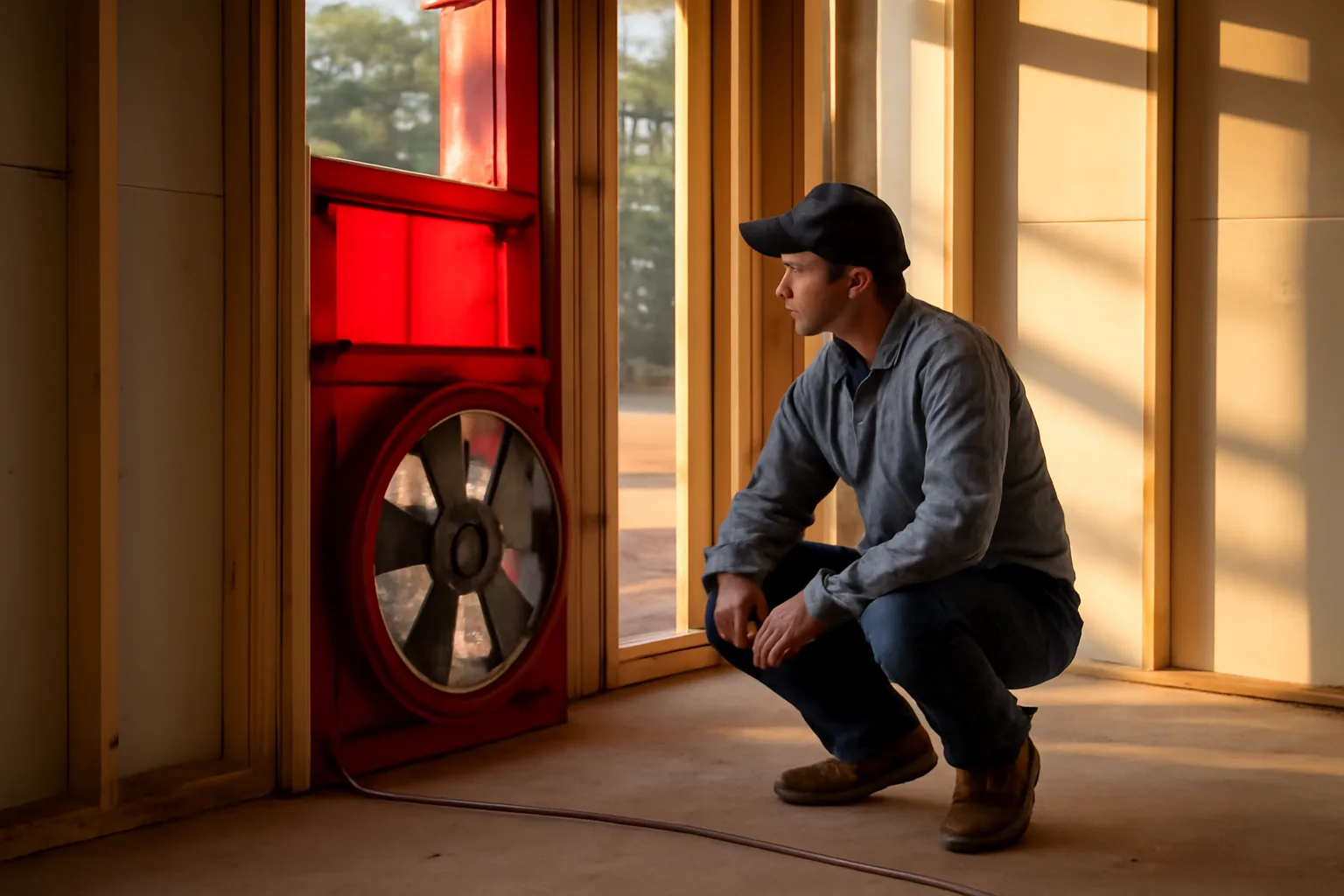
Equipment: A blower door is the non-negotiable piece of hardware. New blower door kits from major manufacturers (Minneapolis/Retrotec) run roughly $3,500 to $5,000 or more depending on configuration [4]. Duct leakage testing equipment adds more cost. Some raters rent equipment when starting out, which can be practical if your rating volume is low in year one.
HERSPath offers a $179 one-time membership that bundles RESNET exam prep resources with a blower-door field kit guide, which helps you understand the equipment side before you commit to a purchase. You can find the details at /start.
Here's a realistic first-year budget for someone starting from scratch in Alabama.
| Cost Item | Estimated Range |
|---|---|
| Rating Provider training + exam | $300, $600+ |
| Blower door kit (entry-level new) | $3,500, $5,000+ |
| Rating software subscription (annual) | $200, $500+ |
| Continuing education (first year) | $0, $200 |
| Total (equipment-heavy first year) | $4,000, $6,300+ |
These are ballpark figures. Confirm all fees with your chosen Rating Provider and equipment vendor before you budget.
How long does it take to become a HERS rater in Alabama?
Two to four months is a reasonable expectation, though the range stretches in both directions depending on how fast you move and your provider's scheduling.
The path has three time-consuming phases. First, coursework. Most Rating Provider programs run between 30 and 60 hours of online or in-person instruction covering building science, the HERS methodology, and rating software. That can take a few weeks if you're going part-time alongside other work.
Second, mentored field ratings. RESNET requires candidates to complete a set of supervised field ratings under a certified rater before they can sit the exam [5]. The exact count depends on your provider's program design, but it typically runs three to five homes. In Alabama's residential construction market, scheduling those mentored ratings depends on your provider's local network and the pace of new home starts in your area. This is often the phase that stretches a timeline.
Third, the exam. The RESNET competency exam is administered through your Rating Provider. Once you've finished coursework and mentored ratings, scheduling and passing the exam is usually the fastest phase, often a week or two.
After you pass, your Rating Provider submits your certification to RESNET and you appear in the national rater registry. That's your operational green light. No waiting on any Alabama state office.
How do you choose a RESNET-accredited Rating Provider in Alabama?
Start with the RESNET provider registry [2]. Filter by state or region to see which providers serve Alabama. Some are national organizations that operate fully online or remotely. Others have regional training coordinators who can connect you with local mentors.
A few things worth checking before you commit to a provider.
Mentor availability in Alabama. Ask specifically whether they have certified mentors in your area who can supervise your required field ratings. A provider that looks great on paper but can't staff your field training in Alabama will stretch your timeline hard.
Rating software compatibility. Most providers work with either REM/Rate or EnergyGauge. Both are RESNET-approved. The software you learn during training is often the software you'll use in practice, so it pays to know which one your provider teaches.
Fee structure clarity. Get the full cost in writing before enrolling: training, exam, mentorship, annual affiliation fees, and any certification renewal fees. Providers must be transparent about this under RESNET accreditation standards [6].
Post-certification support. Some providers offer ongoing technical support, quality assurance review of your ratings, and CE tracking. That relationship matters, because your Rating Provider stays responsible for the quality of your ratings under RESNET's accountability structure.
What is the RESNET HERS exam, and how hard is it?
The RESNET Home Energy Rating Competency Exam tests building science fundamentals, the HERS methodology, rating software calculations, and field inspection procedures. It's administered through your Rating Provider, not through a third-party testing center.
RESNET's certification standards cover building systems, energy efficiency, and rating procedures [5]. Nobody publishes official pass rates, so there's no clean number to cite here. Anecdotally, candidates who complete their provider's full training program and study the RESNET Mortgage Industry National Home Energy Rating Standards pass comfortably. Candidates who skip prep or rush through the coursework tend to struggle.
One prep tip actually matters more than the rest: work through real rating software calculations, more than concept definitions. The exam includes calculation-based questions that reward hands-on practice over memorization. Your Rating Provider should give you practice materials. Use them.
If you fail, most providers allow retakes. Confirm your provider's retake policy and any associated fees before you sit the first time. No sense in getting surprised by a retake fee.
Does Alabama have a residential energy code that affects HERS raters?
Yes, and it's worth understanding how Alabama's code adoption intersects with HERS work, even though the code doesn't govern your credentials.
Alabama has adopted the 2021 International Energy Conservation Code (IECC) for residential construction [7]. The 2021 IECC includes performance compliance paths that accept HERS ratings as evidence of code compliance. Section R405 allows a simulated performance alternative where a home's energy use is modeled and compared to a reference design, which is exactly what a HERS rating does.
So Alabama builders can hire a certified HERS rater to demonstrate energy code compliance using the performance path rather than the prescriptive checklist. That's a real market driver for HERS raters working with custom builders who want design flexibility.
Local enforcement varies by jurisdiction. Alabama's building code adoption is state-level, but enforcement happens at the county and municipal level. Some jurisdictions have been slower to adopt updated codes or enforce energy provisions. Confirm with your local building department what they actually require before citing the HERS performance path to a builder client.
For raters doing ENERGY STAR Certified Homes work or ratings tied to DOE Zero Energy Ready Home, the requirements come from those federal programs, not from Alabama's state code. See the DOE's program requirements page for current details [8].
How does Alabama compare to states that do have HERS rater boards?
Most states don't have a dedicated HERS rater board either. Alabama sits in the majority, not the outlier column. Only a handful of states have created state-specific credentialing requirements layered on top of RESNET certification.
California is the clearest example of a more complex landscape. The California Energy Commission has its own certified rating program requirements that interact with RESNET certification see [HERS rater board in California]. Florida has specific requirements tied to the Florida Building Code that affect how HERS ratings are used in permit compliance see [HERS rater board in Florida]. Georgia sits closer to Alabama in its approach see [HERS rater board in Georgia].
Alabama's lack of a state board is genuinely simpler for new raters. One credentialing chain, one exam, one registry. The tradeoff is fewer locally visible pathways for finding mentors or connecting with peers. National provider networks and RESNET's regional chapters fill that gap.
| State | State HERS board exists? | Additional state requirements? |
|---|---|---|
| Alabama | No | None beyond RESNET |
| California | No dedicated board | Yes, CEC certification layer |
| Florida | No dedicated board | Yes, Florida Building Code requirements |
| Georgia | No | None beyond RESNET |
| Arkansas | No | None beyond RESNET |
See also: HERS rater board in Arkansas, HERS rater board in Colorado.
What continuing education do Alabama HERS raters need?
Continuing education for HERS raters comes from RESNET, not from any Alabama state body. RESNET requires certified raters to complete continuing education as a condition of annual certification renewal. The specific CE hour requirement is set by your Rating Provider's accreditation terms and RESNET's standards, so confirm the current number directly with your provider.
In practice, most providers require somewhere between 6 and 12 CE hours per year, though that figure can shift as RESNET updates its standards. Confirm with RESNET and your Rating Provider for your current renewal cycle's exact requirements.
CE can usually be completed through RESNET-approved courses, provider-run webinars, and national or regional conferences like the RESNET annual conference [1]. Some providers bundle CE into an ongoing membership fee. Others charge per course.
Beyond CE, your Rating Provider conducts quality assurance reviews of a sample of your completed ratings each year. Those QA reviews are part of RESNET's accountability structure and are separate from CE. A pattern of QA failures can trigger remedial training requirements or, in serious cases, suspension of your certification.
Where can Alabama raters find the official RESNET standards documents?
RESNET publishes its core standards document, the Mortgage Industry National Home Energy Rating Standards, on its website [1]. That document is the legal and technical foundation for everything HERS raters do: how ratings are calculated, what field inspections must cover, how Rating Providers are accountable for their raters, and what the HERS Index values actually mean.
RESNET also publishes supplemental standards for specific programs and building types. If you plan to rate manufactured housing, for example, specific RESNET standards apply to that sector.
For code-related questions specific to Alabama, the Alabama Building Commission maintains information on adopted codes and enforcement [3]. For federal program requirements that drive HERS rating demand (ENERGY STAR, DOE Zero Energy Ready Home, FHA EEM loans), check the relevant federal agency pages directly [8].
One practical note. RESNET standards documents are updated periodically. Don't rely on a PDF you downloaded two years ago for current requirements. Check the RESNET website for the current version before you base any professional decision on a specific provision.
For raters comparing state approaches, see also HERS rater board in Alaska and HERS rater board in Idaho for other states where RESNET certification is the sole credentialing pathway.
Frequently asked questions
Do you need a license for a HERS rater in Alabama?
No state license exists for HERS raters in Alabama. Your credential comes from RESNET through an accredited Rating Provider. You complete training, mentored field ratings, and a competency exam. Once certified, you appear in the national RESNET rater registry. No Alabama state agency issues or renews that credential.
How much does becoming a HERS rater cost in Alabama?
Rating Provider training and exam packages typically run $300 to $600 or more. Equipment is the bigger expense: a blower door kit alone runs $3,500 to $5,000 or more new. Add rating software subscriptions of $200 to $500 annually. A realistic first-year budget for someone starting from scratch is $4,000 to $6,300 or more. Confirm all fees with your chosen provider.
How long does it take to become a HERS rater in Alabama?
Expect two to four months from enrollment to first independent rating. Coursework takes a few weeks. Mentored field ratings (typically three to five homes) depend on your provider's local scheduling. The exam itself is fast once prerequisites are done. No Alabama state processing time adds to this, since there's no state application involved.
Is there a HERS rater board in Alabama I need to register with?
No. Alabama has no state board, commission, or agency that registers or licenses HERS raters. The only registry that matters is the national RESNET rater registry, which your Rating Provider populates once you pass your exam. That registry is publicly searchable and is what builders and code officials use to verify your credentials.
Which Rating Providers serve Alabama for HERS rater certification?
RESNET publishes a public registry of all accredited Rating Providers at resnet.us. Filter by state or region to find providers that serve Alabama. Some are national organizations operating online. Others have regional training staff. Ask specifically about mentor availability in your area before enrolling, since mentored field ratings are required and local mentor access varies.
Does Alabama's building code require HERS ratings for new homes?
Alabama has adopted the 2021 IECC, which includes a performance compliance path (Section R405) that accepts HERS ratings. It's not a blanket requirement, though: builders can use prescriptive compliance instead. Some builders choose HERS ratings for design flexibility or to qualify for incentive programs. Enforcement varies by jurisdiction, so confirm local requirements with the relevant building department.
Can I rate homes in multiple states once certified in Alabama?
Yes, generally. RESNET certification is national. Once you're certified through an accredited Rating Provider, you can rate homes in any state without additional RESNET credentialing. Some states layer on their own requirements (California is the clearest example), so check each state's rules if you plan to work across state lines regularly.
How do I find a mentor for my required field ratings in Alabama?
Your Rating Provider is your first call. Providers are responsible for connecting candidates with qualified mentors as part of their accreditation obligations. If your provider has thin coverage in Alabama, RESNET's regional chapters and the national rater registry can help you locate certified raters who may be willing to mentor. Expect to compensate mentors for their time.
What software do HERS raters use in Alabama?
The two dominant RESNET-approved rating software platforms are REM/Rate and EnergyGauge. Both are accepted for HERS ratings nationwide, including in Alabama. Your Rating Provider will typically train you on one platform. Subscriptions run roughly $200 to $500 per year depending on the platform and license type. Some providers include software access in their training packages.
Are there Alabama-specific HERS rating requirements for ENERGY STAR homes?
ENERGY STAR Certified Homes requirements come from the EPA, not from Alabama. The program sets specific HERS Index thresholds by climate zone. Alabama falls primarily in IECC Climate Zones 2 and 3, which carry their own ENERGY STAR target scores. Check the current EPA ENERGY STAR Residential New Construction program requirements for the thresholds that apply to your specific project location.
What happens if my HERS rating fails a quality assurance review in Alabama?
Your Rating Provider conducts QA reviews of a sample of your completed ratings as required by RESNET. If a rating fails QA, your provider will typically require corrections and may require additional training. Repeated QA failures can result in your certification being suspended or revoked by your Rating Provider. RESNET's standards give providers authority to take those actions.
How often do I need to renew my HERS rater certification in Alabama?
RESNET requires annual certification renewal through your Rating Provider. Renewal involves completing continuing education (typically 6 to 12 hours, though confirm the current requirement with your provider) and paying an annual affiliation fee. Since Alabama has no state licensing layer, there's no separate state renewal process to track.
Can a home inspector in Alabama also become a HERS rater?
Yes, and the overlap in field skills is real. Home inspectors already understand building systems, which gives them a head start in HERS training. The added learning curve is mostly around energy modeling software and the HERS calculation methodology. You'll still need to complete the full Rating Provider program and pass the RESNET exam regardless of your home inspector credentials.
Sources
- RESNET, Mortgage Industry National Home Energy Rating Standards: RESNET is the national standards-making body for home energy ratings and publishes the Mortgage Industry National Home Energy Rating Standards.
- RESNET, Home Energy Professionals Directory: RESNET maintains a public registry of accredited Rating Providers and certified raters searchable by state.
- Alabama Building Commission: The Alabama Building Commission oversees residential building code adoption and enforcement in Alabama.
- The Energy Conservatory: New blower door kits from major manufacturers run roughly $3,500 to $5,000+ depending on configuration.
- RESNET, Become a RESNET HERS Rater: RESNET requires candidates to complete mentored field ratings and pass a competency exam before certification; the exam covers building systems, energy efficiency, and rating procedures.
- RESNET, About Standards: RESNET accreditation standards require Rating Providers to be transparent about fees and program requirements.
- International Code Council, 2021 International Energy Conservation Code: Alabama has adopted the 2021 International Energy Conservation Code for residential construction.
- U.S. Department of Energy, Zero Energy Ready Home Program Requirements: DOE Zero Energy Ready Home and other federal programs set HERS rating requirements independent of state building codes.
- U.S. EPA, ENERGY STAR: ENERGY STAR Certified Homes requirements, including HERS Index thresholds by climate zone, are set by the EPA at the federal level.