Last updated 2026-08-18
TL;DR
Alaska has no state-issued HERS rater license. You certify through a RESNET-accredited Rating Provider, pass the RESNET Rater Exam, complete field training, and pay RESNET membership dues plus exam fees. Total first-year costs typically run $400-$1,200 depending on training format. Most candidates finish in 3-6 months.
Do you need a state license to be a HERS rater in Alaska?
No. Alaska does not issue a state-specific license for HERS raters. There is no Alaska licensing board, no state exam, and no renewal fee paid to a state agency. What you need is RESNET certification, and that comes entirely from the Residential Energy Services Network, a national nonprofit that sets the standards for the HERS Index under ANSI/RESNET/ICC Standard 301.
RESNET is the governing body here. Their standard defines how homes get rated, who can rate them, and what quality assurance looks like. When a builder or code official in Anchorage or Fairbanks asks to see your credentials, they're asking for your RESNET Rater certification number, not an Alaska state license number.
That said, do a quick confirm with your local jurisdiction before you take your first job. Some municipalities layer on their own requirements for energy inspectors or building officials, and Alaska's borough-level building departments vary widely. The Municipality of Anchorage, for example, runs its own building department under Title 23 of the Anchorage Municipal Code [1]. It's unlikely they require a separate HERS credential, but a five-minute phone call to the permit counter is worth it.
What is RESNET certification and why does it replace a state license?
RESNET created the HERS rating system in the early 1990s, and in 2006 the International Energy Conservation Code formally referenced the HERS Index as a compliance path for residential energy efficiency [2]. That reference is what gave RESNET credentials their teeth nationally. When a state or local jurisdiction adopts the IECC, they're implicitly adopting HERS ratings as a recognized compliance tool, and they rely on RESNET's own quality-assurance system rather than building a separate licensing apparatus.
RESNET accredits Rating Providers (RPs), which are the companies or organizations that train, certify, and oversee individual raters. You as an individual rater work under an RP. The RP is responsible for your quality assurance, your file audits, and your continuing education. Think of the RP as your credentialing sponsor.
RESNET's Mortgage Industry National Home Energy Rating Standards, commonly called the RESNET Standards, define three tiers of rater: Rater Trainee, Rater, and Senior Rater. You start as a Trainee, complete supervised ratings, pass the national exam, and get promoted to full Rater status [3]. The whole pathway is national and consistent, which is exactly why Alaska doesn't need to rebuild it from scratch.
How much does becoming a HERS rater cost in Alaska?
Costs split into four buckets: training, the RESNET exam, Rating Provider enrollment, and equipment. Alaska adds a geographic wrinkle to the equipment side because shipping to remote areas can be expensive.
Training. Online coursework through a RESNET-accredited Rating Provider typically runs $300-$700. In-person boot camps, which some raters prefer because you get hands-on blower-door practice, run $700-$1,500 and usually require travel since Alaska has limited local providers. If you're in Anchorage or a hub city, check whether any RP has scheduled a regional cohort before booking flights south.
RESNET exam. RESNET administers the Rater Exam through Proctorio's online proctoring system. As of RESNET's published fee schedule, the exam fee is in the range of $100-$150, but confirm the current figure directly at resnet.us because fees are updated periodically [3].
Rating Provider enrollment. RPs charge annual membership or per-file fees. Annual membership models often run $300-$600 per year. Per-file models might charge $15-$40 per rated home. For a new rater doing fewer than 20 homes in year one, per-file can be cheaper; heavy-volume raters usually prefer the flat annual fee.
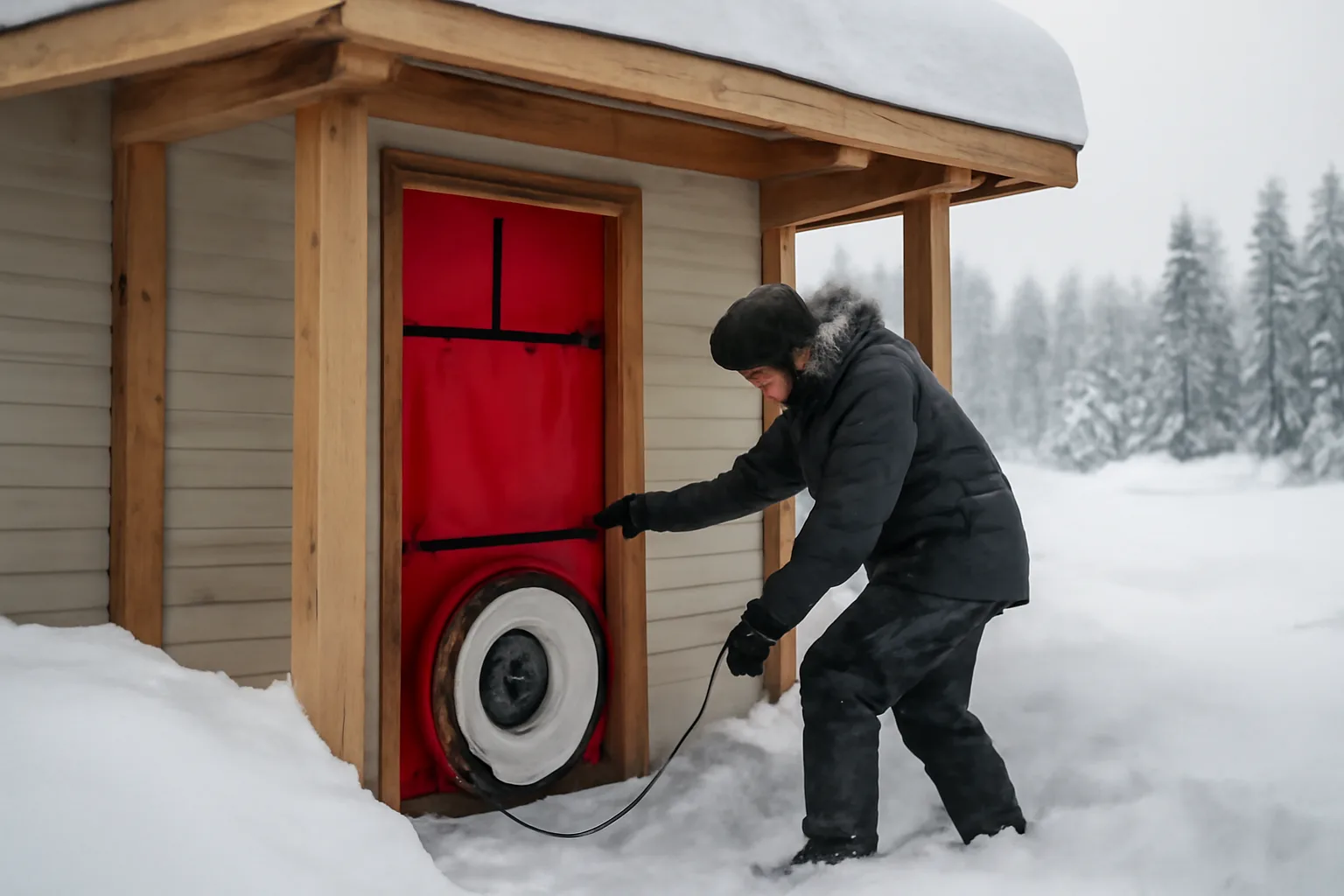
Equipment. A blower door is non-negotiable. A Minneapolis Blower Door Model 4 with a DG-700 gauge runs roughly $3,500-$4,000 new. Used units show up on the used-equipment market for $1,500-$2,500. You also need an energy modeling software subscription: REM/Rate or EnergyGauge are the two most common RESNET-approved tools, and subscriptions run $400-$800 per year.
If you're just starting out and want to test the career before committing to a blower door purchase, HERSPath offers a $179 starter kit covering RESNET enrollment and blower-door fundamentals at /start. That's not a replacement for the full equipment purchase, but it lowers the initial research cost.
Total realistic first-year spend: $1,500-$4,500 if you buy a new blower door, or $800-$2,500 if you access shared equipment through your RP during early ratings. Alaska-specific shipping for heavy equipment can add $100-$300 depending on destination.
| Cost item | Typical low | Typical high |
|---|---|---|
| Online training | $300 | $700 |
| RESNET exam | $100 | $150 |
| Rating Provider annual fee | $300 | $600 |
| Energy software subscription | $400 | $800 |
| Blower door (new) | $3,500 | $4,200 |
| Blower door (used) | $1,500 | $2,500 |
How long does it take to become a HERS rater in Alaska?
Three to six months is a realistic range for most people working at a normal pace alongside a job. The timeline breaks into three phases.
Phase one is coursework, which takes two to eight weeks depending on your format. A self-paced online course can be done in two weeks if you push hard. An in-person boot camp compresses it into four or five days but requires scheduling around a cohort.
Phase two is the Trainee period. RESNET requires that Rater Trainees complete a minimum number of supervised ratings before sitting for the full exam. The current RESNET Standards require at least three rating files reviewed and approved by a certified Rater under your RP [3]. In Alaska, finding homes to rate as a trainee can take longer than in a dense metro area, so build extra buffer here. Some Alaskan Trainees spend two to four months finding and completing their supervised ratings, especially outside Anchorage.
Phase three is the exam. You schedule it, sit for it online, and get results quickly. If you pass, your RP updates your status in RESNET's registry and you're a certified Rater.
One honest caveat: if you're in a rural part of Alaska, the logistics of supervised ratings can stretch the timeline. Some RPs allow remote supervision via video call and file review, but confirm that policy with your specific RP before signing up.
How do you choose a RESNET-accredited Rating Provider in Alaska?
RESNET maintains a public directory of accredited Rating Providers at resnet.us. Not all RPs operate in every state, and Alaska's market is thin. You may end up working with a national RP that has remote or hybrid training rather than one with an Anchorage office.
When you evaluate an RP, ask four things. First, do they have experience with Alaska's climate zone? Alaska spans IECC climate zones 6, 7, and even 8 in the Interior and Arctic regions [4]. A good RP will know that zone 7 and 8 homes have very different modeling assumptions than zone 3 homes in the south, and their training materials should reflect that. Second, how do they handle supervised ratings for Trainees who are geographically isolated? Third, what is their audit rate and how do they conduct file audits? Fourth, what software do they support, and does that software handle Alaska's climate data correctly?
Software matters more in Alaska than most raters expect. REM/Rate and EnergyGauge both pull from ASHRAE climate data sets, but verifying that your modeling software has accurate weather station data for your specific area (say, Nome vs. Anchorage vs. Kodiak) is worth a check before you start rating homes. Climate data errors compound into inaccurate HERS scores, which creates QA problems down the road.
For context on how other states handle RP selection, the HERS rater license in Alaska guide goes deeper on the specific credential pathway. And if you're comparing state frameworks, the how to start HERS rater in Alabama guide shows a similar no-state-license structure.
What does the RESNET Rater Exam cover?
The RESNET Rater Exam tests your knowledge of building science, energy modeling, and the RESNET Standards themselves. RESNET publishes a candidate handbook describing the exam content domains. As of the most recent published version, the exam covers building envelope analysis, mechanical systems, water heating, duct systems, and HERS rating procedures [3].
The exam is multiple choice, administered online with live proctoring. Pass rate data isn't publicly released by RESNET, so there's no honest published figure to cite here. Most candidates who complete an accredited training course pass on the first attempt, but that's anecdotal from the RP community, not a published statistic.
One thing worth knowing: you can only sit for the exam while enrolled as a Trainee under an RP. You can't just show up and take a test cold. The RP has to certify that you're eligible, which means completing your supervised ratings first.
Study focus areas that catch people off guard include duct leakage testing procedures (specifically the DeltaQ and pressure pan methods), multi-family rating rules, and the quality assurance requirements for Rating Providers. The building science fundamentals are usually the easy part for people who come from construction or HVAC backgrounds.
What equipment do HERS raters in Alaska actually need?
The minimum kit is a calibrated blower door, a duct leakage tester, and a laptop with RESNET-approved energy modeling software. Alaska's cold climate adds some practical gear on top of that.
Blower doors are the anchor piece. The most common unit in the field is the Minneapolis Blower Door Model 4 with a DG-700 pressure gauge. The Model 4 handles most single-family homes; for large homes over 5,000 square feet, you may need an additional ring and fan. RESNET requires that your blower door be calibrated annually [3], and in Alaska, sending a fan to a calibration center involves shipping logistics and potential turnaround delays, so build that into your maintenance schedule.
For duct testing, an Duct Blaster is the common choice, though any RESNET-approved duct pressurization device works.
Alaska-specific gear to think about: insulated carrying cases for equipment operating in extreme cold, extra gaskets (cold makes them brittle), and a good headlamp because you'll be crawling attics and crawl spaces in the dark during winter months. Cold-weather gear for outdoor setup isn't a RESNET requirement but it's a practical necessity in Fairbanks in January.
Software subscriptions are annual. REM/Rate is published by NORESCO and priced around $400-$650/year depending on license tier. EnergyGauge is published by Florida Solar Energy Center at similar pricing [5]. Both are RESNET-approved. Your RP will usually have a preferred software; ask before you buy a subscription.
What is the Alaska residential energy code and how does it affect HERS ratings?
Alaska has a complicated energy code situation. The state does not have a mandatory statewide residential energy code for all jurisdictions. Under Alaska Statute 18.56, the Alaska Housing Finance Corporation (AHFC) is the entity most directly engaged in residential energy standards, and AHFC administers a voluntary home energy rating program called AHFC's Home Energy Rating System, which has historically run parallel to (and sometimes overlapping with) RESNET HERS ratings [6].
AHFC operates its own Rating designation through its Alaska Retrofit program and the Cold Climate Housing Research Center (CCHRC). This is a distinct credential from RESNET HERS, though the two systems share building science roots. Some Alaskan clients and building programs may want specifically an AHFC rating rather than or in addition to a RESNET HERS rating. Check with AHFC directly to understand which programs require which credential [6].
For building permits, code adoption in Alaska is largely local. The Municipality of Anchorage has adopted specific energy code provisions under its building code. Other boroughs and communities may use older editions of the IECC or have no formal energy code requirement at all. RESNET HERS ratings are most commonly requested in Alaska in the context of federally backed mortgages, DOE's Zero Energy Ready Home program, or utility rebate programs, rather than as a mandatory building code compliance path.
AHFC's Weatherization and home energy programs do create real demand for rated homes in Alaska, particularly in rural communities receiving federal weatherization funds. That's a market angle worth knowing if you're thinking about where your clients will come from.
How does Alaska's climate affect HERS scores and your rating work?
Alaska sits almost entirely in IECC Climate Zones 6, 7, and 8, which are the most demanding thermal zones in the continental classification system [4]. Zone 8 covers the Arctic and Interior Alaska regions including Utqiagvik (Barrow) and much of the North Slope. Zone 7 includes Fairbanks. Zone 6 covers Anchorage and parts of Southcentral Alaska.
In practice, this means Alaskan homes tend to have very high insulation levels, triple-pane windows, and complex air sealing strategies. A typical Alaska HERS score is lower (more efficient) than a comparable new home in a southern state simply because the code baseline is more demanding. According to RESNET, the HERS Index reference home is calibrated against the 2006 IECC; a home built to Alaska's climate zone 7 requirements may naturally score in the 40s or 50s without any efficiency add-ons [3].
For you as a rater, that means Alaska homes take longer to model accurately. More assemblies, more complex mechanical systems (heat recovery ventilators are nearly universal), and more detailed air sealing documentation. Expect to spend more time per file than you would in a milder climate. Price your ratings accordingly.
Heat recovery ventilators (HRVs) and energy recovery ventilators (ERVs) are standard in Alaska new construction, and RESNET's modeling protocols for HRVs require specific input values that can trip up raters unfamiliar with cold-climate construction. Make sure your training covers HRV modeling explicitly, or seek out a supplemental resource from CCHRC [7].
What continuing education does Alaska require to maintain your HERS certification?
RESNET, not Alaska, controls continuing education requirements for HERS raters. Under the current RESNET Standards, certified Raters must complete continuing education to maintain their credential. RESNET requires six hours of approved continuing education per year [3].
RESNET-accredited continuing education covers topics like updated modeling protocols, new code editions, blower door calibration updates, and quality assurance procedures. Your Rating Provider typically offers some of these, and RESNET holds an annual conference where many raters bank their hours.
There's no Alaska state board to report to, no Alaska renewal form to file, and no Alaska fee to pay for renewal. Everything runs through RESNET and your RP. The RP tracks your CE credits and your QA compliance, and RESNET maintains the public registry that shows whether your certification is current.
One practical note: if you let your certification lapse, reinstatement requires demonstrating continued competency, which may mean re-examination depending on how long you've been inactive. Don't let it lapse.
What does a HERS rater's first year actually look like in Alaska?
Honest answer: slower ramp than the Lower 48. The Alaska market for HERS ratings is real but thin compared to high-growth states like Texas or Colorado. New home construction volume in Alaska is modest; the U.S. Census Bureau reported roughly 1,500-2,000 new housing units permitted annually in Alaska in recent years [8], compared to 300,000+ in Texas. That's a small pool of potential rating clients.
Where the work actually comes from in Alaska: AHFC-related programs, federal weatherization clients, DOE Zero Energy Ready Home builders (a small but growing segment), and utility rebate programs through Golden Valley Electric or Chugach Electric. Some raters also do HERS ratings for mortgage energy-efficient mortgage (EEM) programs through FHA and VA, which use HERS scores to qualify borrowers for larger loan amounts [9].
Most successful first-year Alaska raters have one of three things going for them: an existing relationship with a builder or HVAC contractor, a connection to the AHFC or weatherization network, or a day job in construction or energy auditing that creates natural client overlap.
For geographic context and adjacent state frameworks, it's worth reading how to start HERS rater in Arizona and how to start HERS rater in Colorado, both of which have active builder markets and show what a higher-volume rater operation looks like.
HERSPath's $179 starter kit at /start is one way to map out your first 90 days without over-committing before you've confirmed there's work in your local area. Build the client pipeline before you buy the blower door.
Frequently asked questions
Do you need a license for HERS rater in Alaska?
No state license is required. Alaska does not issue a HERS rater license through any state agency. You need RESNET certification, obtained through a RESNET-accredited Rating Provider. Some local jurisdictions may have additional requirements, so confirm with your borough's building department before starting your first job in a new area.
How much does it cost to become a HERS rater in Alaska?
Total first-year costs typically run $1,500-$4,500 if you buy a new blower door, or $800-$2,500 if you share equipment through your Rating Provider. Training runs $300-$700 online, the RESNET exam is roughly $100-$150, and Rating Provider annual fees add $300-$600. Alaska shipping for heavy equipment can add $100-$300 for remote areas.
How long does it take to become a HERS rater in Alaska?
Three to six months is typical. Coursework takes 2-8 weeks, supervised Trainee ratings take 1-4 months depending on how many homes you can access, and the RESNET exam adds a few weeks of scheduling. Rural Alaskan raters often take longer because finding supervised rating opportunities outside major cities can be slow.
Is AHFC's home energy rating the same as a RESNET HERS rating?
No, they're separate systems. AHFC administers its own home energy rating program for Alaska. RESNET HERS is a national standard recognized under the IECC. Some Alaska programs may require an AHFC rating specifically, others may accept RESNET HERS. Confirm which credential your client's program requires before you begin.
What climate zone is Alaska for HERS rating purposes?
Alaska spans IECC Climate Zones 6, 7, and 8. Anchorage is Zone 6, Fairbanks is Zone 7, and Arctic regions including Utqiagvik are Zone 8. Your energy modeling software must use the correct climate data for each project location. Zone mismatches produce inaccurate HERS scores and create QA problems.
Can I work as a HERS rater in Alaska remotely or part-time?
Yes, many Alaska raters work part-time, especially in the first year when volume is low. Remote work is limited by the fact that ratings require physical on-site testing with a blower door. You can do energy modeling remotely, but the blower door test and visual inspection must happen in person at the home.
Which Rating Providers operate in Alaska?
RESNET maintains a public directory of accredited Rating Providers at resnet.us. Not all RPs have Alaska offices, but many offer remote or hybrid training and can supervise Alaskan Trainees via file review. Search the RESNET directory and ask each RP directly whether they have experience with Alaska climate zones 6-8 before enrolling.
What energy modeling software should I use for Alaska HERS ratings?
REM/Rate and EnergyGauge are the two most widely used RESNET-approved energy modeling tools, both priced at roughly $400-$650 per year. For Alaska, verify that the software includes accurate weather station data for your specific location. Anchorage and Fairbanks are well-covered; remote locations may need manual climate data verification.
Do I need a blower door to become a HERS rater in Alaska?
Yes, blower door testing is required for a full HERS rating under RESNET Standards. A Minneapolis Blower Door Model 4 with a DG-700 gauge costs $3,500-$4,200 new and $1,500-$2,500 used. Some Rating Providers allow Trainees to borrow equipment during their supervised rating period, which can delay the purchase decision.
Does Alaska have a mandatory residential energy code that requires HERS ratings?
No statewide mandatory residential energy code exists in Alaska that requires HERS ratings. Energy code adoption is largely handled at the local borough level. HERS ratings in Alaska are most often requested for federally backed mortgages, DOE programs, AHFC programs, or utility rebate programs rather than as a mandatory code compliance path.
How many continuing education hours do Alaska HERS raters need per year?
RESNET requires six hours of approved continuing education per year to maintain certification. Alaska has no separate state CE requirement. Your Rating Provider tracks your hours. RESNET-approved CE includes updated modeling protocols, code changes, and QA topics. Many RPs offer their own CE courses that count toward the annual requirement.
How do I find my first HERS rating clients in Alaska?
Start with AHFC-connected builders, weatherization program contractors, and local HVAC companies. The DOE Zero Energy Ready Home builder network and utility rebate programs through Chugach Electric and Golden Valley Electric are also viable sources. Alaska's new construction volume is modest, so most successful first-year raters use an existing construction or energy auditing network.
What happens if my HERS rater certification lapses in Alaska?
RESNET controls reinstatement, not Alaska. A lapsed certification may require demonstrating continued competency, which could mean retaking the exam depending on how long you've been inactive. Your Rating Provider will guide the reinstatement process. Staying current on CE hours is far easier than dealing with a lapse.
Sources
- Municipality of Anchorage, Title 23 Buildings and Construction: The Municipality of Anchorage administers its own building code under Title 23, which governs local building department requirements.
- ICC, 2006 International Energy Conservation Code, Chapter 4: The 2006 IECC formally recognized the HERS Index as a compliance path for residential energy efficiency.
- RESNET, Mortgage Industry National Home Energy Rating Standards: RESNET Standards define the Trainee, Rater, and Senior Rater tiers, exam eligibility requirements, supervised rating minimums, and six-hour annual CE requirement.
- U.S. Department of Energy, Building Energy Codes Program, Climate Zone Map: Alaska spans IECC Climate Zones 6, 7, and 8, with Anchorage in Zone 6, Fairbanks in Zone 7, and Arctic regions in Zone 8.
- Florida Solar Energy Center, EnergyGauge Software: EnergyGauge USA is a RESNET-approved energy modeling software published by the Florida Solar Energy Center.
- Alaska Housing Finance Corporation, Home Energy Rating Program: AHFC administers its own home energy rating program in Alaska, distinct from the national RESNET HERS system.
- Cold Climate Housing Research Center (CCHRC), Publications: CCHRC produces cold-climate construction research relevant to HRV/ERV modeling and Alaska-specific building practices.
- U.S. Census Bureau, Building Permits Survey, Alaska: Alaska permits approximately 1,500-2,000 new residential housing units annually according to Census Bureau building permit data.
- U.S. Department of Housing and Urban Development, Energy Efficient Mortgage Program: FHA Energy Efficient Mortgages use HERS scores to qualify borrowers for larger loan amounts to finance energy improvements.
- U.S. Department of Energy, Zero Energy Ready Home Program: DOE's Zero Energy Ready Home program requires HERS ratings and creates builder-side demand for certified HERS raters.